
Whistleblower records released Tuesday by Senate Republicans show the FBI opened an investigation into GOP lawmakers over innocuous constituent tours of the U.S. Capitol that happened on and before Jan. 6, 2021, despite early doubts about the strength of allegations that the tours were somehow connected to the riot.
The preliminary investigation known as “Rampart Twelve” was formally opened on Jan. 22, 2021, less than two days after then-President Joe Biden took office, according to internal FBI communications obtained by Senate Judiciary Chairman Chuck Grassley (R-IA) and Sen. Ron Johnson (R-WI). The investigation examined whether Republican members of Congress had assisted individuals who later took part in the Capitol riot.
Rampart Twelve, which lawmakers described on Tuesday as an investigation that preceded the Biden administration’s future criminal cases against President Donald Trump, centered on Reps. Lauren Boebert (R-CO), Paul Gosar (R-AZ), Andy Biggs (R-AZ), and former Rep. Mo Brooks (R-AL). According to a 36-page exhibit, agents obtained phone toll records for Boebert and Gosar as part of the inquiry.
The origins behind the unfounded allegation of the Republicans’ wrongdoing stemmed from claims made by former Rep. Mikie Sherrill (D-NJ), whom the exhibit showed said in a Jan. 12, 2021, Facebook Live broadcast that some Republican lawmakers had conducted “reconnaissance” tours of the Capitol in the days leading up to the riot. Sherrill, who is now the Democratic governor of New Jersey, and more than 30 other House Democrats also sent a letter to Capitol security officials raising concerns about “suspicious” visitors on Jan. 5.
At the time, reports circulated that some individuals who later attended the Jan. 6 rally to protest the 2020 election results requested tours while in Washington, fueling speculation among Democrats on social media about whether those visits were part of a coordinated effort. The newly released records suggest federal investigators treated those claims seriously despite internal skepticism.
Text messages between federal prosecutors involved in early Jan. 6-related cases reveal doubts about the strength of the allegations almost immediately after they surfaced.
“so mickie (sic) sherrill has such important groundbreaking information that she has agreed to talk to Amanda…Friday,” former federal prosecutor Molly Gaston wrote sarcastically in a Jan. 13, 2021, message to colleague J.P. Cooney.
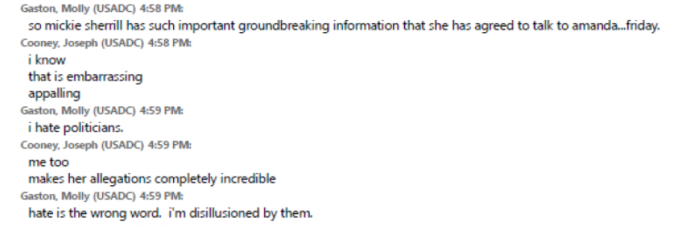
Cooney responded bluntly, calling Sherrill’s handling of the situation “embarrassing” and “appalling,” adding that it “makes her allegations completely incredible.”
“i hate politicians,” Gaston replied, before adding that “hate is the wrong word” and that she was “disillusioned” by them. Gaston eventually worked as a deputy under then-special counsel Jack Smith, who initiated two federal criminal cases against Trump.
Despite those early doubts, Cooney suggested investigators should continue examining the theory, writing that the “tour/map thing has legs” and that it “makes perfect sense,” even while acknowledging that proving a lawmaker’s intent could be difficult.
At the time, Cooney speculated that investigators might eventually uncover evidence showing that information such as a map or other details tied to the Capitol could have been passed to an extremist group and traced back to a congressional office, prompting the bureau to move forward in its inquiry.
In a Feb. 3, 2021, email exchange, Cooney reassured then-FBI agent Timothy Thibault that rules governing “sensitive investigations” during an election period did not apply, arguing that the lawmakers under investigation were not “declared candidates” at the time. Cooney also told Thibault that there was no risk that the investigation’s exposure would influence a federal election.
Additional messages included in the exhibits released on Tuesday show that Biden-era investigators scrutinized video footage and attempted to identify suspicious activity. In one Jan. 16 exchange, Cooney described a group following Boebert in the Capitol as appearing to be a family with children, noting that while the situation was “weird,” it “does not look suspicious.”
During a Judiciary Committee hearing on Tuesday, Sen. Eric Schmitt (R-MO) said the whistleblower records indicate the FBI lacked sufficient evidence to advance the case but kept it open for nearly a year, closing it in January 2022. Three months later, the FBI officially opened Arctic Frost, a sweeping investigation that targeted dozens of conservative activists and organizations based on little evidence of any coordinated wrongdoing.
The records also point to heightened oversight by Thibault, a bureau figure who Republicans have alleged played a central role in quashing an investigation into Hunter Biden. Thibault has denied those allegations in previous statements through his legal counsel.
In the exhibit, Grassley and Johnson included a May 2021 document edited by Thibault, which further revealed the lack of evidence to support the Rampart Twelve investigation while it remained active.
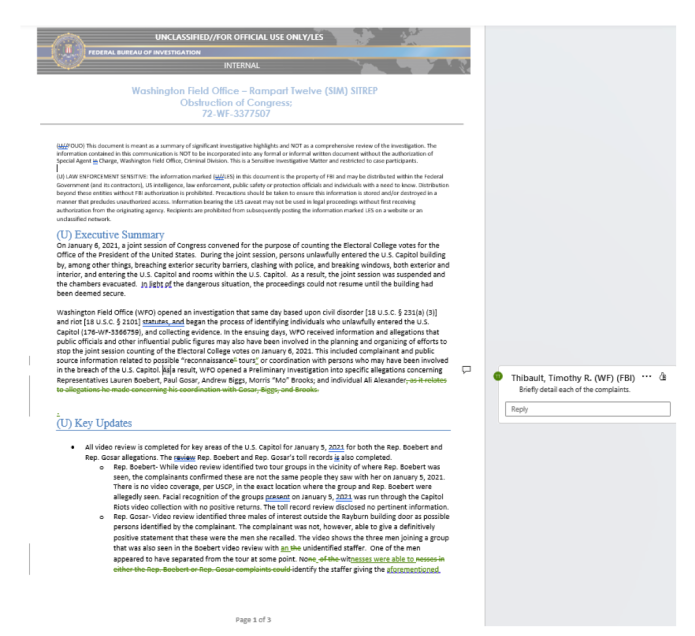
In a statement, Grassley said the documents reveal the FBI opened the case based on allegations that “didn’t exist,” while internal communications from prosecutors contradicted the decision to proceed.
The broader Arctic Frost investigation involved a massive expansion of federal oversight. Grassley revealed in October last year that investigators who worked on Arctic Frost utilized 197 subpoenas targeting approximately 430 Republican individuals and entities, including the Republican National Committee and Turning Point USA. Surveillance efforts extended to the legislative branch, with investigators obtaining the cell phone toll records of at least 13 members of Congress, including eight U.S. senators and five representatives.
HOUSE TUCKS REPEAL OF $500,000 SENATE ‘ARCTIC FROST’ BENEFIT IN GOVERNMENT FUNDING BILL
“This committee’s investigative work is necessary because during the entire Biden administration, my Democrat colleagues didn’t lift a finger to investigate this political rot,” Grassley said Tuesday in a prepared statement. He did not attend a committee hearing on Arctic Frost due to a medical procedure.
The release of the exhibits was accompanied by a separate trove of documents highlighting previously unseen correspondence between the office of Fulton County District Attorney Fani Willis and members of the Executive Office of the President under Biden just one month after the FBI began its Arctic Frost investigation, which further revealed the scale of the coordinated effort to prosecute Trump long before any charges were filed against him.