
EXCLUSIVE — The Ukrainian government breathed a sigh of relief this week when Hungarian Prime Minister Viktor Orban, Russia’s greatest supporter in the European Union, lost his reelection bid.
But Kyiv remains clear-eyed that the Hungarian leader has not been replaced by a rabidly pro-Ukraine alternative. Incoming Prime Minister Peter Magyar has signaled points of skepticism toward Europe’s all-encompassing crusade in defense of the war-torn nation.
If they want Hungary’s new government to help them, they cannot simply rely on the goodness of their neighbors’ hearts. They will need to demonstrate value.
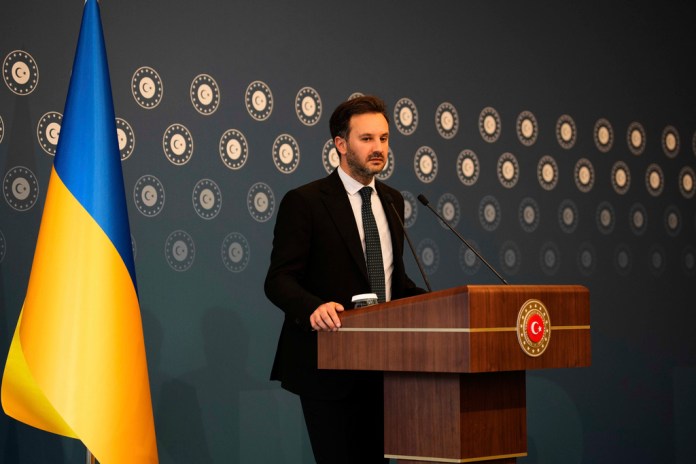
Heorhii Tykhyi, spokesman for the Ukrainian Ministry of Foreign Affairs, told the Washington Examiner in an exclusive interview that officials in Kyiv “do not have any unrealistic expectations or wishful thinking about [Magyar’s] actions in his post as prime minister of Hungary.”
“We really want to normalize our bilateral relations that have been, unfortunately, very deeply harmed by Prime Minister Orban and his anti-Ukrainian propaganda,” Tykhyi said. “We want to cure those relations, and we are confident that we can actually be very mutually beneficial for each other.”
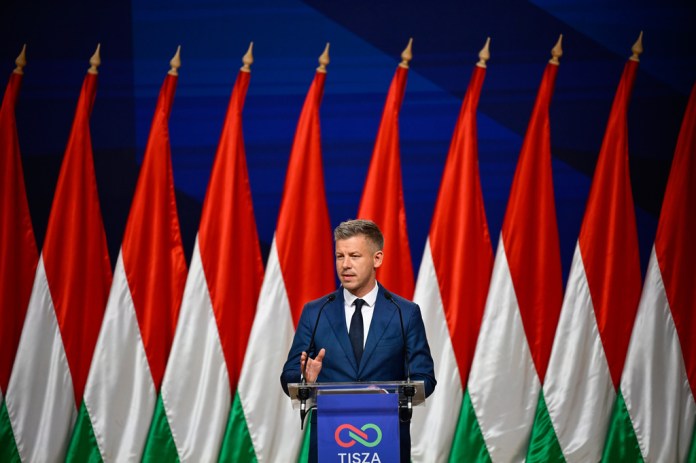
Magyar, a member of the European Parliament, secured victory on Sunday with a campaign primarily focused on championing European cooperation over Orban’s euroskeptic nationalism. He portrayed himself as a pragmatic and amicable technocrat capable of making Brussels work for Hungarian interests.
He also presented himself as a defender against encroaching Russian influence in Hungarian politics. Leaked recordings planted in the Hungarian press leading up to the election documented Orban and his allies’ conversations with Russian President Vladimir Putin and Foreign Minister Sergey Lavrov, showing that the Orban government routinely offered to fight for the Kremlin’s interests in the EU and elsewhere.
“Hungary made its choice,” Kremlin spokesman Dmitry Peskov said on Monday during press comments in which he distanced Russia from Orban following his defeat. “We respect that choice.”
But opposing Russian influence in domestic politics does not inherently mean blindly supporting Ukrainian interests. Magyar said on Monday that he would not support Ukraine being fast-tracked into the European Union.
“For one thing, we are talking about a country at war,” he explained. “It is completely out of the question for the European Union to admit a country at war.” Magyar also said Hungary would not contribute to a $100 billion support package for the war-torn nation.
Kyiv understands the new prime minister “will be pursuing Hungarian interests,” and is prepared to sit down at the table to figure out where there is room for mutual benefit.
“We are working to translate the effects of this election into some tangible action on the EU level, including unblocking some of the EU decisions that have been blocked for a long time,” Tykhyi told the Washington Examiner.
First on the agenda is the support package that Magyar says Hungary will not help fund. The new prime minister doesn’t need to contribute to the fund to lift Orban’s veto and allow the already-approved package to go through.
European Commission President Ursula von der Leyen and other officials have indicated that a reserve of borrowed funds is already prepared for disbursement upon the lifting of the Hungarian veto.
“Once we have all the relevant elements in place, we can draw on the funds that we have in our liquidity pool and make the first disbursement,” a European Commission spokesperson explained earlier this month.
The next priority would be the alliance’s 20th package of sanctions against Moscow, which imposes sweeping restrictions on Russian trade — including maritime oil transport, banking systems, and more tangible exports such as rubber and machinery.
This will be a trickier sell, as the incoming prime minister has compared energy sanctions on Russia to “shooting ourselves in the leg.”
Magyar has instead voiced a desire for the Russians to cease their invasion, advocating an immediate suspension of sanctions if the Kremlin were to do so. But he has downplayed his own ability to talk Putin down from the war.
“If Vladimir Putin calls, I’ll pick up the phone,” he said on Sunday. “I don’t think it’ll happen … but if we did talk, I’d tell him to please, after four years, put an end to the killing and end this war.”
Finally, on Ukraine’s entry into the EU, Kyiv has heard Magyar’s comments loud and clear — no one is expecting him to sign off on a rapid ascension into the alliance. But making good on resolutions already passed would be a welcome start.
The EU voted in 2023 to open negotiations on the accession of Ukraine. That process began, but repeated vetoes from Budapest have kept conversations about Ukraine meeting EU membership standards largely informal and unofficial.
Kyiv doesn’t expect Budapest to sign off on its membership at the moment, but it wants the talks to continue unimpeded.
“We are talking about implementing the decision on practice and opening negotiation clusters, because basically the process of accession is about proceeding with negotiation clusters, one by one, negotiating Ukraine in the EU,” Tykhyi told the Washington Examiner. “And then, of course, looking for solutions, looking for compromises. But we need to open the process.”
HUNGARY’S NEW PRIME MINISTER SUSPENDS STATE MEDIA AND RECOMMITS TO EUROPE IN FIRST ADDRESS
Magyar will be walking a tightrope for his entire administration, balancing cultivating warm relations with Brussels while dodging accusations of putting the continental alliance ahead of his own countrymen.
Ukrainian President Volodymyr Zelensky has commended Magyar on his “resounding victory” and promised that Ukraine is “ready for meetings and joint constructive work for the benefit of both nations, as well as peace, security, and stability in Europe.”