
Voters in Wisconsin are heading to the polls on Tuesday to elect a new justice for the state Supreme Court, a decision that will determine whether liberals hold steady or widen their majority on the bench.
The contest stands out in Wisconsin’s spring elections, which feature a range of judicial, local, and school-related races that are typically nonpartisan and draw less attention than the high-profile battles of the fall.
Competing for the open seat this year are Appeals Court Judges Chris Taylor and Maria Lazar, who are running to succeed retiring Justice Rebecca Bradley, a member of the court’s conservative wing. Taylor, a former Democratic state lawmaker, has secured backing from all four of the court’s sitting liberal justices. Lazar previously served as an assistant attorney general under former Gov. Scott Walker (R-WI) and has been endorsed by conservative Justice Annette Ziegler, who announced earlier this year that she will not seek reelection in 2027.
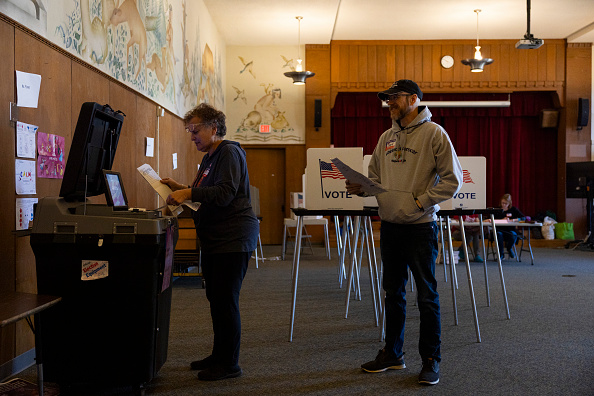
If Taylor wins, liberals will likely retain control of the court until at least 2030. A Lazar victory could give conservatives a slim opening to reclaim a majority in 2028, assuming upcoming elections tilt in their favor.
Compared to recent Wisconsin Supreme Court races, this year’s election has drawn relatively limited national focus, largely because the court’s ideological split is not expected to change.
That’s a sharp departure from last year, when billionaire Elon Musk traveled to Wisconsin, appeared at a rally in Green Bay wearing a foam cheesehead, and handed out two $1 million checks while urging the crowd to vote for the conservative judge in the race. In all, $100 million was spent on last year’s race. This year, $8.9 million has been spent, with Taylor holding a 9-1 advantage, according to a WisPolitics.com review.
Sam Mirejovsky, a partner at Sam & Ash LLP, told the Washington Examiner that pouring millions into judicial campaigns risks undermining the perception of judicial independence.
“Judges aren’t politicians,” he said. “Their job is to decide cases based on the Constitution and the law as written. They shouldn’t bring personal politics or outside agendas into the courtroom. Furthermore, elected judges face another built-in challenge. Their campaigns require large sums from donors. Many of those donors could later have cases before the court, which creates real risks of conflict of interest.”
Last year’s race carried broader national implications, with the topic of abortion rights at the center of it. This year’s contest, by contrast, has unfolded with far less visibility, lacking appearances from President Donald Trump or former President Barack Obama, and without the heavy advertising, partisan clashes, or massive spending seen in prior cycles. This year’s contest has not centered on a single defining policy issue, nor is control of the court at stake. After two consecutive losses, conservatives have also mounted a more subdued effort in support of their candidate.
Even so, the justice elected Tuesday could find themselves at the center of major legal disputes, including those tied to the 2028 presidential election or the next round of congressional redistricting in the early 2030s. Justices on Wisconsin’s high court serve 10-year terms.
Democratic strategist Jay Satterfield told the Washington Examiner that most voters are seeking a “sense of stability and pragmatism.”
“While they may not agree on everything, there’s a growing perception that Republicans have lost a degree of that steadiness in recent years,” he said. “Supreme Court races are unique, but in Wisconsin, it appears the broader political shift is continuing toward Democrats, and Taylor should win this race comfortably, potentially by 5 to 10%, which would emphasize Democratic strength in a key swing state. That outcome would mirror recent high-profile Wisconsin Supreme Court races that have gone Democratic, reinforcing a broader trend in the state’s political direction.”
Judge Chris Taylor
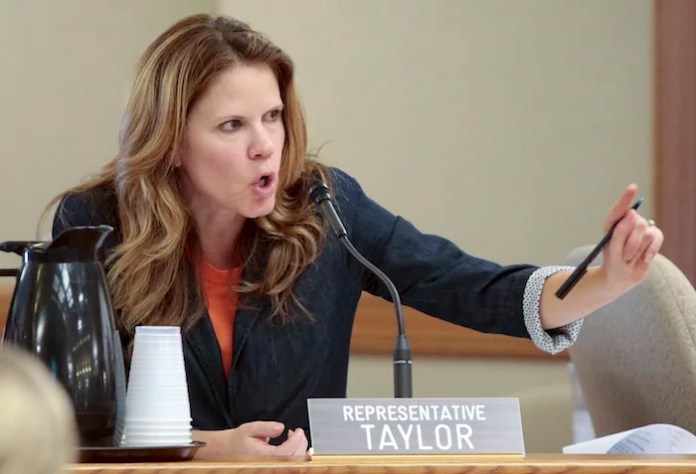
Taylor made a name for herself as an attorney and policy director for Planned Parenthood of Wisconsin. She also served nearly a decade in the Wisconsin State Assembly. She was appointed to the Dane County Circuit Court in 2020 and elected to the post the following year.
In 2023, she was elected by voters in 24 counties to the Wisconsin Court of Appeals, where she currently sits. She spent the last week of the campaign appearing with Sen. Tammy Baldwin (D-WI), former U.S. Attorney General Eric Holder, and other Democrats.
During the only debate against Lazar, Taylor praised the Wisconsin Supreme Court’s 4-3 decision last year that blocked a 19th-century law banning nearly all abortions.
She is endorsed by the Democratic Party of Wisconsin.
Judge Maria Lazar
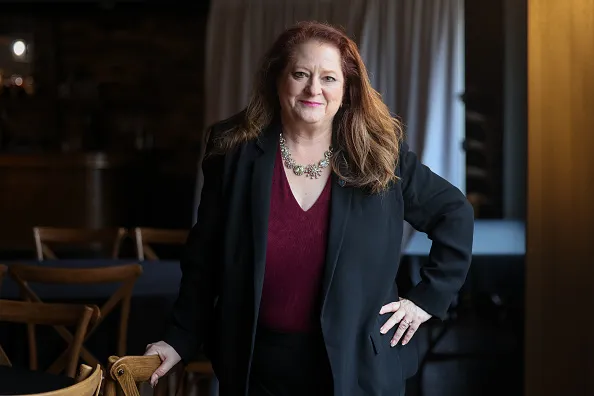
Lazar began her career in private practice before moving into state government as an assistant attorney general under Republican Attorney General JB Van Hollen. In that role, she worked on legal defenses of policies from the Walker administration, including voter ID requirements and Act 10, the collective bargaining law.
She later won election to the Waukesha County Circuit Court in 2015 and again in 2021, before capturing a seat on the Court of Appeals in 2022 by defeating a judge appointed by Gov. Tony Evers (D-WI). That contest, like others in her career, drew clear partisan backing, with Republicans lining up behind her candidacy.
Lazar is endorsed by Walker and the state’s six Republican members of Congress. Lazar closed out her campaign by visiting county GOP offices.
Democrats and ‘WOW’ county Republicans
As is often the case in Wisconsin elections, the map tells the story.
Democrats tend to pile up votes in major population hubs such as Milwaukee County and Dane County, where Madison is located, while Republicans run up the score across the state’s rural areas. The GOP also relies heavily on high turnout in the suburban “WOW” counties — Waukesha, Ozaukee, and Washington — to counterbalance Democratic strength in the cities. In the end, statewide results usually come down to how wide those margins are and how candidates perform in battleground regions.
WISCONSIN SUPREME COURT LOSES SECOND CONSECUTIVE JUSTICE WITH ANNETTE ZIEGLER RETIREMENT
The dynamic was evident in the 2024 presidential race, when then–Vice President Kamala Harris captured 68% of the vote in Milwaukee County and 75% in Dane County, yet still fell short statewide.
In contrast, liberal Supreme Court candidates Janet Protasiewicz and Susan Crawford outperformed those benchmarks in their races, driving margins even higher in Democratic strongholds and securing comfortable statewide victories.