
President Donald Trump is set to give an operational update on the conflict in Iran on Wednesday night.
The televised address — which will be broadcast on all four major U.S. stations — will be his opportunity to quell growing confusion about the state of play in Iran, the ongoing oil crisis caused by Iranian control of the Strait of Hormuz, and boiling tensions with uncooperative NATO allies.
How long will Operation Epic Fury continue?
The president is facing a running clock to settle a conflict he assured the U.S. public would take up to five weeks to complete.
Officials have asserted that the main objectives are being met, but the objectives themselves seem to vary occasionally.
At various points, the Trump administration has said its goals include a permanent end to Iranian nuclear programs, the destruction of their navy, the end of Iranian missile production, the end of Tehran’s proxy terrorism network, and more.
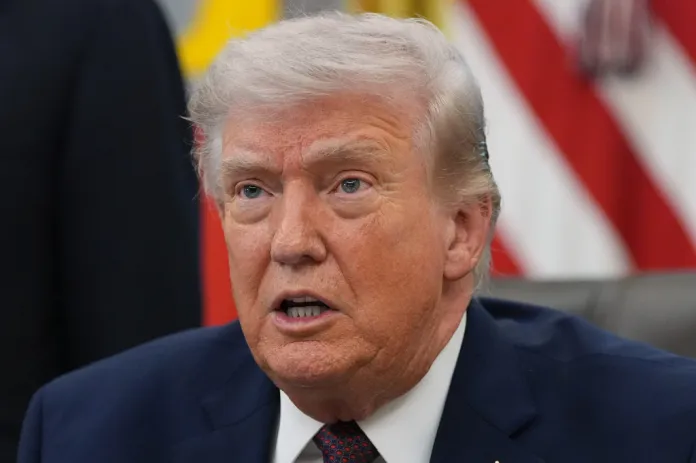
It has allowed Trump to pivot his rhetoric on the state of the conflict and the progress made by the U.S. military, but the president will eventually run out of road if he doesn’t declare victory.
“[Trump] has to go back to Congress after two months of fighting a military operation like this and get some form of approval,” Peter Doran, Adjunct Senior Fellow at the Foundation for Defense of Democracies, told the Washington Examiner.
Trump has acknowledged that he is designating Operation Epic Fury as a “military operation” and not a “war” because “as a military operation, I don’t need any approvals.”
A resolution that would have forced Trump to withdraw U.S. forces from the conflict, until congressional approval was given, failed to pass last month. It was the third failed attempt to end the operations, but Trump only has approximately four weeks to wrap up before congressional approval will be required.
What is the future of the Strait of Hormuz?
“The other clock is the oil markets and the stock market,” Doran told the Washington Examiner. “President Trump has to keep the traders calm. So far they have been calm — but if he loses control of market expectations, he imperils the political dimension of this operation.”
Trump announced Wednesday morning that Iran’s “New Regime President” has already asked him for a ceasefire, but explained that he will only consider that option when the “Hormuz Strait is open, free, and clear.”
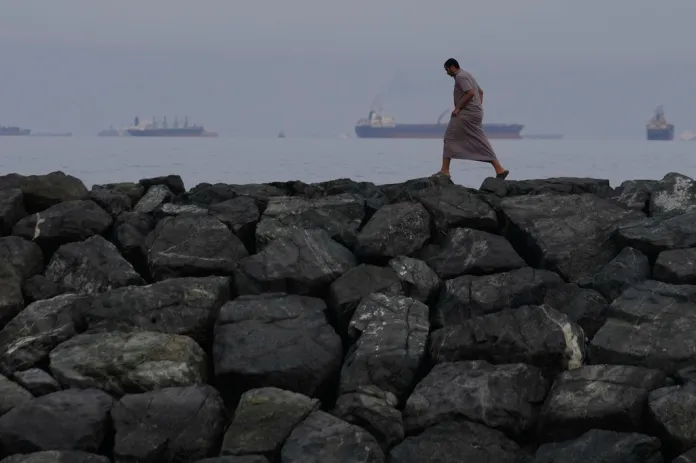
Despite collapsing military capabilities, the Islamic regime continues to exert control over the Strait of Hormuz — one of the most crucial waterways for global oil trade.
The remaining infrastructure of the Islamic Revolutionary Guard Corps does not need to physically blockade the strait to achieve this goal. By simply threatening to sink a portion of ships — each containing millions of dollars worth of oil — they can effectively hold the passage hostage.
“The Iranians are degraded, and it’s hard for them to do the mass missile attacks on, say, Israel,” Brian Carter, the Research Manager at the Critical Threats Project at the American Enterprise Institute, told the Washington Examiner. “That doesn’t mean it’s hard for them to shoot a single drone at a single ship in the Strait of Hormuz or the Persian Gulf and scare away the markets from engaging in trade in that region of the world.”
Trump characterizes reopening the strait as one of the final steps to ending the conflict, but the valuable bargaining power it provides Tehran drives them to dig in their heels.
“As Iran blocks thousands of ships from passing through the Strait and can now sell its oil around the world, the administration confronts a scenario in which (modest) oil market stabilization depends on the very actor most responsible for its disruption,” a Wednesday report from the Atlantic Council noted.
Even if the U.S. pulled itself out of Iran overnight, Iran’s newfound leverage through control of the Strait would undoubtedly become a recurring threat to global markets.
Who is the White House negotiating with?
It is not entirely clear what “New Regime President” Trump has spoken to about a hypothetical “ceasefire,” given the decapitated and disorganized state of the Iranian rump regime.
President Masoud Pezeshkian is generally considered to still be acting as the head of government in the Islamic Republic. He told the European Union on Tuesday that Iran has the “necessary will to end this conflict, provided that essential conditions are met, especially the guarantees required to prevent repetition of the aggression.”
The president’s spokesperson, Mehdi Tabatabai, announced Wednesday afternoon that a message from Pezeshkian to the American public will be released this evening. The contents of that letter are not yet known.
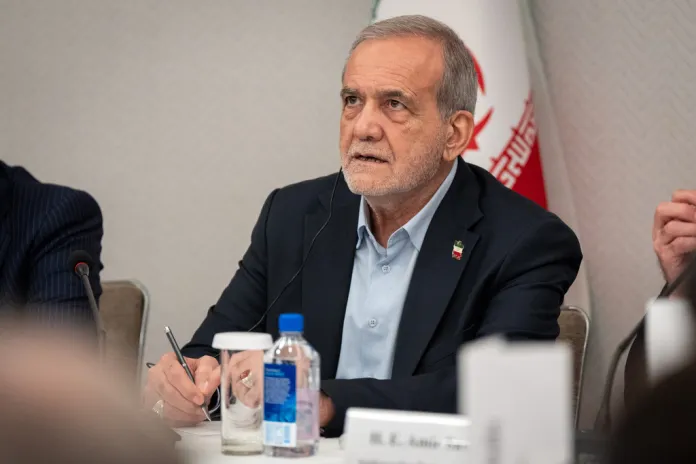
But even if Pezeshkian is the leader making positive gestures toward Washington, as Trump reports, there are indications that the shattered remnants of the Iranian government might not even be acting as a cohesive body.
“This complicates any effort by the United States to negotiate a ceasefire or a capitulation on the part of the Islamic Republic, Doran told the Washington Examiner. “It is entirely possible to see a scenario where one side accepts a ceasefire and capitulates to the United States and the other side of the regime says, ‘No, we are going to continue fighting.’”
Carter questioned if negotiating with Pezeshkian would even amount to any meaningful change, given that the Iranian president “doesn’t really have a ton of power to make his own independent decisions.”
“He’s beholden to the IRGC and, of course, the supreme leader,” Carter explained.
The supreme leader, Ayatollah Mojtaba Khamenei, has yet to even appear in public. The closest thing to a sign of life offered by the Iranian government has been a prepared address to the public, which was read on state television by a newscaster.
Trump does not seem deterred by the shaky foundations of the negotiations, stating her is prepared to simply keep blasting Iran “back to the Stone Ages” until the Strait of Hormuz is opened.
Will Trump announce a change to NATO?
Trump told the Telegraph on Wednesday that his evening address will “absolutely” touch on his increasing frustration with fellow NATO member states, which he believes have undercut U.S. operations in Iran by refusing to allow aircraft to use their military bases.
Asked if he is reconsidering U.S. membership in NATO, the president said he is “beyond reconsideration,” calling the alliance a “paper tiger.”
The president does not have the legal authority to unilaterally withdraw the United States from NATO, which requires congressional assent.
Sen. Mitch McConnell (R-KY) and Sen. Chris Coons (D-CT) released a joint statement on Wednesday rejecting the idea that the Senate would vote to end the most “successful military alliance in history.”
“Alliance disputes are as old as the alliance itself. Americans are safer when NATO is strong and united,” the lawmakers wrote. “It is in our interest for all allies to tend this unity with care.”
TRUMP PRESSURED NATO ALLIES WITH UKRAINE SUPPLIES OVER IRAN WAR: REPORT
But the increasing frustration percolating across the Atlantic could drive the White House to ignore or otherwise write off commitments to the alliance, with Secretary of State Marco Rubio telling Fox News on Wednesday that the U.S. government is being forced to “reexamine the value of NATO.”
“If NATO is just about us defending Europe if they’re attacked, but them denying us basing rights when we need them, that’s not a very good arrangement. That’s a hard one to stay engaged in,” Rubio said.
Reports emerged Wednesday claiming Trump has previously threatened to stop furnishing the Ukrainian war effort with U.S. weapons if European allies do not contribute to reopening the Strait of Hormuz.