
The Justice Department’s widening South Florida-based investigation into an alleged high-level conspiracy to target President Donald Trump is putting renewed pressure on a pair of Trump’s adversaries, with classified transcripts of a congressional interview of former CIA Director John Brennan headed to prosecutors and former FBI Director James Comey under subpoena.
The developments come as federal prosecutors pursue a theory that, starting during the Obama administration, top officials coordinated actions against Trump and his allies, stretching from the 2016 Russia investigation through criminal cases brought during the Biden administration. The investigation, centered in a Fort Pierce grand jury, is emerging as the administration’s clearest path to test that grand conspiracy case in court.
The latest steps follow last year’s declassification of a 2020 House Intelligence Committee report by Director of National Intelligence Tulsi Gabbard. The report, originally produced under then-Chairman Devin Nunes, examined the intelligence community’s handling of Russian collusion claims. It found that the intelligence community did not have reliable evidence that Russian President Vladimir Putin sought to help Trump win in 2016, but that top officials, including Brennan, pushed analysts to reach that conclusion anyway.
The declassified material has become a key reference point for lawmakers and investigators scrutinizing how the January 2017 intelligence community assessment was produced and whether its conclusions reflected the reality of underlying intelligence.
Despite there being no clear signal as to whether the Justice Department will ultimately pursue charges, Trump allies are already framing the effort in sweeping terms.
“This is a conspiracy that’s gone on for a decade,” Nunes said Sunday on Fox News’s Sunday Morning Futures. “The victim in this is President Trump, his family, his associates, campaign members.” Nunes also described the alleged conduct as “ongoing,” arguing the actions tied to the 2016 election, the intelligence assessment that followed, and subsequent investigations years later form a continuous chain, rather than isolated events.
That part of the legal theory is crucial to any potential prosecution, as the statute of limitations has long expired for any criminal wrongdoing that may have taken place around the 2016 election. But tying alleged crimes from 2016 to events that happened much more recently could allow prosecutors to build a case that includes evidence of a targeted effort to manufacture a criminal investigation into Trump based on fabricated Russian collusion allegations.
Nunes added that the scope of the alleged conspiracy runs from the Hillary Clinton email controversy, also from 2016, to former special counsel Robert Mueller’s Russia investigation, to Trump’s 2019 and 2021 impeachments, and to the FBI’s 2022 search of Mar-a-Lago — the last of which he said makes Florida “the right home for this.” Nunes further pointed to the post-2016 election intelligence community assessment as a central turning point in the alleged conspiracy.
Peter Schweizer, who appeared on Sunday Morning Futures alongside Nunes, pointed to what he described as evidence of intent by senior officials.
“You have intentionality,” Schweizer said. “And the question is, what was the goal here? … The intentionality was to disrupt and undermine the normal functioning of the American government.”
Grand jury has convened since January
The investigation, overseen by U.S. Attorney Jason Reding Quinones, has been building for months and now involves a large volume of compulsory process. More than 130 subpoenas have been issued as part of the inquiry, according to an NBC News tally, targeting a range of former intelligence and law enforcement officials tied to the Trump-Russia investigation.
As early as November, Brennan, along with former FBI officials Peter Strzok and Lisa Page, had been subpoenaed before a federal grand jury examining the origins of the Russia investigation, according to Fox News. As of January, a grand jury has been seated in Fort Pierce, Florida, to be presented with evidence.
More recently, House Republicans voted last week to send classified interview transcripts tied to Brennan to the DOJ at the department’s request. The transfer included multiple interviews related to Brennan and one interview with Brennan himself, signaling heightened interest in the origins of the January 2017 intelligence community assessment on Russian election interference.
That move followed the March 19 subpoena of Comey, which centers on his role in drafting that same assessment. Both Comey and Brennan held senior roles during the Obama administration when the initial Russia investigation and intelligence assessments were developed. Trump allies have long argued the document was shaped by flawed or politically motivated intelligence, particularly surrounding the inclusion of material tied to the Steele dossier. CIA Director John Ratcliffe and Gabbard have both declassified evidence over the past year that supports those arguments.
The declassified materials have sharpened scrutiny of how the 2017 intelligence assessment document was produced in the final weeks of the Obama administration, when senior intelligence officials were shaping conclusions about Russian election interference. A September 2016 draft circulated among intelligence agencies did not conclude that Putin sought to help Trump win, instead stating Moscow’s actions were aimed at disrupting the election.
By Dec. 19, 2016, intelligence officials from multiple agencies expressed “discomfort” with adding language that said Putin favored Trump, citing a lack of supporting evidence. Despite those concerns, a revised assessment ordered Dec. 6, 2016, and finalized Jan. 6, 2017, included that conclusion.
Separate findings from former special counsel John Durham in 2023 also documented that the FBI incorporated unverified reporting from the Steele dossier into surveillance applications submitted in October 2016, while continuing to pursue the investigation after collecting credible information that undercut core allegations tied to Trump campaign associates.
At the same time, the CIA under Brennan sat on evidence that the Clinton campaign developed a plan in the summer of 2016 to create a controversy tying Trump to Russia for Clinton’s political advantage.
Links between Obama-era conspiracy to Biden-era prosecution of Trump
Trump allies have also pointed to later investigations opened under the Biden administration as part of the same broader pattern of weaponizing law enforcement to target Trump. Last October, Senate Judiciary Committee Chairman Chuck Grassley (R-IA) released a declassified FBI memo dated April 4, 2022, which first revealed then-FBI Director Chris Wray sought Attorney General Merrick Garland’s approval to open the “Arctic Frost” investigation into Trump’s efforts to challenge the 2020 election.
Garland approved the request on April 5, 2022, with then-Deputy Attorney General Lisa Monaco recommending approval.
According to the four-page memo, the investigation was largely predicated on open-source reporting, such as public statements, rather than on clear evidence of suspected crimes. Arctic Frost later served as a foundation for special counsel Jack Smith’s election interference case against Trump, including subpoenas issued in 2023 for phone records tied to Republican lawmakers and Trump associates.
Allies of Trump who support the grand jury proceedings in Florida may argue those connections show continuity between earlier intelligence decisions and later prosecutorial actions. But experts in criminal law say turning that timeline into a criminal conspiracy case presents steep challenges.
“It doesn’t really look like there is underlying evidence that is generating the investigation, as opposed to a conclusion that is looking for evidence,” said Mike Benza, a criminal law professor at Case Western Reserve University.
Benza told the Washington Examiner the scope of the alleged conduct — it spans multiple administrations, agencies, and years — would typically require a far more extensive evidentiary build.
“If you’re looking at something like that, you’re generally not just looking at the top of the organization,” he said. “You would be talking about years to put that investigation together.”
Benza added that conspiracy cases hinge on proving coordination, not parallel conduct.
“It’s not enough to say this guy did a bad act and this other guy did a bad act,” he said. “You’ve got a whole bunch of connections that you have to draw between those guys … to make it a conspiracy.”
Timing of case crucial to success or failure
Even if prosecutors are able to secure indictments, Benza said the timeline could stretch well beyond the current presidential term. “You’re looking at years before you would get to trial,” he said, pointing to extensive pretrial litigation and the likelihood that defense attorneys would attempt to delay proceedings.
A case that extends into or beyond the next presidential administration could also face shifting enforcement priorities at the DOJ, raising the possibility it is narrowed or abandoned by Trump’s successor before reaching a jury. For example, the issue of timing played a crucial role in the collapse of Trump’s two federal criminal cases brought by Smith; neither reached a jury prior to the 2024 election.
Separately, New York Attorney General Letitia James (D) is facing renewed scrutiny through two criminal referrals issued last week by Federal Housing Finance Agency Director Bill Pulte, who asked prosecutors in Florida and Illinois to examine allegations tied to insurance filings on properties in both states.
Those referrals are not tied to the South Florida conspiracy investigation but underscore that multiple legal disputes involving Trump’s political adversaries are unfolding at the same time.
A DOJ spokesperson confirmed the referrals from Pulte were received. The allegations follow the November dismissal of a prior mortgage fraud case against James involving her home in Virginia, which was thrown out over procedural issues tied to the prosecutor’s appointment, not the underlying claims. Two grand juries later declined to indict.
A separate case accusing Comey of making false statements to Congress, brought by the same prosecutor, former Acting U.S. Attorney Lindsey Halligan, was also dismissed after a judge found Halligan was unlawfully serving in her role. That ruling is now on appeal before the 4th Circuit.
DOJ INQUIRY INTO JOHN BRENNAN INTENSIFIES AFTER HOUSE SENDS CLASSIFIED TRANSCRIPTS
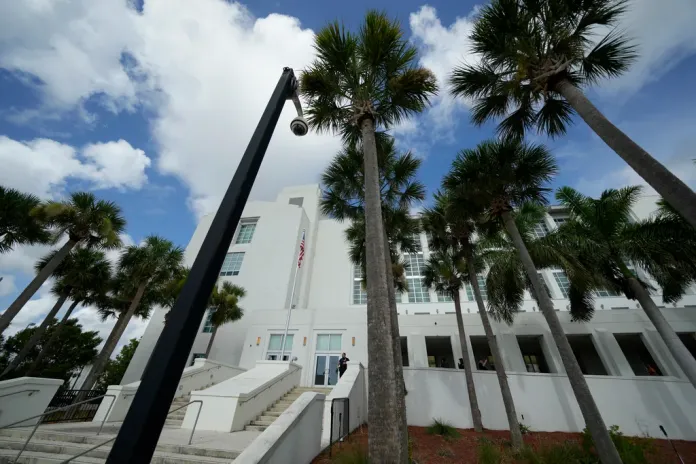
The issue of courtroom venues remains a central point of contention in the Florida case. Much of the underlying conduct occurred in Washington, but the grand jury sits in Fort Pierce, where U.S. District Judge Aileen Cannon, an appointee of Trump, had previously presided and later dismissed the classified documents case against Trump brought by Smith. Attorneys for Brennan have raised concerns that prosecutors are steering the case toward a favorable forum, according to a New York Times report last December.
Whether prosecutors can connect decisions made in 2016 and 2017 to investigative steps taken in 2022 and beyond into a single criminal agreement, and do so fast enough to survive years of expected legal challenges, remains to be seen.