
President Donald Trump’s military operations around the globe are a geopolitical gamble, watched intently by Beijing, which hopes the United States has gotten in over its head.
The Chinese Communist Party has been left on the sidelines while the White House abducted Venezuelan President Nicolas Maduro, decapitated Iran, and now saber-rattles against Cuba. China has no desire to stick its neck out to aid these minor allies, but it hopes that, when the dust settles, the U.S. will find it has lost more than it has gained.
“The assessment by China of the Trump administration, even prior to the Iran invasion, is that Trump was accelerating the decline of the United States — and so they’re happy to sit back and watch Trump doing this,” Ely Ratner, a principal at The Marathon Initiative and former assistant secretary of defense for Indo-Pacific Security Affairs, told the Washington Examiner.
Ratner continued: “Events in Venezuela and Iran obviously affect them in terms of their diplomatic relationships, their energy supplies — but net-net, they likely view these as positive for them in terms of competition with the United States.”
China is a preeminent ally of the Iranian regime and one of the biggest oil importers for the Islamic Republic. Beijing was among the first world powers to voice outrage when several of Iran’s highest-ranking officials were assassinated in the first strikes of Operation Epic Fury, but the situation grew more complicated when Tehran retaliated with scattershot attacks on neighboring countries and closed the Strait of Hormuz.
“The Strait of Hormuz’s closure has wide-reaching consequences for energy markets and for states reliant on exports from the region, but one customer of particular interest is China, which imports as much as 40 percent of its oil and 30 percent of its liquid natural gas through the strait,” according to the Center for Strategic and International Studies.
China’s rhetoric on the conflict is identical to its messaging on all geopolitical developments that put it at odds with the West: condemning actions deemed outside the international norms, advocating an immediate end to hostilities, and demanding diplomatic rapprochement with respect for sovereignty on all sides.
Foreign Ministry spokesman Lin Jian announced on Tuesday that Beijing will deploy humanitarian aid to Iran, Jordan, Lebanon, and Iraq, hoping it will “help ease the difficult humanitarian situation facing the people there.”
The Chinese Communist Party is hoping the U.S. won’t be able to stick the landing on Operation Epic Fury, that it will fail to shift the Iranian government toward a more pro-Western position. This could allow China to further entrench itself in the region as an alternative to U.S. influence.
“China will play a significant role after the war, with or without U.S. consent,” the Washington Institute for Near East Policy speculated in a report on Tuesday. “After the devastation inflicted by the allies on Iran’s military industry, Iran will very likely seek to rebuild with the help of its partner China, and perhaps also North Korea, in return for oil.”
But with the U.S. campaign scoring two more scalps this week from among the Iranian regime’s highest ranks, National Security Council Secretary Ali Larijani and Islamic Revolutionary Guard Corps Basij commander Gholamreza Soleimani, and with Ayatollah Mojtaba Khamenei still missing in action, the U.S. goal of installing a friendlier government in Tehran does not seem totally far-fetched.
“I think there is an outcome here in which, at a geopolitical level, this is a net loss for China. Particularly given their energy insecurity, their lack of strong diplomatic partners around the world,” Ratner said. “If a more pro-Western leadership were to come into place in Iran, and if Iran was less of a secure energy supplier to China, then that would certainly be a worrisome outcome for them.”
Trump is already calling his next shot, saying, “I can do anything I want” with Cuba, an important, symbolic ally of China.
“Taking Cuba. I mean, whether I free it, take it,” he said, “they’re a very weakened nation right now.”
China is pouring solar energy resources into its communist ally, hoping to offset the widespread energy crisis caused by the latest U.S. sanctions and embargoes.
The Cuban regime, initially defiant in the face of Trump’s bellicose rhetoric, has begun to indicate it’s willing to negotiate amid reports that even basic civic services, such as garbage collection, are failing on the island. Such a scenario, compounded with the fall of Maduro and decapitation of Iran, would be another blow to Chinese credibility on the world stage.
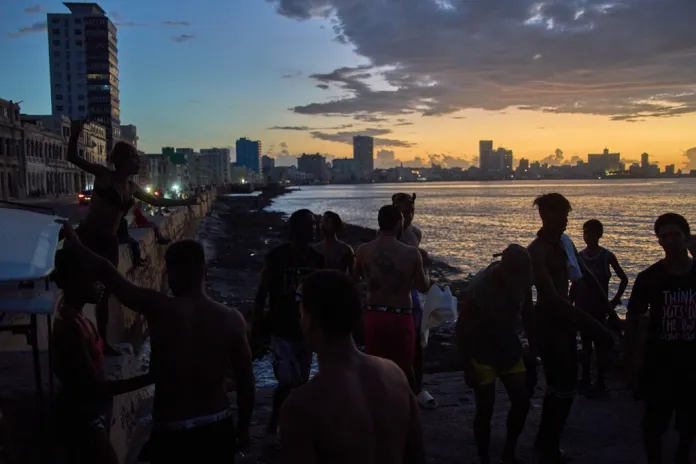
“It’s a long-standing relationship between China and Cuba. Obviously, they hold on to their communist roots,” Ratner said. “From a practical perspective, China is not politically or economically or militarily reliant on Cuba for anything, but it would have significant symbolic value.”
President Miguel Diaz-Canel said this week that Cuban officials “have recently held conversations with representatives of the United States government” and are seeking to find “solutions through dialogue to the bilateral differences we have between the two nations.”
IRAN’S LEADERS DON’T NEED TO HIDE, ENVOY INSISTS, DESPITE MIA KHAMENEI AND DEAD OFFICIALS
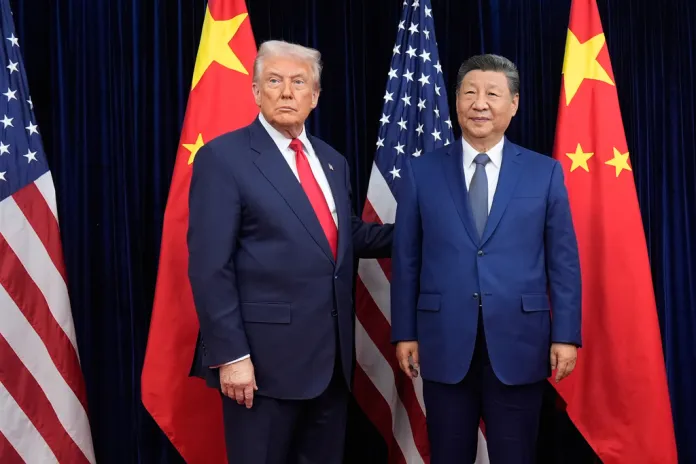
Trump has announced that his planned April summit with Chinese President Xi Jinping will be postponed, suggesting he is displeased with Beijing’s unwillingness to help force open the Strait of Hormuz.
Treasury Secretary Scott Bessent later clarified that postponing the meeting is not related to China’s role in Iran and that “if the meeting for some reason is rescheduled, it would be because the president wants to remain in [Washington] D.C. to coordinate the war effort.”
China, which typically withholds formal announcements of state visits until much closer to the date, has affirmed only that it remains “in communication” with the White House regarding the visit.