
Beginning on the evening of March 2, Jewish communities around the world observed the holiday of Purim. The occasion marks the demise of the wicked Persian vizier Haman, who sought, some 2,500 years ago, to exterminate Jews throughout the vast Persian Empire. Only the impassioned importuning of the Jewish Queen Esther persuaded her husband, the hapless King Ahaseurus, to thwart Haman’s plans and eliminate the threat to the Jewish people.
In parallel, the Israel Defense Forces, in partnership with the United States Air Force and Navy, set out to degrade and hopefully destroy the evil regime of the modern-day Persian tyrants, which for five decades threatened to liquidate the Jewish state and posed an increasingly dangerous threat to the U.S. and other Western countries.
In a bold move undertaken in broad daylight on Feb. 28, Israeli fighter jets dropped thousands of pounds of explosives on a compound in Tehran where Iranian supreme leader Ali Khamenei was meeting with numerous key political and military officials. This decapitation blow was soon accompanied by a concerted bombing campaign joined by the USAF — Israelis call it Operation Roaring Lion; the U.S. labels it Epic Fury — that targeted critical regime infrastructure and triggered an immediate launch of hundreds of ballistic missiles at the Jewish state.

So how are Israelis handling the Iranian onslaught, which erupted a short eight months after the previous round of hostilities concluded? How is the IDF’s partnership with the U.S. military proceeding? And what is the long-term outlook for the Jewish state and the region as a whole?
Israeli resilience
Since its founding nearly 80 years ago, Israel has faced no shortage of aggression from its neighbors, and its citizens have weathered numerous bouts of punishing aerial assaults with a stubborn — if exhausting — equanimity.
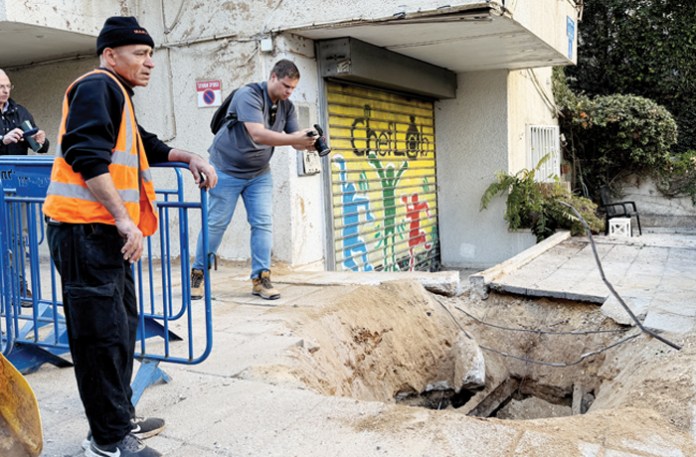
And since Oct. 7, 2023, those attacks have been a near constant, with missiles from Hamas in Gaza, Hezbollah in Lebanon, the Houthis in Yemen. Iran itself is destroying homes and schools, killing and wounding dozens, and disrupting daily life, sometimes beyond recognition.
While Israelis enjoyed a brief respite late last year following the Gaza ceasefire, the air-raid sirens have come roaring back.
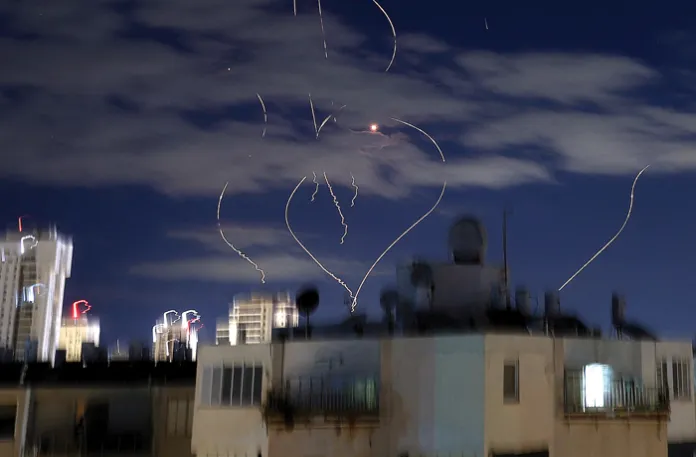
Within the first two weeks of the latest outbreak, Iran’s mullahs have fired more than 300 ballistic missiles and hundreds of drones at the Jewish state. Lately, the Islamic Republic has taken to launching cluster munitions, single missiles that separate into multiple projectiles designed to kill and maim as many civilians as possible, and a dozen Israelis have died so far, including numerous children in an apartment block in the city of Bet Shemesh.”.
But Israelis have managed to endure even the latest unpleasantness with characteristic resilience. Life goes on as much as possible, given the circumstances. Running routes get truncated, as those exercising must run laps within a radius of an accessible bomb shelter. Grocery store errands become more efficient, and visits to coffee shops, restaurants, and bars require ascertaining where the nearest bomb shelter lies. My mid-war return to Israel included a warm greeting from the mullahs: an air-raid siren that consigned me and hundreds of others to Ben Gurion Airport’s cavernous shelter within minutes of our arrival in the country.
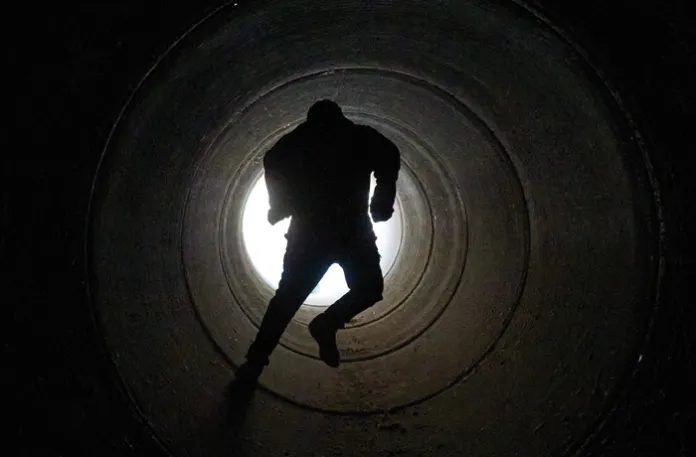
Celebrations have continued but transformed into missile-friendly formats. Our friends converted their 400-person reception hall wedding into a spirited dance party at their home, with small groups of well-wishers, each small enough to fit into their bomb shelter, taking turns reveling. Another couple moved their entire wedding into a massive underground garage, where hundreds of celebrants could party worry-free.
As is their wont, Israelis have made bomb shelter lemonade out of lemons in other ways. Scenes of subterranean raves have permeated social media and arrived in the pages of Rolling Stone, where one partygoer wrote, “Normally, this is a sensory warning: ‘Prepare to die.’ Then someone, a stranger in a dusty hoodie and worn sneakers, hits play on a JBL boom box.’” One ever-hustling entrepreneur even developed an iPhone dating app that matches singles in public bomb shelters.
The broader picture augurs well for the Israeli home front. According to CENTCOM Commander Adm. Brad Cooper, ballistic missile fire is down 90% from the beginning of the war. In contrast to the June 2025 Twelve Day War’s simultaneous launches of dozens of missiles, which claimed the lives of 30 Israelis, the latest phase of the current conflict has seen desultory firings of single missiles every few hours — a far less dangerous specter, albeit a comparably disruptive one. Israeli schoolchildren have attended classes on the dreaded Zoom for the past two weeks, though the Ministry of Education plans to restart in-person learning early next week.
Israel’s allies have also faced the wrath of an Iranian regime lashing out at nearly every country in the region. Abraham Accords brethren like the United Arab Emirates and Bahrain have absorbed more than 250 ballistic missiles and some 1,500 drone attacks from Tehran. Even Azerbaijan, a Muslim country neighboring Iran that has forged close ties with Israel, has come under assault. Azerbaijan’s president called the drone strike on one of its airports “ugly, cowardly and disgusting.”
Saudi Arabia, which has warmed to Israel in recent years but has not yet consummated normalization, has endured unending Iranian drone and missile incursions. Qatar, which ordinarily supports the mullahs’ interests, has also been targeted. Yet these countries have also demonstrated impressive defensive prowess, shooting down the vast majority of projectiles aimed at them.
They’ve also sought to project calm and confidence on the home front. For instance, Sheikh Hamdan bin Mohammed Al Maktoum, Dubai’s president and crown prince, strolled casually through the glittering Dubai Mall shortly after hostilities began. The social media post documenting his mall walk read, “Close to the people. Steady in leadership.”
So if the home front is holding up as well as can be expected, how about the broader war effort?
The campaign: A model partnership
Roaring Lion/Epic Fury appears, per the White House, to be “far ahead of schedule.” The mullahs have “no navy, no communications, they’ve got no air force,” President Donald Trump said on Monday.
“Their missiles are down to a scatter … If you look, they have nothing left,” Trump said. “There’s nothing left in a military sense.”
The statistics appear to bear out the president’s rosy assessment. As of Monday, Israel estimated that allied forces had killed nearly 2,000 Iranian soldiers and commanders. According to the Jerusalem Post, citing CENTCOM statistics, “over 3,000 targets have been struck nationwide across 30 of Iran’s 31 provinces. The IDF has conducted 2,600 sorties in 150 strike waves, dropping roughly 6,500 munitions. More than 60% of Iran’s missile launchers have been neutralized. Forty-three Iranian naval vessels have been destroyed or damaged.”
The allies have pummeled both Iran’s Islamic Revolutionary Guard Corps, as well as the Basij and local police, the regime’s street-level thugs and enforcers who bore a significant share of responsibility for murdering tens of thousands of Iranian civilians during their popular uprising earlier this year.
Both militaries have scored striking successes. Israel notched the first-ever air-to-air kill by a F-35 fighter jet. American torpedoes sank a hostile enemy vessel for the first time since World War II. And earlier this week, the U.S. destroyed at least sixteen Iranian mine-laying ships, which threatened safe passage through the Strait of Hormuz. The diligent cultivation of intelligence by the Mossad and the CIA, and the discreet sharing of information between the two, enabled the astounding opening blow, when the allied armies tracked the Islamic Republic’s leadership to their fateful meeting place.
The seamless cooperation between the two allies has exceeded expectations. U.S. Secretary of War Pete Hegseth complimented the Israelis warmly in the early days of the campaign, praising the IDF’s “unmatched skill and iron determination,” lauding Israel as a “steadfast partner,” proclaiming that it’s a “breath of fresh air” to fight alongside the Israeli military, and stating that “we salute your courage and your contribution.”
Eliot Cohen, a decorated Johns Hopkins military historian, labeled Israel “America’s invaluable ally” and observed that “having sophisticated, creative, and bold allies, such as Israel, that can operate at scale is an extraordinary asset that the United States still retains and should prize.” Similarly, writer and historian Victor Davis Hanson asserted that “the so-called big powers of NATO themselves, with these huge populations of 80 million, 60 million, 55 million, they don’t have the air capability that tiny Israel does. And right now, they are fighting side by side with us.”
An in-flight audio exchange between an Israeli and American pilot went viral on social media: “It is a great honor for us to fight with you. You are doing a great job.” American pilot: “Thank you very much — likewise, gentlemen. Please be safe out there. Strike hard.”
But not every consequence of the campaign has been positive. Oil prices have spiked above $100 per barrel amid Iranian threats to maritime traffic in the Strait of Hormuz and declarations of force majeure by both Kuwait and Bahrain, who argue events beyond their control have impeded their ability to deliver petroleum.
In parallel, Qatar announced a pause to its production of liquefied natural gas. As one Iranian regime official cautioned, “If you can tolerate oil at more than $200 per barrel, continue this game.” Higher gas prices hurt Americans at the pump, but they also bestow a windfall on our enemies. “Don’t discount that the biggest and most surprising beneficiary may well turn out to be Russia,” argued Ellen R. Wald of the Atlantic Council, “which is using the opportunity to fill its emptying coffers with revenue from higher oil prices.”
Trump vowed to reopen the Strait of Hormuz by any means necessary.
“Effective IMMEDIATELY,” Trump declared on Truth Social last week, “I have ordered the United States Development Finance Corporation (DFC) to provide, at a very reasonable price, political risk insurance and guarantees for the Financial Security of ALL Maritime Trade, especially Energy, traveling through the [Persian] Gulf … If necessary, the United States Navy will begin escorting tankers through the Strait of Hormuz, as soon as possible.”
But whether the U.S. Navy can make good on Trump’s promise remains to be seen. The Wall Street Journal reported that American naval assets may be spread too thinly to protect oil tankers transiting the straits.
Israel and the U.S. could exact reprisals on Iranian energy interests in other ways, too. Jerusalem has already bombed oil depots near Tehran that the Guard uses to fuel its war machine, but it’s unclear whether the Pentagon supports this approach.
Meanwhile, both the American and Israeli militaries have in their sights Kharg Island, a nerve center for Iranian energy production, with Israel’s opposition leader Yair Lapid urging the IDF to “destroy all of Iran’s oil fields and energy industry on Kharg Island,” and thereby “cripple Iran’s economy and topple the regime.” Other analysts, though, are more sanguine, reckoning that the allies can instead simply seize Iranian oil tankers.
Israelis are also keenly aware that U.S. public opinion surveys about the strikes are mixed, with a narrow majority of Americans opposing the campaign. But despite the shrill-carping of execrable troublemakers like Tucker Carlson and Megyn Kelly, whom Trump expressly categorized as outside of the MAGA movement, the overwhelming 85% of Republicans support the war effort, recognizing the significance of the Iranian threat and the unique opportunity this moment affords us to diminish it dramatically.
But where are things actually headed?
The endgame and outlook
No one can predict how the fighting ends, but Israelis, Americans, and regional partners remain hopeful that a continued, determined, concerted effort to destroy the Iranian war-making machine will yield tremendous benefits. These include, at a minimum, severely degrading the mullahs’ ability to harass their neighbors, possibly by recovering the nearly 1,000-pounds of enriched uranium currently buried near one of the Islamic Republic’s ruined nuclear sites.
“Victory is a hard thing to photograph,” Israeli journalist Amit Segal recently wrote. “But Israeli prime minister Benjamin Netanyahu and Trump shaking hands in front of Iran’s enriched uranium would come pretty close.”
The endgame could also involve replacing hardliners with more pliant leaders; Mojtaba Khamenei, appointed to fill his late father’s shoes, isn’t likely to succeed. As Trump told Time, “I’m not going through this to end up with another Khamenei.”
Equally important: forging tighter bonds between Israel and the other countries Tehran has targeted. For decades, the Gulf States have lived in fear of exactly such an Iranian attack, and, now that it’s finally come, they’ve recognized exactly how pernicious their adversaries are.
But the most important and advantageous potential outcome of the conflict by far would be a decisive uprising by the Iranian people themselves. Enslaved by a tyrannical regime for nearly half a century, everyday Iranians long passionately for their freedom, as the rebellion earlier this year showed. Despite the mullahs’ slaughter of tens of thousands of everyday Iranians, these impossibly courageous souls have continued to stand up for their God-given rights. A free Iran, rid of the odious Islamic Republic, would spark tremendous economic, political, and geostrategic benefits throughout the region.
Perhaps for this reason, Trump has insisted on “unconditional surrender” by the mullahs, and both he and Netanyahu have urged the Iranian people to “throw off the yoke of tyranny” and seize liberty once the Guard has been further demolished. For their part, Israelis would love nothing more than to restore the friendly relations they had with Iranians until the 1979 revolution. It has been heartwarming to see joint rallies around the world featuring Jews holding Israeli flags and Iranian expatriates wielding the Lion and the Sun banner.
Locally, Israel has taken advantage of the strategically unforgivable decision by Hezbollah to join the fighting on behalf of its Iranian patrons. Badly weakened by the Israeli campaign that began in September 2024 with the notorious pager attacks, the Lebanese terrorist group lobbed mostly harmless rockets and drones at Israel’s north, many of which have been destroyed by Israel’s first-of-its-kind deployment of a laser-based interception system. It has since faced both a ferocious counter-offensive by the IDF and vigorous denunciation by the Lebanese government, which is sick and tired of being dragged into another country’s war by Shia Islamists. Happily, Syria’s new government has joined Lebanon’s call to expel the terror group. Definitively beating Hezbollah could pave the way to a long-desired rapprochement between the Jewish state and its northern neighbor.
Finally, the defanging of the Iranian menace would also significantly augment the collective strength and abilities of the West with respect to China, which relies heavily on Iranian oil. In addition to straining the CCP’s energy supply lines, eliminating the malign influence of the mullahs would free up the resources of the United States and its allies to confront Chinese aggression against Taiwan and its other neighbors.
Conversely, in the words of Hudson Institute China scholar Zineb Riboua, “Every carrier group stationed in the Gulf of Aden is a carrier group absent from the Western Pacific.” Similarly, the masterful display of coordinated airpower that the U.S. and Israel have presented will surely give Beijing pause about invading the powerful island democracy it claims as its own. As the Israeli analyst Haviv Rettig Gur put it, this war “is about dismantling the most significant Chinese forward base outside of East Asia …America went to war in Iran because Iran made itself a Chinese weapon.”
This year, Israelis were compelled by circumstance to celebrate Purim in or near their bomb shelters. But that imposition only made the triumph of the Jewish people over their sworn enemies that much sweeter. Here’s hoping history will repeat itself, that, thanks to a heroic alliance between Israel and the U.S., the wicked autocrats in Tehran at long last face eternal justice, and that the proud Iranian people can celebrate their liberty alongside a relieved and hopeful Israeli nation and a grateful world.
Michael M. Rosen is an attorney and writer in Israel, a nonresident senior fellow at the American Enterprise Institute, and author of Like Silicon From Clay: What Ancient Jewish Wisdom Can Teach Us About AI.