
The Islamic Republic of Iran has for years offered a simple but grave warning that any attack on its nation would result in regional chaos.
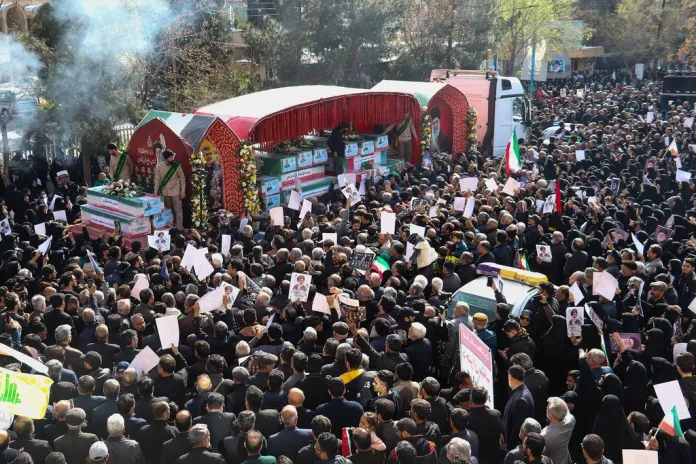
Following the assassination of more than a dozen of the regime’s top authorities — including Ayatollah Ali Khamenei — the Islamic Revolutionary Guard Corps and other military outfits within the country have done their best to make good on that threat.
Despite Operation Epic Fury’s launch originating from the United States and Israel, it has been Iran’s neighbors in the Gulf States that have suffered the most costly strikes. As strike after strike pounded on the Islamic Republic, it seemed as though Tehran was more concerned with trying to hit the United Arab Emirates than the countries that were bombing its government.
“The regime has repeatedly warned that an attack on Iran would not remain confined to its borders,” Janatan Sayeh, a research analyst in the Foundation for Defense of Democracies’ Iran Program, told the Washington Examiner. “The idea is to inflict costs on as many actors as possible and widen the battlefield.”
He added: “By escalating beyond the immediate U.S.–Israeli confrontation, Tehran hopes to generate international pressure on the joint operation and shift blame onto Washington.”
By targeting more U.S.-friendly countries — such as Kuwait, the United Arab Emirates, Saudi Arabia, Jordan, Qatar, and more — Iran is hoping to spread the conflict geographically and create pressure on these Arab powers to demand the U.S. back down.
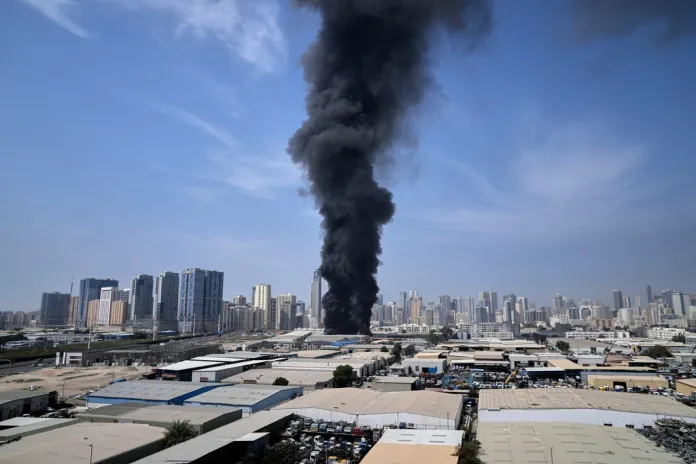
Simultaneously, these scattershot attacks serve as punishment against these Muslim countries that Iran believes have been ideologically corrupted by Western influences. Strikes in Dubai, for example, have utterly shattered the metropolis’s curated image as a bastion of safety in the Middle East.
‘Mosaic defense’
These attacks against neighboring countries are originating not from a central command, but from disparate officers empowered with autonomy by Iran’s entrenched “mosaic defense” doctrine.
Having observed how decapitation of command compromised the regimes of Iraq under Saddam Hussein and Libya under Muammar Gaddafi, Iran has designed their military structure to continue operating under regional authorities in the event top-level leaders are killed.
“After the decapitation strikes against parts of the regime’s command structure, it is unlikely that a single military figure is directing operations at the national level,” Sayeh told the Washington Examiner. “Iran’s system does not rely entirely on centralized leadership in moments like this. The strategy guiding these actions has been embedded in the regime’s doctrine for decades.”
The U.S. lost six service members earlier this week from an Iranian drone attack in Kuwait. Nine Israelis were killed by a ballistic missile on the same day, with dozens more wounded.
Destruction of Iranian infrastructure has severely compromised the regime’s ability to continue using these larger weapons, making drones the current weapon of choice.
Annika Ganzeveld, the Middle East portfolio manager for the Critical Threats Project at the American Enterprise Institute, told the Washington Examiner that Iran’s decision-making is also influenced by the inconvenient reality that striking the U.S. is impossible and Israeli targets are far more difficult for drones than other nations.
“Iran has learned from previous rounds of conflict with Israel that its drones are largely ineffective against Israeli air defenses because Iranian drones take hours to reach Israel and Israel therefore has ample time to detect and defend against them,” Ganzeveld said.
She continued: “Iranian drones are, by contrast, able to reach the Gulf States much quicker and therefore have a higher chance of bypassing air defenses and inflicting damage. Iran has launched some drones at Israel, but we have not observed any reports that these drones have caused damage or casualties.”
No Gulf States have launched military responses against Iran despite the provocations, though some have issued communiques affirming their right to conduct such a counterattack if they so choose.
THREAT FROM IRANIAN RETALIATION STRIKES SPREADS ACROSS MIDDLE EAST, TARGETING EMBASSIES AND AIRPORTS
The UAE stated that “any infringement on the sovereignty of any state constitutes a direct threat to the security and stability of the entire region.”
The boundaries of Iran’s spray-and-pray strategy continue to expand.
Azerbaijan is accusing Iran of striking one of its airports with a drone on Thursday, and NATO air defenses reportedly shot down a missile in Turkish airspace.