
I have been married for 23 years. Not bad for a man in his mid-forties. Nevertheless, CBS’s Survivor is so old that I watched its first season with a previous girlfriend. Joy, if you’re out there, I still can’t believe Rudy lost that immunity challenge.
There is more in this vein if you want it. Survivor is older than George W. Bush’s presidency, Apple’s iPod, and Vermont’s “civil unions.” When it premiered in the spring of 2000, you could buy a McDonald’s hamburger for a buck. Although other prime-time series like 60 Minutes and The Simpsons have been around longer, none offer viewers anything like Survivor’s participatory appeal. Fans who have watched for a quarter century can still dream of playing the game themselves one day, or of watching their grown children on TV. While most of the 50 million people who watched the inaugural season’s finale have moved on, Survivor remains for its core audience a ritual, a touchstone, and a steadfast friend.
Yet recent years have not always passed smoothly in Fiji, the Pacific outpost to which host and showrunner Jeff Probst moved production permanently in 2016. Like many cultural institutions, Survivor fared badly during the Biden administration, overreacting to both the George Floyd moment and the resulting “inclusivity” craze. I personally stopped watching in 2021 after the on-air retirement of Probst’s catchphrase “Come on in, guys,” a concession to wokeness that felt absurd then and seems, in retrospect, almost literally insane. Fans who persisted got more of the same and worse. As Zachary Faria recently wrote for this magazine, a show that had begun life as a fascinating social experiment turned overnight into a “university struggle-session simulator,” as players and producers began to obsess over the color of contestants’ skin.
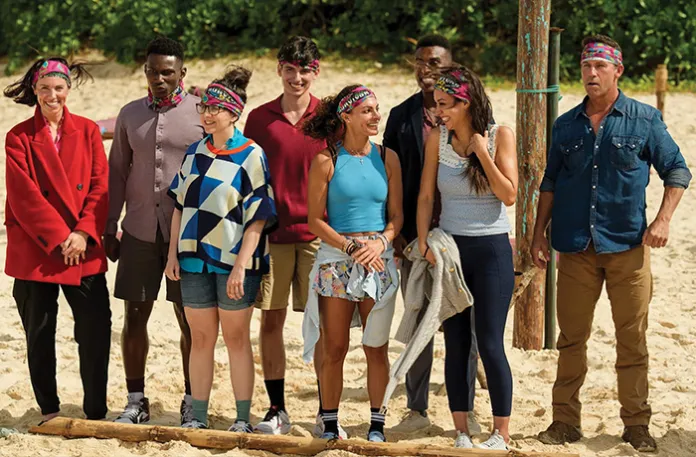
Making matters worse was the fact that Survivor had previously provided useful cultural barometry in the normal course of gameplay. A 2017 episode, for instance, featured the strategic “outing” of a transgender player by a gay one, a move that presaged broader cracks in the LGBT alliance. The series dealt with at least two sexual harassment incidents in real time, never pleasing everyone but demonstrating the shifting power dynamics and mutual incomprehensibilities that govern such affairs. If story arcs such as these were not quite what conservatives would have chosen, they were at least unostentatious. Some even approached anthropological significance. A 2011 episode in which a male player turned against a female one for the crime of being attractive neatly demonstrated the universality of the impulse behind the burqa.
If I sound like an NBA fan pining for the days of Michael Jordan, the comparison is valid. Like professional basketball, CBS’s reality flagship spent the post-COVID era making ideological gestures that alienated all but its farthest-left fans. The result was a visibly worse product that never came close to making up with “progressive” eyeballs what it lost among conservatives and the politically disengaged. In Survivor’s case, the low point was a 2022 episode in which “anti-racist” theory changed a Tribal Council vote. (“If I write Drea’s name right now, that means I’m part of a perpetuating problem.”) But other moments were almost as bad. What had once been solid middlebrow entertainment had been reborn as hectoring, victim-mongering trash.
The funny thing about wokeness, of course, is that vanishingly few people actually like it. Break its hold on the corporate imagination, and tarnished brands can polish themselves into a shine. Sitting down for the Survivor 50 premiere late last month, I experienced all the old frisson of a new season, along with something akin to hope. The NBA, after all, has dialed down most of its political foolishness in the last year or so. Mightn’t Survivor, chastened, pull off a similar trick?
It certainly helps that, like previous anniversary seasons, Survivor 50 has an all-star cast of returning players. Among this spring’s contestants are such favorites as Cirie Fields, a 55-year-old schemer and self-appointed Survivor “queen”; Ozzy Lusth, a five-season veteran and the game’s best all-around athlete; Rick Devens, a former TV news anchor with a penchant for satirical on-air commentary; Benjamin “Coach” Wade, a hugely entertaining fabulist and Japanophile; Mike White, the creator of HBO’s The White Lotus; and Colby Donaldson, the now-middle-aged heartthrob made famous by 2001’s Survivor: The Australian Outback. Because regular viewers already know most of these contestants, no early-season throat-clearing is necessary. Rather, the game starts at full speed on Day One. Alliances and rivalries are engaging, coherent, and fueled by authentic hatreds and loves.
This is not to say that the new episodes are perfect, even before we get to the matter of ideology. Although the basic vote-out-your-tribemates formula remains the same, Survivor has tinkered excessively with its rules over the past 15 seasons, adding myriad “advantages” to the individual- and tribal-immunity “idols” with which contestants secure their place on the island. The result is a system so convoluted that proper strategizing is impossible. How is anyone supposed to plan or count votes when ballots can be loaned, stolen, blocked, doubled, or “nullified” according to the producers’ whims?
One is inclined to blame Probst for most of Survivor’s ills. During the woke era, the longtime host fanned flames he might have smothered and generally proved himself feckless and weak-kneed. Back for his own 50th season, the bone-thin and pompadoured TV veteran looks for all the world like Elvis in a time of famine. Would someone please deliver this exhausted man a cheeseburger?
Nevertheless — and fans of the show should cross our fingers here — it does appear that Probst and CBS have largely righted the ship. Through the new season’s first two episodes, no one is politically oppressed or aggrieved. Race, irrelevant in a game of individuals, is simply and blessedly not a factor. I have my doubts whether the show can keep it up over the course of 13 emotionally charged episodes, but conservatives should be cheering for its success. If a ship as unwieldy as Survivor can sail back to the before times, perhaps we all can.
Graham Hillard is the TV critic for the Washington Examiner magazine and editor at the James G. Martin Center for Academic Renewal.