
If foreign policy analysts were hoping the State of the Union address would offer a glimpse into President Donald Trump’s grand plans for Iran, they were sorely disappointed.
The address was the longest in the nation’s history, but only a handful of lines touched on the ongoing negotiations to denuclearize the Islamic Republic — and none of his insights were particularly groundbreaking.
Rose Kelanic, director of the Middle East Program at the think tank Defense Priorities, told the Washington Examiner that, “Trump likes to keep everyone guessing, so the lack of information is both surprising and not.”
Kelanic said: “Trump most likely declined to offer details on Iran to avoid boxing himself in, which suggests he is undecided about a U.S. attack and keeping the options open for a diplomatic breakthrough in Geneva — a wise move given the major costs and risks of a war with Iran.”
Janatan Sayeh, a research analyst at the Foundation for Defense of Democracies, told the Washington Examiner that “there is value in keeping cards close to the chest when the stakes are this high.”
“On the domestic front, prematurely signaling anything, positive or negative, can trigger backlash and complicate decision-making,” he explained. “Ambiguity is something both sides have leveraged during talks. Small details can carry major implications, especially when negotiations stall over highly technical issues.”
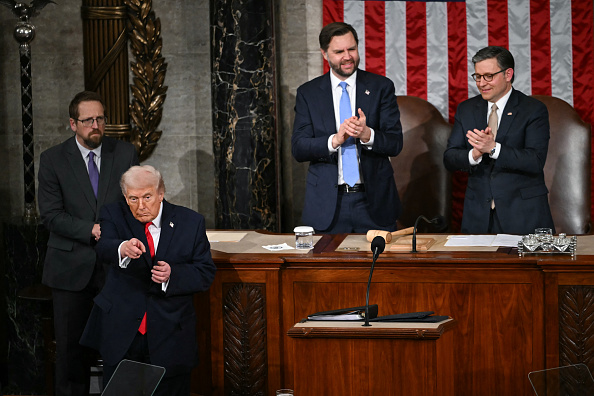
During his State of the Union address, Trump reiterated his “preference is to solve this problem through diplomacy [with Iran]” but affirmed that he will “never allow the world’s No. 1 sponsor of terror, which they are by far, to have a nuclear weapon.”
“We are in negotiations with them,” Trump said in the Tuesday address. “They want to make a deal, but we haven’t heard those secret words: ‘We will never have a nuclear weapon.’”
Kelanic told the Washington Examiner that “some of the more fatalistic analysts” were concerned heading into the State of the Union that Trump could actually use the opportunity to “announce the start of a U.S. attack on Iran.”
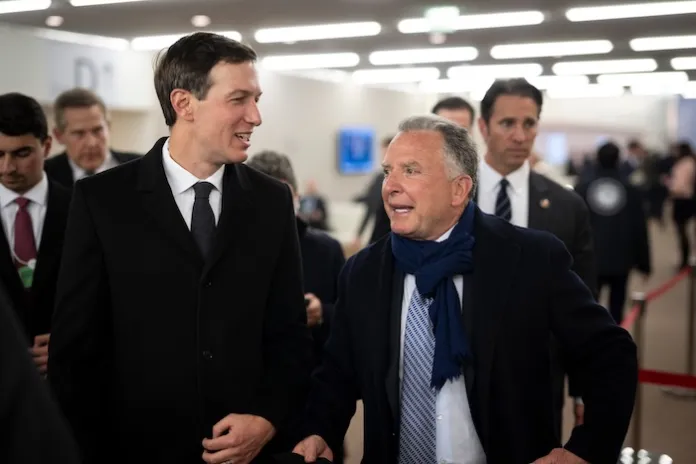
U.S. diplomats are slated to meet with their Iranian counterparts again on Thursday. The talks, held in Geneva, Switzerland, are aimed at forging an agreement that sufficiently disempowers the Islamic Republic from acquiring nuclear weapons. Special envoys for peace, Steve Witkoff and Jared Kushner, are heading the mission.
Vice President JD Vance explicitly threatened the use of military force against the regime if they fail to “take [negotiations] seriously” this week.
“I think the Supreme Leader [Ayatollah Ali Khamenei] and everybody in their system should understand that we’ve been crystal clear, and we’re hopeful that we’re able to come to a good resolution without the military, but if we have to use the military, the president, of course, has that right as well,” Vance said.
Negotiation at the barrel of a gun
Hostile nations typically resist negotiating with their enemies at the barrel of a gun, fearing they might betray their own weakened position. But with aircraft carriers and other military vessels gathering in the Strait of Hormuz, the Iranian leaders don’t have much of a choice but to sit down at the table.
“Right now, the Islamic Republic is at the literal barrel of a gun — and it’s still talking, which demonstrates the regime’s willingness to compromise to avoid war,” Kelanic told the Washington Examiner. “The problem is trusting the U.S. is hard, and Trump’s military buildup, coupled with his sometimes-talk of regime change, has so rattled the Iranians that they fear the U.S. plans to attack regardless of any concessions offered, which isn’t conducive to agreement.
She speculated that dialing down the pressure on Iran and paring back the massive buildup of troops off the coast could help convince the regime that the administration is negotiating in good faith.
Sayeh is more hawkish, telling the Washington Examiner that pressure must continue to be applied as “no Western approach has produced sustained behavioral change” from the regime.
“Sanctions, maximum pressure, the killing of Soleimani, and operations like Midnight Hammer have weakened regime capabilities but have not altered its core ambitions. Tehran has repeatedly framed compromise as weakness, particularly during moments of vulnerability,” Sayeh explained.
NARENDRA MODI LANDS IN ISRAEL DURING PEAK OF IRAN TENSIONS, SUGGESTING STRIKE DELAY
He continued: “Weakening the regime is not the same as moderating it. The opportunity now lies in converting that weakness into meaningful support for Iranians who reject Islamist rule and are receptive to closer ties with the West.”
The Department of the Treasury’s Office of Foreign Assets Control announced on Wednesday that it was rolling out a new set of sanctions targeting “over 30 individuals, entities, and vessels enabling illicit Iranian petroleum sales and Iran’s ballistic missile and advanced conventional weapons production.”
The office is specifically targeting vessels believed to be operating as part of Iran’s “shadow fleet” of transport ships that move petroleum products internationally to avoid penalties.
Networks believed to be supplying the Islamic Revolutionary Guard Corps and Ministry of Defense with materials used in the creation of ballistic weapons and aerial drones are also targeted.