
Sen. Chuck Grassley (R-IA) accused the Justice Department under former President Joe Biden of secretly subpoenaing phone records tied to sitting members of Congress during a politically sensitive Jan. 6, 2021, investigation, saying the effort bypassed constitutional safeguards and blocked lawmakers from asserting their rights.
Grassley made the remarks at a two-hour hearing on Tuesday of the Senate Judiciary Subcommittee on Privacy, Technology, and the Law, chaired by Sen. Marsha Blackburn (R-TN), during which senior legal executives from Verizon, AT&T, and T-Mobile testified about how they responded to subpoenas issued during the Biden-era Arctic Frost investigation. That inquiry served as the backbone for what ultimately became former special counsel Jack Smith‘s indictments against then-former President Donald Trump during the Biden era.
Sen. Judiciary Cmte. Chair @ChuckGrassley on the Arctic Frost probe: ” [Jack] Smith’s deceitful conduct was a substantial intrusion… If this happened to my Democratic colleagues, they’d be as rightly outraged as we Republicans are.” pic.twitter.com/Tc9whUEgE4
— CSPAN (@cspan) February 10, 2026
Arctic Frost was the internal name for the federal investigation into efforts surrounding Trump’s challenge to the 2020 election and the events of Jan. 6, 2021. The investigation began inside the FBI in April 2022, before the appointment of a special counsel, and was overseen by then-FBI Washington Field Office assistant special agent in charge Timothy Thibault, a senior counterintelligence official later removed from the bureau after internal findings of political bias.
The investigation, which gained written approval by then-Attorney General Merrick Garland and then-FBI Director Chris Wray, was later taken over by Smith, whose team ultimately brought criminal charges against Trump. As part of that inquiry, prosecutors sought phone “toll records” — metadata showing which phone numbers contacted one another and when, but not the content of the calls.
Smith’s office and the Biden DOJ used court-authorized nondisclosure orders to secretly obtain phone records associated with sitting lawmakers, preventing Congress from intervening or invoking constitutional protections.
“They intentionally hid their activity from members of Congress,” Grassley said in opening remarks. “That deceitful conduct was a substantial intrusion into the core constitutional activity of constitutional officers.”
Republicans grill phone companies over secret subpoenas
According to whistleblower disclosures collected by Grassley’s office, telecommunications carriers received at least 84 subpoenas tied to Arctic Frost or Smith’s office, including 10 subpoenas linked to the phone records of 20 current or former Republican members of Congress. Several senators said they only learned their records had been subpoenaed through Grassley’s oversight investigation, not through notice from the DOJ or the carriers.
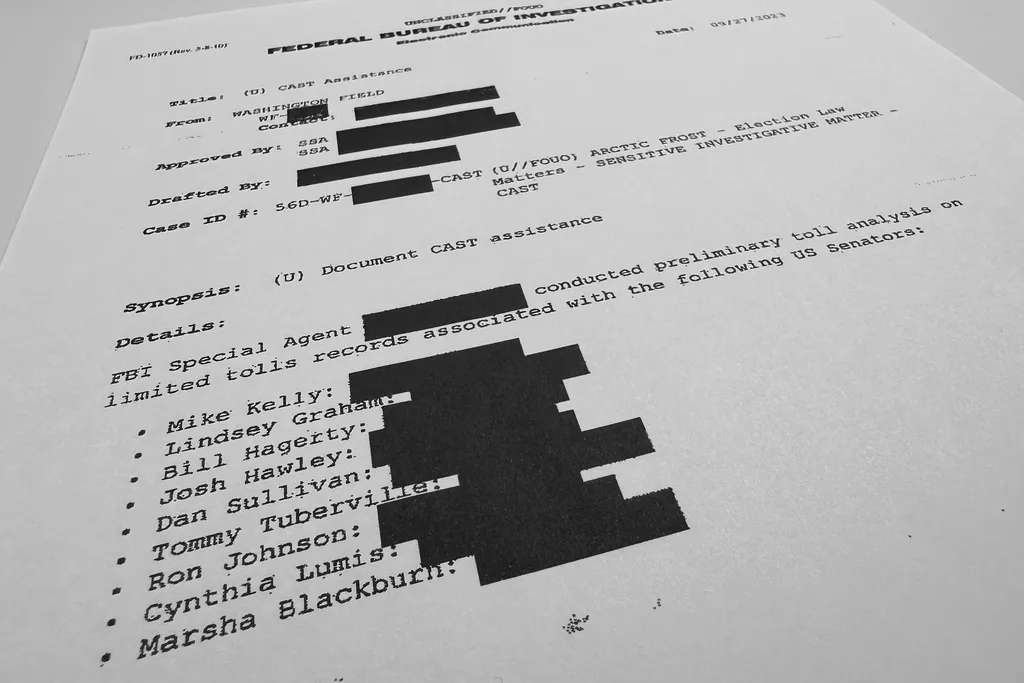
Blackburn said the use of gag orders was central to the problem.
“Members were denied the opportunity to assert speech or debate clause protections because they were never told,” she said, referring to the constitutional provision shielding legislative activity from executive interference.
AT&T, Verizon, and T-Mobile are under oath this morning to answer why they did or did not comply with Jack Smith’s secret subpoenas from Arctic Frost.
Those who enabled a weaponized DOJ’s invasion of privacy are going to answer to the American people today. pic.twitter.com/rswXkhhRT5
— Sen. Marsha Blackburn (@MarshaBlackburn) February 10, 2026
Among the lawmakers whose records were implicated were Sens. Ted Cruz (R-TX), Mike Lee (R-UT), and Lindsey Graham (R-SC), all of whom sit on the Judiciary Committee.
Grassley pointed to federal statute 2 U.S.C. § 6628, which requires companies to notify senators when their personal information is being sought, as well as a May 2022 Senate contract that required Verizon to notify the Senate sergeant-at-arms when Senate-associated lines are subpoenaed, a step he said did not occur.
“That contract created an affirmative notification requirement for Senate devices, which means, under the contract, Verizon was required to notify the Senate sergeant-at-arms when a member office was subject to a subpoena,” Grassley said, adding that “Verizon failed to perform that notification requirement.”
What the telecommunications executives said
Testifying under oath, Chris Miller, senior vice president and general counsel for Verizon, acknowledged the company complied with the subpoenas and accompanying gag orders but conceded Verizon lacked procedures in 2023 to identify whether subpoenaed numbers belonged to members of Congress before producing records.
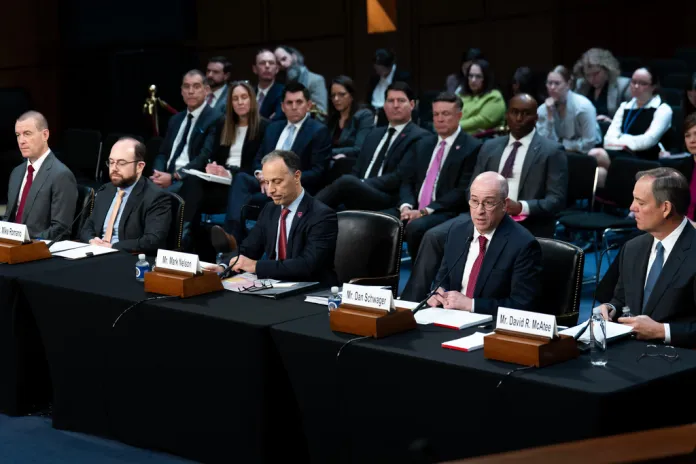
“These were unprecedented circumstances,” Miller said, adding that Verizon has since changed its policies to escalate such requests to senior leadership, verify whether numbers belong to lawmakers, and challenge nondisclosure orders when legally permissible.
David McAtee, AT&T’s senior executive vice president and general counsel, testified that his company raised constitutional concerns internally when subpoenas appeared to implicate congressional campaign accounts. McAtee said AT&T asked Smith’s office to address potential speech or debate clause issues and, in at least one instance, declined to produce records after raising those concerns.
Mark Nelson, executive vice president and general counsel for T-Mobile, said his company processes hundreds of thousands of law-enforcement requests each year and treated the Arctic Frost subpoenas as valid legal demands. Nelson said T-Mobile is now working with Senate officials to improve identification and notice procedures for congressional numbers.
All three carriers emphasized that they did not provide call content, text messages, or location data.
Ex-DOJ lawyers clash over routine practice vs. constitutional breach
Former Justice Department prosecutor Mike Romano testified that toll-record subpoenas and nondisclosure orders are routine investigative tools, particularly in conspiracy and obstruction cases, and said the Arctic Frost subpoenas were consistent with long-standing prosecutorial practice.
“There is nothing remotely scandalous about collecting toll records,” Romano said, adding that such records do not reveal the substance of communications.
Additionally, the DOJ’s former Public Integrity Section attorney Dan Schwager, now of counsel at Verdi & Ogletree, said the speech or debate clause raises serious questions but argued that reasonable disagreements between the executive and legislative branches over its scope do not necessarily amount to misconduct.
Grassley rejected that framing, noting that internal emails showed Smith’s team had been warned that subpoenaing congressional metadata could raise constitutional problems — warnings he said were ignored.
A broader fight over Biden-era weaponization
The phone records dispute is part of a broader Republican effort to scrutinize how politically sensitive investigations were handled under the Biden administration, particularly those that began inside the FBI before moving to special counsel oversight.
Grassley said the Arctic Frost timeline, starting with the FBI under Thibault in 2022 and expanding under Smith, raises questions about how aggressively federal investigators pursued Republican lawmakers and organizations while shielding the process from oversight.
Democrats on the panel, led by Sen. Dick Durbin (D-IL), argued the investigation was justified by the seriousness of Jan. 6 and said Smith has already offered to testify publicly under oath, questioning the need to bring in counsel for the telecommunications companies.
Still, Republicans cited Democrats such as Sen. Ron Wyden (D-OR), who, in the past, has agreed with Republicans that phone carriers are required under contractual obligations to notify lawmakers about the surveillance of government-issued devices.
The hearing comes one day after Sen. Bill Hagerty (R-TN) said he filed a Federal Communications Commission complaint against Verizon, saying the telecommunications giant should publicly admit wrongdoing and discipline any employees who were involved in complying with the subpoena.
GRAHAM SAYS MIKE JOHNSON OPEN TO ‘ARCTIC FROST’ PAYOUT DEAL
“Such discipline by the FCC would send a clear message that companies cannot collude with politically motivated prosecutors to violate customers’ rights,” Hagerty’s legal counsel wrote. “Verizon is not above the law.”
The subcommittee left the record open for written questions, and Blackburn said additional hearings are likely as the Judiciary Committee continues examining how the Biden DOJ handled sensitive data involving members of Congress.