
The primal American rock song ends in prophecy: A shack-dwelling, near-illiterate from the middle of nowhere will play for packed nightclubs instead of railroad drifters, and Johnny B. Goode, son of the evergreens and the swamps, will see his name in lights. Does the prophecy come true? We suspect it might.
And on some level, we are obligated to believe that it will. In America, the line between nothing and everything and nowhere and somewhere — the line between, for instance, a grocery store in an obscure town in Puerto Rico and the biggest stage in all of music — is supposed to be thinner than anywhere else on Earth. That stage exists for only 15 minutes each year, during the Super Bowl halftime show.
The obscure Puerto Rican town I have in mind is Vega Baja, which is even lower on the American scale than southern Louisiana. It was there that Benito Antonio Martínez Ocasio, son of a local truck driver and school teacher, worked checkout at an Econo supermarket while on break from the University of Puerto Rico at Arecibo, where he was studying communications in hopes of becoming a radio host. In 2016, by the last of his grocery-bagging days, Ocasio’s, known more widely as Bad Bunny, self-released music had scored him a record contract with San Juan tastemaker DJ Luian, and he was on his way toward a career-making joint single with the Columbian star Karol G. The 31-year-old is now the most commercially successful Spanish-language musician in history, the latest winner of the Grammy for album of the year, and by some metrics, the biggest pop star on Earth.
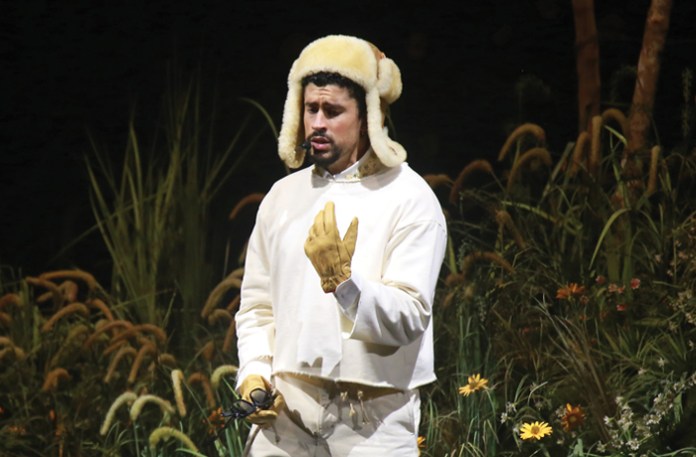
Those who are earnestly pissed about Bad Bunny playing the 2026 Super Bowl halftime show, and there are many, are not just wasting their emotion. They have forgotten their national inheritance. Americans should be thrilled that out-of-the-way places in their country, or at least in a territory with a disquietingly ambiguous relationship to their country, still produce artists like this. The critics of this booking probably have not actually listened to the artist they are attacking, which is their own sad loss. Sadder still is the attempt to counter-program Bad Bunny, as if it’s the duty of all good American patriots to ignore him. In one of its more ill-advised moves, Turning Points USA is throwing a Kid Rock-headlined alternative halftime show, with neither the talent nor the bookers aware of how tasteless the juxtaposition with the Puerto Rican phenom will make them all look.
We are in one of those rare periods when the most musically interesting pop star on the planet is also the most popular, with 82 million monthly Spotify listeners and the ability to sell out venues worldwide. Bad Bunny is one of America’s few NFL-sized musicians, and one of the only ones who has used his stardom on anything artistically worthwhile.
In 2018, just two years out of Vega Baja, Bad Bunny’s album X 100Pre upended global pop. Others had attempted the mix of ear-friendly melodic hip-hop and harder-driving Caribbean club rhythms that Bad Bunny instantly mastered. What made his major-label debut an inflection point in 21st-century music was its mass-scale introduction of an elusive, alluring new pop persona. Tropical ukulele slams into a tectonic bass rattle in the first 30 seconds of the album’s runtime, as a slurred and moody baritone croons in Spanish about how he is not doing particularly well or especially bad after a recent breakup — “ni bien, ni mal.”
Bad Bunny is the voice of potentiality. There is always a chance his mopes and howls will give way to a brain-splitting explosion of fiery beats, which is the destination of the sublimely filthy “Safaera” from 2020, and the stripped-down rager “Titi Mi Pregunto” from 2022. He can have a slack, stoned delivery, stretching out long vowels to a near-moan. But his vocal wanderings often settle on an uncannily controlled expression of deep emotion.
Debi Tirar Mas Fotos, Bad Bunny’s Grammy-winning album from last year, is a psychologized dual journey into his ascent to the stratosphere and the musical history of Puerto Rico. It did the kinds of things pop albums are not supposed to be able to do anymore, such as drive a five-minute track with a lengthy piano solo all the way to #3 on the Billboard Hot 100. That song, “Baile Inolvidable” (“Unforgettable Dance”) is an astonishing pop achievement, and the distance between it and any recent single from Taylor Swift or Sabrina Carpenter is almost comically vast. It begins with Bad Bunny plodding through a slowed-down version of his deepest possible moan over woozy arpeggiated synths. Sixty-seven seconds in, long enough to wonder if the song is actually going anywhere, the music lurches from digital to analogue; a sonic curtain bursts open, and an entire salsa band appears. The song accelerates as high-climbing trumpet harmonies and soul-smouldering bachata drums compete to out-blaze one another. Bad Bunny, newly alive, rips through a revved-up recapitulation of his gloomy opening phrase and finishes a thought introduced in the song’s downcast first movement: “Life is a party that one day ends,” he sings, “and you were my unforgettable dance.”
“Baile Inolvidable” is a unity of musical and emotional opposites, a two-part pop suite with a lethal groove and a real idea animating it: While there’s universality to the deeper pop themes, such as love and home and memory, the traditions that drive global revolutions in music come from very specific places, ones often beyond the conscious understanding of the listening public. That’s no knock on the public, much less an attempt to exclude them from the party — the best pop music invites its listeners in, as Bad Bunny’s does. You do not need to know anything about salsa, the intricacies of the eight-beat bachata scale, Puerto Rico, or the Spanish language to sense the power and ambition of “Baile Inolvidable.” Its massiveness of sound and feeling subsumes its particularities, even if they are what allow the song to exist.
American music has always been strongly regional. You can trace recent national shifts in taste to specific neighborhoods in Atlanta, Milwaukee, or San Juan. To call Bad Bunny Vega Baja’s first entrance in the history books is, of course, an insult to beloved Hall of Fame catcher Pudge Rodriguez, who also grew up there. But at least some of the discomfort over Bad Bunny’s halftime show has to do with a nagging sense that Puerto Rico is foreign American property rather than a part of America per se, and that Bad Bunny’s music, in language and style, stretches the limits of a shared culture that was already in danger of bursting into incoherence. A decision to give scarce Super Bowl real estate to someone who does not sing in English might feel like betrayal, given that the NFL is the last truly monolithic force in American life.
These are unfounded fears. Bad Bunny’s halftime show does not spell the end of the American center, but hints that it can actually survive. The idea that the internet would flatten the entire world, erasing the distance between Thimphu and Tuscaloosa and unlocking the genius trapped in the peripheries of the human community, turned out to be one of the 21st century’s great overhyped sources of hope, closer to nervous self-bargaining in the face of changes no one really understood. In Bad Bunny’s case, the promise was real. The often-annihilating economies of cultural consumption found and elevated an artist from far off most of the world and the country’s mental map, someone who could embody the possibilities of an otherwise bewildering time.
The 21st-century mind-state is a haze of disconnected digital inputs and chattering inner fears. In harmonizing sounds, histories, and the various sides of himself, Bad Bunny is the first and maybe only pop star who has turned our defining mental mixture into the stuff of worthwhile mass-market art. You, of course, have the option of looking at Bad Bunny and seeing only the things that are incomprehensible or unfamiliar: The Spanish lyrics, the chugh-cha-chug of the Latin trap beat, which delays or even inverts the emphases of traditional Western pop rhythms; the callbacks to artists and genres largely unknown beyond the Spanish-speaking Caribbean. But it is all in the service of music whose force most curious listeners can sense without having to listen that hard, and an artistry that any proud American would be insane to scorn.
Armin Rosen is a New York-based reporter-at-large for Tablet.