
Families of the 67 people killed in a midair collision over the Potomac River say regulators have taken steps to improve aviation safety since the crash one year ago, though they argue additional changes are still needed.
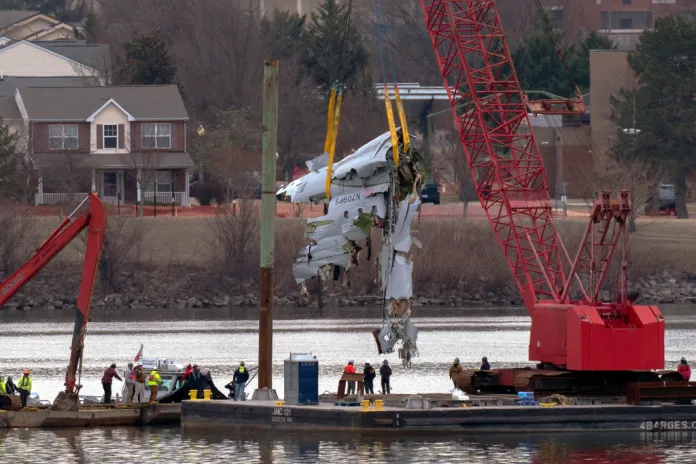
On Jan. 29, 2025, American Airlines Flight 5342 was circling to land at Ronald Reagan Washington National Airport when it collided with a U.S. Army Black Hawk helicopter, sending both aircraft into the icy Potomac River. All 60 passengers and four crew members aboard the jet were killed, along with three soldiers in the helicopter, marking the deadliest U.S. aviation disaster in nearly 25 years.
As the National Transportation Safety Board prepares to vote on the crash’s probable cause and safety recommendations, families say the anniversary is both a moment of remembrance and a test of momentum, whether the warnings exposed by the collision will finally force lasting reform or quietly fade.
The flight that changed everything
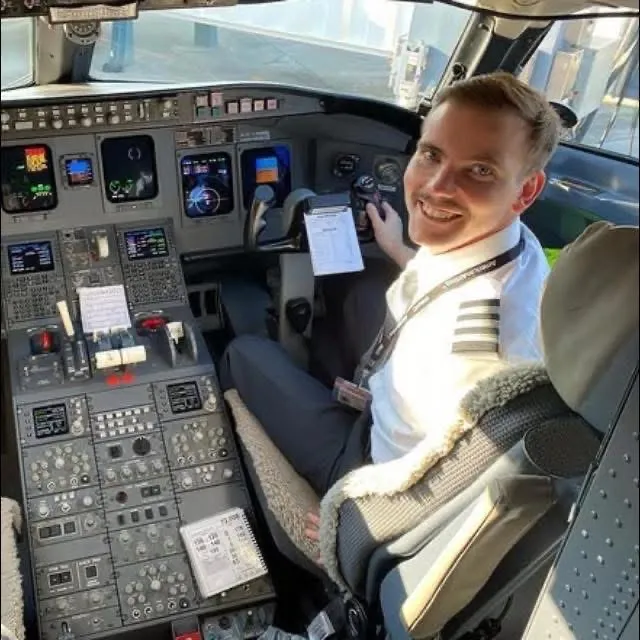
For Sheri and Tim Lilley, the year is anchored to a memory that feels painfully ordinary. The last time Sheri saw her stepson, Sam Lilley, he was sitting in his car outside their Savannah home, taking longer than expected to pull away. Sam, 28, was the first officer flying the CRJ-700 that day for PSA Airways, a regional carrier for American Airlines. He was choosing a playlist, entering directions into the GPS, and double-checking details before heading to the airport. Sheri waited in the driveway longer than planned, then finally turned inside. “He was basically preflighting the car,” she said.
In the weeks after the DCA crash, grief gave way to resolve. Tim Lilley, a pilot with decades of experience flying both military helicopters and commercial aircraft in the Washington region, found himself pulled into investigative hearings, policy briefings, and long conversations with regulators and lawmakers. What began as an effort to understand what happened to his son became, in his words, a second job and a moral mandate. “If something like this were to happen again,” Tim said, “and we had stayed silent, we couldn’t face those families.”
The questions Tim started asking after his son’s death were the same ones he had spent decades asking as a pilot.
For years, helicopter routes and commercial flight paths around Washington overlapped, relying heavily on visual separation, experience, and habit. At night, under goggles and shifting weather, those margins narrowed fast. Tim described a system in which unsafe practices became normalized because nothing catastrophic had happened yet. “Accidents like this don’t come from one mistake,” he said. “They come from thousands of unsafe acts lining up at the same time.”
Investigators believe that is exactly what unfolded on Jan. 29. Flight-tracking data show the passenger jet adjusting its approach after air traffic controllers cleared it to use a shorter runway. Less than 30 seconds before impact, a controller asked the nearby helicopter whether it had the incoming plane in sight and instructed it to pass behind the jet. Seconds later, the two aircraft collided.
What changed after the crash
In the days after the crash, the federal government moved quickly to clamp down on helicopter traffic near Ronald Reagan Washington National Airport, rolling out emergency restrictions meant to reduce the risk of another incident. Those measures were supposed to be temporary. Last week, they became permanent.
Last Thursday, the Transportation Department announced the Federal Aviation Administration had finalized the changes through an interim final rule, closing Route 4 along the Potomac River, scrapping visual separation near the airport, updating military flight agreements, and pushing helicopter traffic farther away from commercial flight paths.
“After that horrific night in January, this administration made a promise to do whatever it takes to secure the skies over our nation’s capital and ensure such a tragedy would never happen again,” Transportation Secretary Sean Duffy said in a statement announcing the rule. “Today’s announcement reaffirms that commitment.”
The fix still on hold
Families acknowledge the new rule meaningfully reduces risk around Reagan. But many say the most consequential fix remains unfinished. In December, the Senate passed the bipartisan ROTOR Act, legislation aimed at closing a long-standing safety gap by restricting the operation of military helicopters without broadcasting their location.
“We don’t need more studies,” Tim Lilley said. “We already know where the risks are. What’s missing is the will to act on the data we have.”
That gap goes to the heart of what failed the night of the crash. The Army Black Hawk helicopter involved in the collision was not transmitting its position using automatic dependent surveillance-broadcast, or ADS-B, an advanced surveillance technology that allows air traffic controllers and nearby aircraft to see precise, near-real-time location data. Civilian aircraft are required to use ADS-B, but the military has long been granted exemptions. In 2019, the FAA allowed the Defense Department to disable the system in limited circumstances, citing national security concerns.
Lawmakers and families say those exemptions have been applied far more broadly than intended, including during routine training flights in some of the country’s most congested civilian airspace. ADS-B has been recommended by federal safety investigators since 2008, yet remains optional for many military aircraft. The ROTOR Act would sharply limit that discretion. The House has not taken up the bill.
Turning grief into advocacy
Sen. Jerry Moran (R-KS), a cosponsor of the legislation, said the past year has underscored both how much has changed and how much remains unresolved. Moran spent the night of the crash at Reagan with families from Kansas who were awaiting word about loved ones on the flight.
“The conversations are always prefaced with families trying to find meaning out of the death of their loved ones,” Moran told the Washington Examiner. “And that meaning they’re trying to find is to eliminate the likelihood of this kind of accident ever happening again.”
Moran credited the families with helping drive bipartisan momentum behind aviation safety reforms. “They have become significant and very effective advocates for safer skies,” he said. “They’ve been a great ally in trying to change legislation, to appropriate dollars, and to change attitudes and approaches at the FAA, the Department of Transportation, and the Department of Defense.”
But Moran said progress has stalled in the House, where objections have been raised to provisions affecting military operations. House leaders, he said, have expressed concern about limits on when the military can disable ADS-B, even as families argue the technology should be used during routine training flights in civilian airspace.
“The House has not taken up the ROTOR Act, and there are objections,” Moran said. “My suggestion has been: get it in a form you can support and let us work together to resolve our differences. Don’t just let it linger.”
Delay, he warned, carries consequences. “The sooner we do this, the sooner we’ll have greater levels of safety,” Moran said, adding the legislation is only one piece of a broader effort to modernize air traffic control, strengthen oversight, and ensure the military follows civilian airspace rules.
Families say the consequences of inaction are not abstract.
Douglas Lane lost his wife, Christine, and his son Spencer, a rising figure skater returning from the U.S. Figure Skating National Development Camp in Wichita, Kansas. In the days before the crash, Lane said, their house was filled with a kind of easy happiness that now feels almost unbearable to recall. “They both had a really wonderful week,” he said.
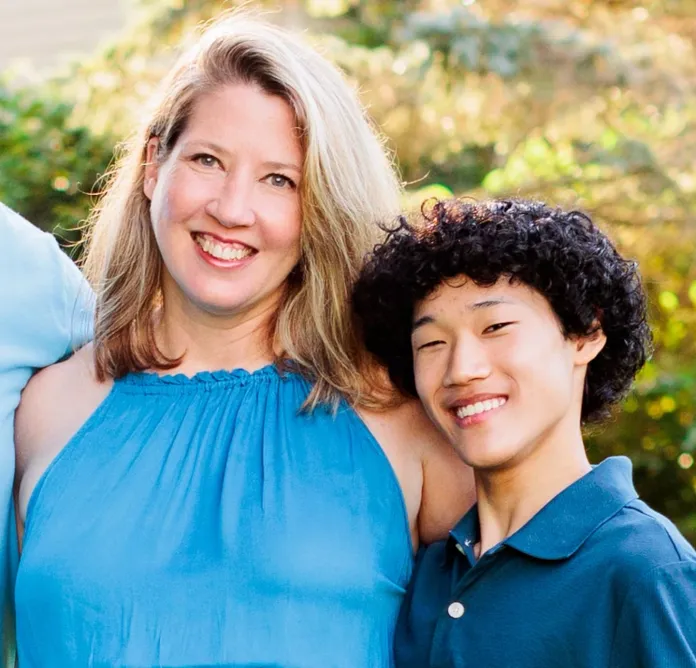
Christine was endlessly creative, the kind of person who moved seamlessly from photography to sewing to modern quilting, always starting new projects, always curious. Spencer had only recently discovered figure skating, but once he did, Lane said, he took off. “He was kind of a rocket ship,” he said, a late starter whose obsession, work ethic, and natural talent pushed him rapidly forward.
The loss, Lane said, is not only of who they were, but of who they were becoming. “The hardest part,” he said, “is not getting to see where that was all going to lead.”
Lane said advocacy has become a way to keep other families from having to learn the same lessons through loss. “If there’s something we can fix,” he said, “then not fixing it is a choice.”
Matthew Collins lost his younger brother, Christopher Collins, who was 42 and traveling for work. Collins said the challenge is not finding words, but choosing which ones to leave out. “Trying to sum him up in 30 seconds is almost impossible,” he said, speaking to the Washington Examiner.
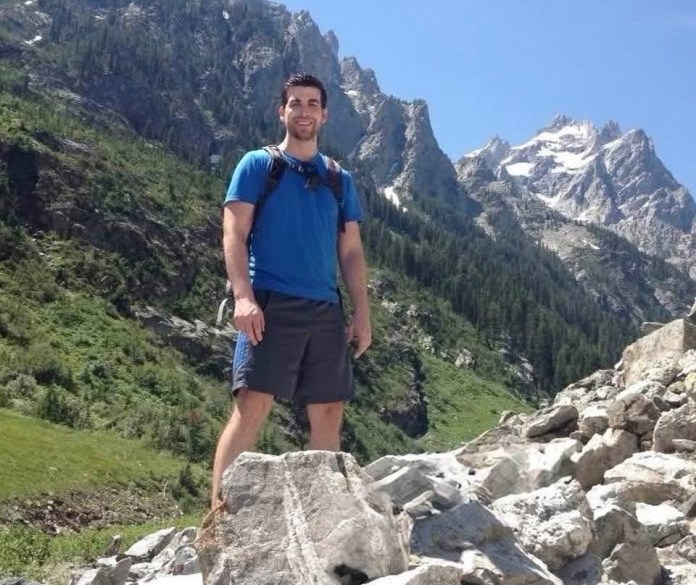
Chris was a devoted husband and a constant presence in the lives of his nieces and nephews, someone who showed up without being asked and followed through without fanfare. He loved hiking and spent much of his free time exploring trails across the country, often with a camera or a dog leash in hand. At a local dog rescue, Collins said, his brother volunteered so many hours in a single year that staff struggled to find anyone who had given more. Reliability was his defining trait. “If he told you he was going to do something,” Collins said, “he was there.”
Amy Hunter lost what she describes as “a whole branch of our family tree.” Her cousin Peter Livingston, Peter’s wife Donna, and their two daughters, Everly and Alydia, were all aboard the flight, returning from the U.S. Figure Skating National Development Camp in Wichita, where the girls had been participating.
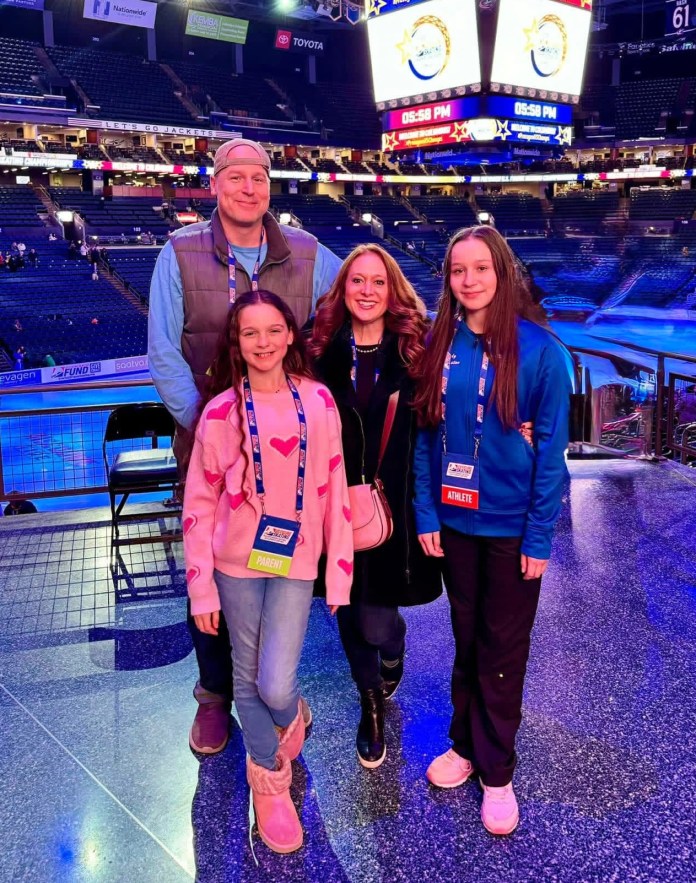
Hunter said the scale of the loss is difficult to convey because it erased not just individuals but an entire family unit. “When that family walked into a room, they lit it up,” she said. Peter and Donna were warm and funny, she said, and their daughters carried the same energy, curious, bubbly, unmistakably present. The absence they left behind is not quiet; it’s structural.
“We didn’t just lose people,” Hunter said. “We lost a future.”
Returning to the river, one year later
As the NTSB prepares to finalize its findings next week, families say the work and the mourning converge. Relatives of the victims will return to Washington for a Jan. 28 memorial at DAR Constitution Hall, gathering not just to remember the lives lost but to underscore what they say must change.
“This is a hard week,” Amy Hunter said. “But we’re here because what happens next matters.”
Hunter said families are watching closely to see whether the investigation leads to concrete change. “Accountability isn’t automatic,” she said. “It only happens if someone insists on it.”
GOVERNMENT ADMITS FAULT IN REAGAN WASHINGTON NATIONAL AIRPORT CRASH: ‘WHOLLY AVOIDABLE TRAGEDY’
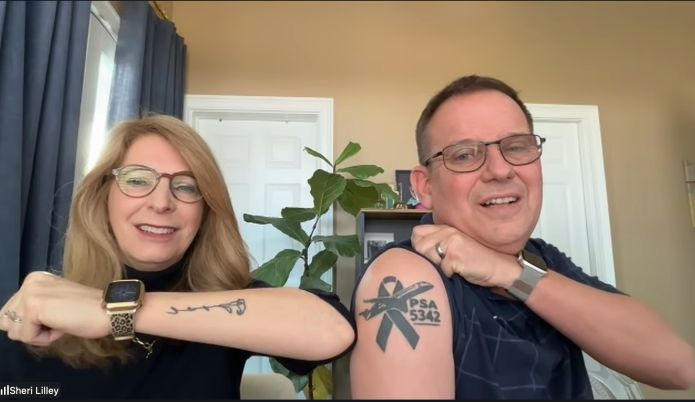
For the Lilleys, the anniversary is marked not only in hearings and legislation, but in flying itself. They still travel through the Reagan National Airport, sometimes stepping up behind the cockpit before takeoff to introduce themselves to the pilots and flight attendants and explain why aviation safety has become personal.
On approach, the Potomac River comes into view. Sheri watches the wing tilt and listens for the change in the engines as the plane lines up over the same stretch of water where their son died, about a half mile short of Runway 33. Tim knows each step of the descent by instinct, but the familiarity no longer brings comfort. The moment is brief, but it is never routine.
After landing, they often thank the crew again before moving on. For the Lilleys, that spot along the river is no longer just part of an approach path.
“Sam would say this didn’t have to happen,” Tim said. “And he’d want to make sure it doesn’t happen again.”