
The Justice Department is considering federal charges tied to a disruptive protest that overtook a Sunday service at Cities Church in St. Paul, Minnesota, with civil rights officials signaling arrests could come as soon as this weekend. Prosecutors are eyeing a law more commonly used in cases involving abortion clinics as they weigh how to handle the targeting of a Christian house of worship.
Assistant Attorney General for Civil Rights Harmeet Dhillon said Monday that the DOJ will pursue charges stemming from the incident, which was livestreamed and featured activists protesting against the Immigration and Customs Enforcement crackdown in Minneapolis by chanting and shouting inside the sanctuary as congregants attempted to continue worship.
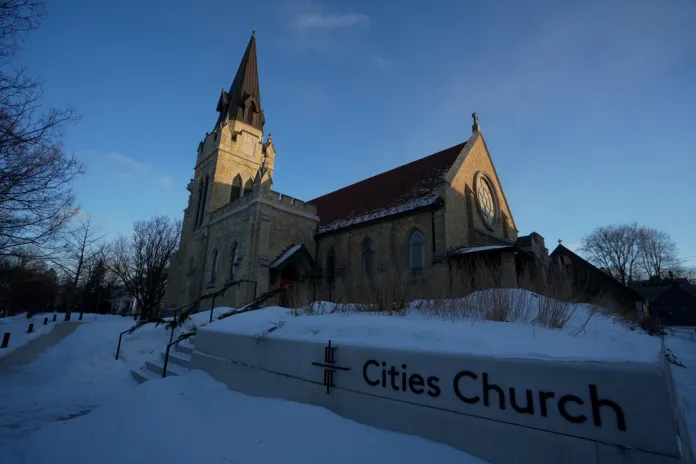
“Come next Sunday, nobody should think in the United States that they’re going to be able to get away with this,” Dhillon told conservative podcaster Benny Johnson, adding that investigators are working through participant lists and evidence of coordination, including who “provided materials” and whether “other conspirators” were involved. 
What the FACE Act covers and why DOJ is considering it
Despite its name and its frequent use in abortion clinic cases, the Freedom of Access to Clinic Entrances Act also protects religious worship. The law makes it illegal “to injure, intimidate, or interfere” by using “force, threat of force, or physical obstruction” against anyone who is “exercising or seeking to exercise the First Amendment right of religious freedom at a place of religious worship.”
Dhillon said her division is investigating “potential violations” of the federal FACE Act for what she described as a desecration of a house of worship and interference with its worshippers.
Minnesota Attorney General Keith Ellison (D) has disputed that legal theory, saying in an appearance on CNN that he believes the statute was designed to protect people seeking reproductive rights, a comment that signals the state is not likely to take any action in response to the protest at Cities Church.
Don Lemon drew DOJ scrutiny over claimed journalist role
Dhillon also singled out former CNN host Don Lemon, who filmed himself with anti-ICE activists before and during the church disruption and later argued he was present as a journalist.
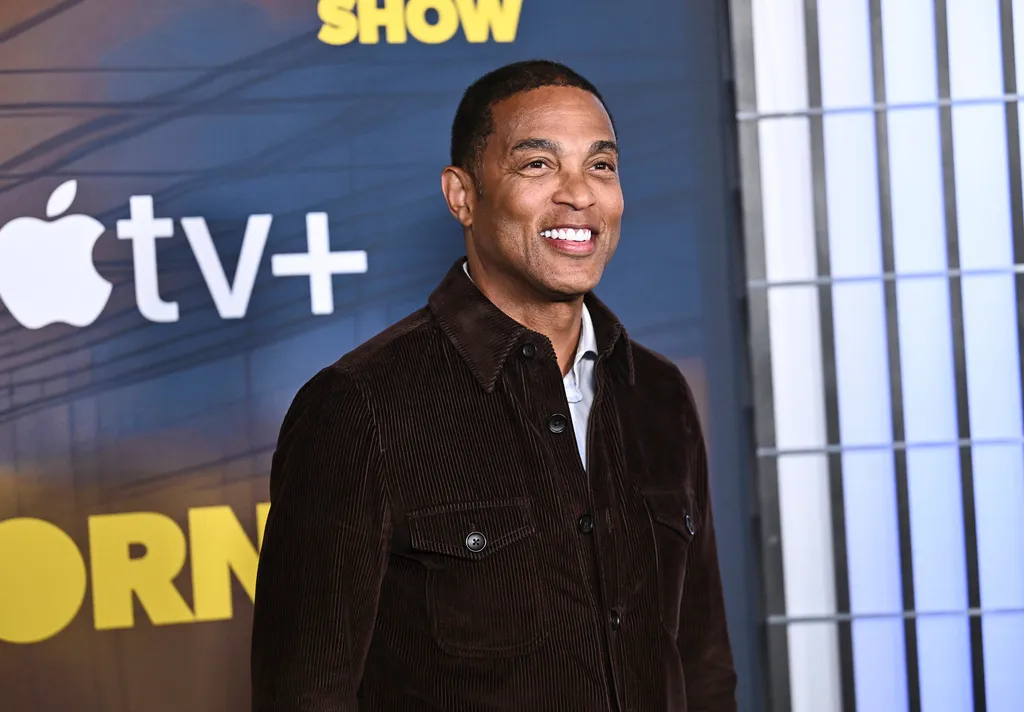
“Lemon went into the facility, and then he began, quote unquote, committing journalism as if that’s a sort of shield from being a part, an embedded part, of a criminal conspiracy. It isn’t,” Dhillon said on Johnson’s show.
Lemon’s video content from the day of the protest includes him referencing “reconnaissance” that the group of activists conducted as they planned for “Operation Pull-Up,” their code name for the disruption of the church service, according to coverage of the episode and excerpts of his own footage.
Lemon told NBC News that he was “covering” the protest and argued that framing him as the face of the incident is misleading.
DOJ also floated a civil rights conspiracy statute
Beyond the FACE Act, Dhillon has suggested the DOJ is also evaluating whether to use 18 U.S. Code 241, a Reconstruction-era civil rights conspiracy statute sometimes associated with the Ku Klux Klan Act.
In an interview with the Washington Examiner, former DOJ civil rights attorney Roger Severino said the key difference between a prosecution under the FACE Act and one under the Klan Act is the severity of the charges. FACE Act violations are typically misdemeanors for first offenses, while Klan Act cases can be charged as felonies if prosecutors show the protest was coordinated to deprive people of their civil rights, including the free exercise of religion, Severino said.
“The minute he stepped into that church, knowing what was going to happen, turned him into a participant,” Severino told the Washington Examiner, arguing Lemon cannot rely on a press label if prosecutors conclude he knowingly joined an unlawful disruption.
Pressure builds for a criminal case
The public push for criminal enforcement against the church disrupters has intensified in part because the FACE Act was used aggressively in recent years against protesters outside abortion clinics. The Trump DOJ has relied on the statute recently in several religious freedom cases.
In September, the DOJ announced a FACE Act lawsuit against “violent protestors” accused of disrupting an event at a synagogue in West Orange, New Jersey, in November 2024. The DOJ described threats of force, intimidation, and violent conduct aimed at congregants gathered for a religious ceremony.
But the West Orange matter was filed as a civil complaint, an approach that typically seeks court orders and injunctive relief, rather than the threat of jail time, for offenders. In the New Jersey case, the DOJ requested a court order barring named groups from using force or physical obstruction to interfere with worshippers at any house of worship in New Jersey.
The Civil Rights Division’s pursuit of a civil case last year in New Jersey provides a stark contrast with its current consideration of a criminal case in Minnesota. Experts who spoke to the Washington Examiner say a civil lawsuit does not carry the same punitive effects as a criminal case, and they are urging the DOJ to bring criminal charges against activists who protested inside a sanctuary in front of families and children.
Shawn Carney, president of 40 Days for Life, told the Washington Examiner that the DOJ should not treat the St. Paul incident more leniently than the Biden administration-era abortion clinic cases that produced prison terms for protesters.
“You can’t lock up the people handing out roses peacefully and then say the protesters going into churches — that’s OK,” Carney said, arguing that a failure by the Trump DOJ to act now will invite copycat disruptions and escalating threats.
Severino similarly told the Washington Examiner that the Minnesota incident, if supported by evidence of intent to intimidate worshippers, is the kind of case that warrants criminal prosecution rather than a civil suit.
The Biden-era enforcement backdrop
The Trump DOJ’s decision will draw scrutiny from conservatives because the statute was used by the Biden DOJ in criminal cases against abortion clinic protesters.
In 2024, for example, the DOJ under President Joe Biden announced that Paulette Harlow, 75, was sentenced to 24 months in prison after being convicted of a FACE Act offense and a civil rights conspiracy tied to a clinic blockade in the Washington area. Harlow joined other anti-abortion activists in a 2020 effort to block the entrance to an abortion clinic by sitting in chairs in front of the door to the clinic’s treatment area and roping herself to the other activists.
The Biden DOJ also announced that Bevelyn Beatty Williams was sentenced to 41 months in prison for a FACE Act violation tied to interference and threats at a Manhattan reproductive health center that provided abortions. Prosecutors said Williams stood in front of the health center’s patient entrance, blocking the way. President Donald Trump later pardoned both Harlow and Williams alongside more than 20 other anti-abortion activists after he returned to office last year.
BLM COALITION BEHIND ANTI-ICE SHUTDOWN OF MINNEAPOLIS CHURCH SERVICE
Those cases, along with similar prosecutions during the Biden administration, some of which involved protests that took place entirely outside the doors of abortion clinics, are now being cited by conservatives who argue that the DOJ has a credibility problem if it does not pursue criminal charges in a case where protesters entered a church and shut down a worship service.
For now, the DOJ has not announced specific charges or named targets in the Minnesota matter. But Dhillon’s remark that accountability could arrive by “next Sunday,” combined with the DOJ’s statements about identifying participants and potential conspirators, has fueled expectations that prosecutors could move quickly in the days ahead.