
In an effort to shape how their industry is regulated, cryptocurrency interests have spent millions of dollars supporting key lawmakers and on lobbying efforts linked to legislation that has since stalled on Capitol Hill.
One of the most recent developments in the monthslong battle over crypto legislation came on Wednesday, when Senate Banking Committee Chairman Tim Scott (R-SC) indefinitely postponed the markup process for the highly anticipated Digital Asset Market Clarity Act, a piece of legislation that endeavors to create a well-defined regulatory environment for digital assets such as cryptocurrency. Scott’s committee, alongside the Senate Agricultural Committee, was previously scheduled to debate and amend the bill on Thursday.
The indefinite delay underscores the influence of powerful crypto interests over the process, as Scott’s announcement came just hours after the CEO of Coinbase, one of the biggest crypto exchanges in the world, publicly signaled his opposition to the bill as written.
Notably, individuals linked to the crypto industry had upped their contributions to Scott in recent months.
In September 2025, a group of Coinbase executives and vice presidents cut $21,000 in campaign checks to Scott. Since late 2024, individuals in the industry have contributed well over $50,000 to the South Carolina senator, according to a Washington Examiner review of campaign finance filings.
One of the most contentious aspects of the bill is whether stablecoins, a class of cryptocurrency intended to maintain a stable value by pegging itself to a non-volatile real-world asset, can pay their owners rewards for holding them. Banking interests oppose such an allowance, as it would increase competition for traditional savings accounts. Draft amendments that would block stablecoin rewards were part of the reason Coinbase rescinded its support for the Clarity Act.
Players in the digital asset space have been locked in a heated influence war with the banking industry, which itself spends big on political donations and K Street retainers, over the Clarity Act. Much like the crypto industry, commercial banks provide large amounts of financial support to lawmakers sitting on the committees tasked with regulating them. Data compiled by OpenSecrets also show that commercial banks spent roughly $56.7 million lobbying in 2025, and while the Clarity Act wasn’t the only item they paid operatives to shape, it does appear on many of their lobbying disclosures.
The crypto industry’s giving to Scott, who may be able to count on it as a key ally in 2028 if he opts to reprise his role as a presidential candidate, represents just the tip of the iceberg in the influence war over the Clarity Act. Individuals linked to the crypto industry, alongside major firms themselves, have pumped tens of millions of dollars into efforts to influence how they are regulated — opening up their checkbooks to campaign treasurers and top-tier lobbyists who previously worked in the very offices they sought to sway.
Many of the senators sitting on the two committees tasked with handling the legislation, for instance, have their seats in Congress thanks in no small part to generous spending of the crypto industry through the super PAC Fairshake and its affiliates Defend American Jobs and Protect Progress.
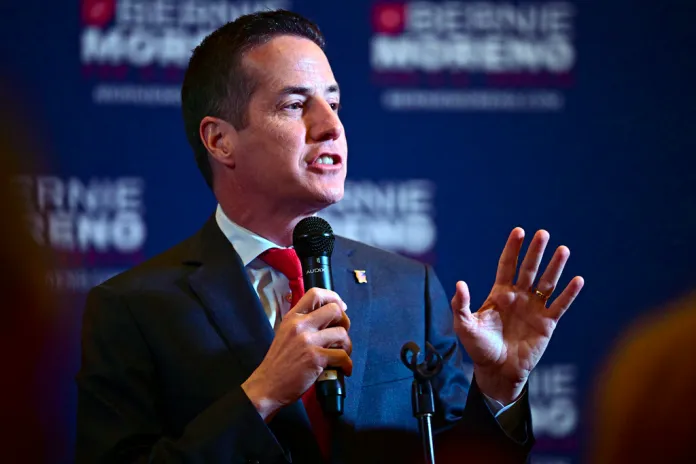
Sen. Bernie Moreno (R-OH), who sits on the Banking Committee, for example, received over $40 million in support from Defend American Jobs during his 2024 run against incumbent Sen. Sherrod Brown (D-OH), where he ultimately won with 50.09% of the vote. On the other side of the aisle, Protect Progress spent more than $10 million supporting Banking Committee member Sen. Ruben Gallego (D-AZ) in his 2024 bid, where he ultimately won with just 50.6% of the vote.
Sens. Jim Banks (R-IN) and Jim Justice (R-WV), on the banking and agriculture committees, respectively, also received millions of dollars in support from Defend American Jobs in 2024.
Notably, Fairshake and its affiliates supported only one senator, Sen. John Curtis (R-UT), who doesn’t sit on the banking or agriculture committee, the two upper chamber bodies that have the bulk of influence over how the crypto industry will be regulated.
On the House side, 12 of the Clarity Act’s 22 sponsors and co-sponsors have received financial backing from the Fairshake network, including Rep. French Hill (R-AR), who introduced the legislation.
Bankrolling Fairshake and its affiliated PACs are major crypto industry players such as Coinbase, Circle, Consensys, Kraken, Ripple, Andreessen Horowitz executives, and the Winklevoss twins. Many of these firms and individuals have engaged in high-dollar lobbying efforts targeting the politicians they fund in the hopes of shaping the law to their liking.
A Washington Examiner review of lobbying records found that entities linked to the crypto industry, encompassing 501(c)(4) advocacy groups as well as businesses, spent at least $14.6 million in 2025 retaining lobbyists to work on the Clarity Act and related pieces of legislation.
In a handful of cases, members of Congress who were among the initial co-sponsors of the bill had alums of their offices lobbying lawmakers on crypto-related issues when they signed on.
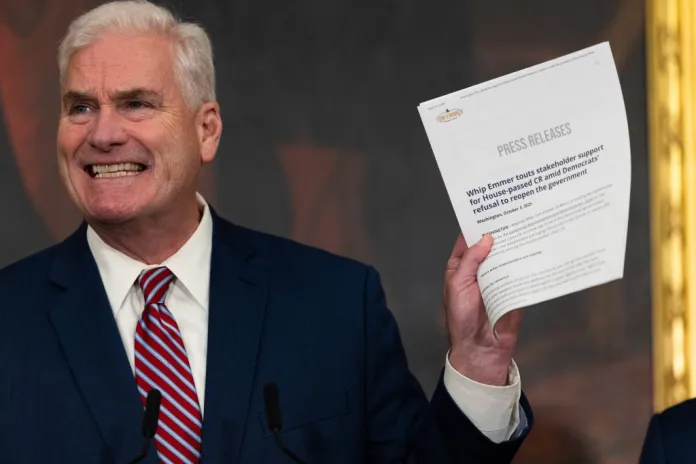
Ron Hammond, for instance, who served as Rep. Warren Davidson’s (R-OH) crypto policy lead from 2017 to 2019, was registered to lobby on behalf of the Blockchain Association — an advocacy organization funded by the crypto industry — between April and June 2024. In May 2024, his former boss became one of the Clarity Act’s initial sponsors. Former staffers for Reps. Tom Emmer (R-MN) and Glenn Thompson (R-PA) — both co-sponsors of the Clarity Act — were registered to lobby at the time the congressmen logged their support for the bill.
Alums of the offices of Reps. Josh Gottheimer (D-NJ), Bryan Steil (R-WI), and Hill were all retained after their one-time bosses signed on to the legislation. Former staffers from the offices of key senators on the banking and agricultural committees — among them Sens. John Thune (R-SD), Mitch McConnell (R-KY), Raphael Warnock (D-GA), Bill Hagerty (R-TN), and Cory Booker (D-NJ) — were also retained by crypto firms to plead their cases.
Some of these staffers likely had close relationships with their members owing to their senior posts.
Ryan Carney, lobbying on behalf of Crypto.com, was previously Steil’s chief of staff, for example. Andreessen Horowitz, through the lobbying firm Mehlman Consulting, retained Senate agriculture committee Chairman John Boozman’s (R-AK) former chief of staff, as well as the committee’s one-time staff director, to lobby for its interests on crypto issues.
A spokeswoman for Boozman told the Washington Examiner that the senator’s approach to the Clarity Act was not influenced by the fact that his former chief of staff was lobbying on it.
Stellar Development Foundation, a cryptocurrency-focused nonprofit organization, meanwhile, retained a former senior adviser to Warnock among its lobbyists, while the Blockchain Association registered Thune’s one-time deputy chief of staff as a lobbyist.
The biggest spender on Clarity Act lobbying in 2025 was Coinbase, with over $2 million routed to in-house and third-party lobbyists. The Blockchain Association came up second with a lobbying spend of roughly $1.5 million. Other major spenders included Block Inc., the Solana Policy Institute, Kraken, and Digital Currency Group, each with over $1 million spent; the Crypto Council for Innovation, with roughly half a million dollars in spending; and Ripple, with around $400,000 in lobbying expenses.

Some lobbyists have yet to release their 2025 fourth-quarter reports, meaning the true amount spent by the industry on lobbying was almost certainly higher than recorded above. Due to limitations in the Lobbying Disclosure Act, the public is not privy to the specific offices lobbied by these connected lobbyists. Operatives retained by the crypto industry have, however, publicly bragged about their ability to shape crypto-related legislation.
Lobbyist Chris Hayes “helped his crypto clients advance the bipartisan passage of the IRS Broker Rule Congressional Review Act disapproval resolution” as well as “shape the recently passed U.S. stablecoin framework, the GENIUS Act,” according to a company bio. Hayes, who has an “extensive network of contacts in Congress,” was retained by the blockchain platform Ava Labs.
Campaign contributions and lobbying aren’t the only ways the crypto industry has been throwing around money to influence how it will be regulated. For example, the American Innovation Project, a crypto-focused advocacy group backed by entities including Kraken, Coinbase, the National Cryptocurrency Association, Paradigm, the Solana Policy Institute, and the Digital Currency Group, paid to send members of Congress to swanky Wyoming resorts in August 2025, where they received policy briefings from people representing industry players such as Coinbase.
MARIJUANA COMPANIES SPENT MILLIONS ON LOBBYING AHEAD OF TRUMP RESCHEDULING ORDER
The Clarity Act, if passed, would delineate which digital assets are commodities and which are securities, a decision that would affect how they are regulated, and implement some consumer safeguards in an attempt to combat fraud, market manipulation, and money laundering regarding digital assets.
Every member of Congress mentioned was reached for comment.