
President Donald Trump is keeping all options open in his deliberations on the future of Iran, but violent intervention to protect protesters could sour relations with allies in the Middle East and beyond.
The president on Thursday walked back his promise that “help is on the way” for protesters, citing the regime’s decision not to execute hundreds of political prisoners. However, his administration has not abandoned force as an option if the situation does not improve — upsetting some allies in the region.
“All options remain on the table for the president,” White House press secretary Karoline Leavitt said Thursday.
The Gulf States in particular are lobbying intensely for the United States to forego any future military action against the Islamic regime, a diplomat with knowledge of the situation confirmed to the Washington Examiner.
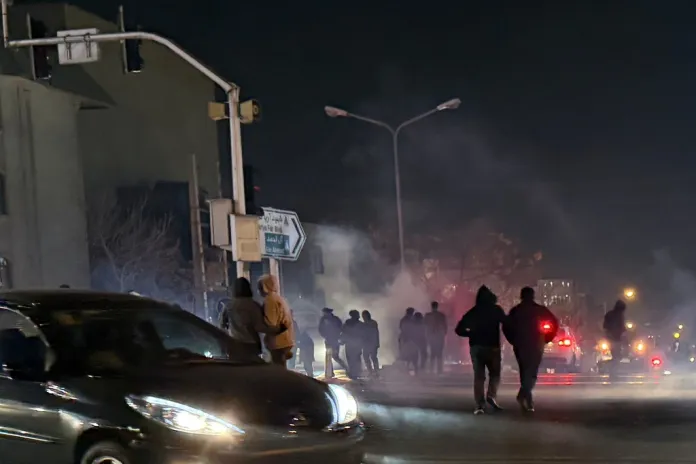
Chief among their concerns is the potential for a conflict between the U.S. and Iran to spill over into a transnational engagement.
TRUMP FIRST YEAR REPORT CARD: A- PROMISE KEEPER OR ‘NIGHTMARE’ FAILURE
“Tehran has told regional countries, from Saudi Arabia and UAE to Türkiye, that U.S. bases in those countries will be attacked if the U.S. targets Iran […] asking these countries to prevent Washington from attacking Iran,” a senior Iranian official reportedly told Reuters on Wednesday.
Even if Tehran did not launch direct attacks on those bases, hostilities between the U.S. and Iran could potentially have crisis-level implications for the oil supply chains that run between Iran and the other Gulf States.
“They would worry about what the Iranians might do in the in the [Persian Gulf], in the Strait of Hormuz,” Edmund Fitton-Brown, a former British Ambassador to Yemen, told the Washington Examiner. “Because that [Iranian] naval capability is obviously a threat to international shipping and also to the coastal facilities of the Arabian petrol states.”
AMERICA 250 TO INCLUDE ‘GREAT AMERICAN STATE FAIR’ AND UFC FIGHT AT HISTORIC DC VENUES
The Strait of Hormuz is a narrow waterway connecting the Persian Gulf to the Arabian Sea. Nearly a third of sea-transported crude oil passes through it, making it a prime chokepoint for Iran to blockade if forced into a desperate position. Such a scenario could as much as double the price per barrel of oil.
Following U.S. strikes on three of Iran’s nuclear facilities in June of last year, the regime flirted with the idea of implementing the catastrophic blockade.
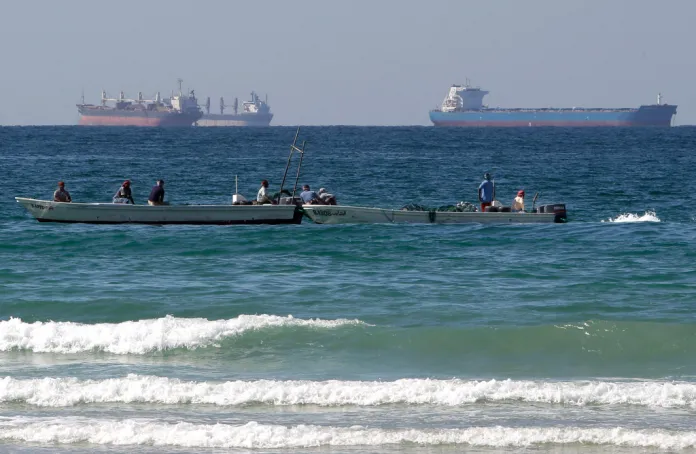
“Iran has the military capacity—using mines, speed boats, submarines, shore-based cruise missiles, aircraft, and other systems—to disrupt the flow of commercial shipping into and out of the Persian Gulf,” an August 2025 congressional report found.
TRUMP ADVISES THAT ANYONE BURNING AMERICAN FLAG WILL BE IMPRISONED FOR A YEAR
The report claimed that while “the U.S. military has the capacity to counter Iran’s forces and restore the flow of shipping, if necessary,” such an undertaking would “likely take some time—days, weeks, or perhaps months.”
The Gulf States are not the only countries in the region voicing opposition to U.S. intervention.
Turkish Foreign Minister Hakan Fidan said Thursday that his country’s priority is “prevention of destabilization” and that “Iran should solve its authentic problems on its own.”
“We oppose any intervention,” he told reporters in Istanbul.
The foreign minister took the opportunity to question whether the uprising that has lasted more than two weeks is a sincere rejection of the Islamic regime’s ideology or general discontent bred by Iran’s economic isolation.
“The hardships people face due to economic and other difficulties can appear as an ideological uprising against the regime; in reality, this constitutes a grey area,” Fidan said. “Iran has a large population and a dynamic society. It has sophisticated people with a very strong desire for life and for participation in social life. When you deprive such a society of certain opportunities, these kinds of problems emerge.
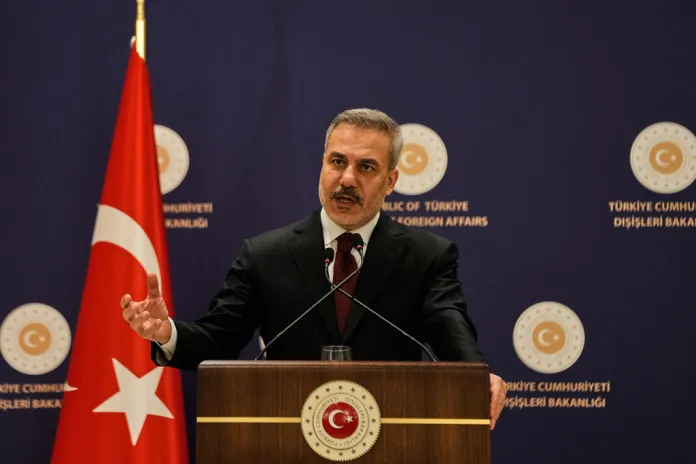
“When examined closely, there is no situation that would whet the appetite of some countries hostile to Iran abroad, in terms of hostility toward the regime,” he continued. “However, the economic difficulties created by existing policies and the inability to alleviate them do give rise to serious problems. We do not want to see any intervention here, but when you look at the policies of (U.S. President Donald) Trump, we have not seen a strong preference so far for the use of ground forces.”
TRUMP ORDERS NEW SANCTIONS ON IRANIAN OFFICIALS COORDINATING DEADLY CRACKDOWN ON PROTESTERS
White House press secretary Karoline Leavitt was asked directly on Thursday if the Gulf States’ intervention on the issue has led Trump to suspend plans to strike Iran.
“There’s been a lot of speculation in the media about what the president is going to do at any given moment or on any given night,” Leavitt said. “And a lot of these stories, to be honest with you — I’ve been reading them and they’ve been based on anonymous sources who are pretending or guessing to know the president’s thinking,” she told the press. “The truth is only President Trump knows that he is going to do and a very, very small team of advisors are read into his thinking on that.”