
Defense attorneys for the man accused of planting pipe bombs outside the Democratic and Republican national committee headquarters on the eve of the Jan. 6, 2021, Capitol riot, told a federal judge on Monday that the Justice Department is fighting to delay its obligation to turn over evidence and to push back the next hearing in his case.
Brian Cole Jr., 30, is set to appear in federal court on Tuesday for a combined preliminary and detention hearing after the proceeding was already postponed once earlier this month, with his lawyer’s consent.
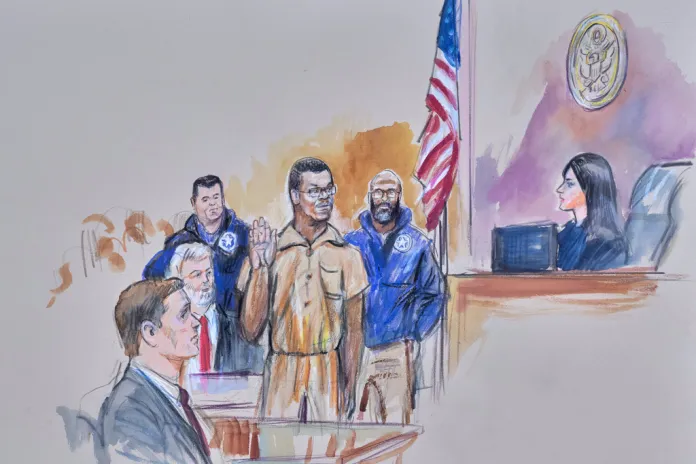
But in a new filing on Monday, Cole’s lawyers said prosecutors informed them that the DOJ is not yet prepared to go forward with the preliminary hearing on Tuesday and raised the possibility of another delay until early January, a move the defense said coincides with continued delays in producing discovery and exculpatory material. However, a person familiar with the government’s intentions told the Washington Examiner that the hearing is expected to move forward as is scheduled.
Defense lawyers said the government’s request via email correspondence “comes too late and does not meet Rule 5.1’s rigorous standard,” urging the court to confirm that the Tuesday afternoon hearing will proceed and warning the government cannot use scheduling disputes to withhold evidence or stall mandatory proceedings.
According to the defense, prosecutors floated next Wednesday or Thursday as alternative dates during emailed discussions with Cole’s lawyers, citing the possibility of forthcoming grand jury action. Cole’s attorneys argued to the court that federal law does not permit delaying a mandatory probable-cause hearing simply to accommodate the “pace of the grand jury,” absent extraordinary circumstances or an intervening indictment.
To date, the DOJ has released little evidence related to its investigation and prosecution of Cole, although Attorney General Pam Bondi and other top DOJ officials previously said additional charges could be forthcoming related to the pipe bomb placement investigation. Notably, the original complaint against Cole remains sealed on the court docket.
The defense nonetheless warned that further delay could trigger statutory remedies, including Cole’s release from custody, if the government fails to establish probable cause or comply with its disclosure obligations while seeking to prolong Cole’s detention.
“The government’s desire to accommodate ordinary scheduling or the pace of a grand jury is not a lawful basis to continue the hearing for which it has had more than three weeks to prepare,” the defense filing says.
The procedural dispute comes as prosecutors seek to keep Cole detained, pointing to what they describe as his detailed post-arrest confession. In a detention memorandum filed Sunday, the DOJ said Cole initially denied involvement in the pipe bomb plot before later admitting he built and placed the devices.
According to a memorandum from the government on Sunday, Cole told investigators he became “bewildered” by claims that the 2020 election was stolen from President Donald Trump. He believed someone needed to “speak up” for people who thought the allegations of election fraud were true, even though he said he had no preference for either political party.
The DOJ told the court that Cole said “something just snapped” after watching political events worsen and that he targeted the two national party headquarters because they were “in charge.” He denied targeting Congress or the Jan. 6, 2021, joint session to certify the electoral vote and told investigators, “I really don’t like either party at this point.”
Prosecutors said Cole admitted he learned how to make the black powder used in the devices from a video game that listed ingredients and supplemented that knowledge with science-related YouTube videos. Investigators later recovered bomb-making components from shopping bags in Cole’s home and vehicle.
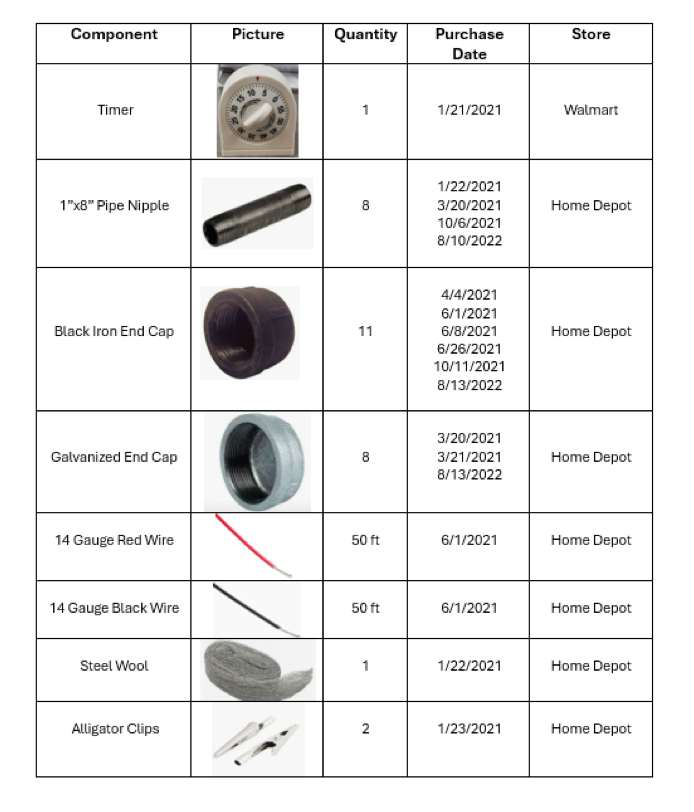
Although neither pipe bomb detonated, prosecutors argued they could have and that Cole should be kept in custody while the case continues. The DOJ said Cole told investigators he set both devices to explode roughly 60 minutes after placement and later said he was “pretty relieved” when they failed because he did not wish to kill anyone.
“It was luck, not lack of effort,” that the devices did not detonate, prosecutors wrote, arguing the failure of the pipe bombs “does not mitigate the profoundly dangerous nature of his crimes.”
Cole was arrested Dec. 4 following what officials described as a breakthrough in the nearly five-year investigation. He is charged with transporting an explosive device in interstate commerce and attempted malicious destruction by means of explosive materials. The first count carries a maximum sentence of 10 years in prison, while the second carries a mandatory minimum of five years and up to 20 years.
In a separate court filing submitted Monday, Cole’s attorneys also demanded broad discovery, including all statements attributed to him, investigative notes, information about the FBI’s use of informants to identify Cole as a suspect, and any exculpatory material. They argued prosecutors’ disclosure obligations apply immediately, including to detention and preliminary proceedings.
Cole is represented by John Shoreman of the Human Dignity and Rights Law Firm, who has handled the case since his arrest. Recent filings show the defense team has expanded to include Mario Williams, the firm’s president, along with three Nashville-based criminal defense attorneys, Alex Little, Zack Lawson, and John Glover, who joined the case on a pro hac vice basis to practice law outside their state.
JAN. 6 PIPE BOMB SUSPECT TARGETED RNC AND DNC BECAUSE ‘THEY WERE IN CHARGE,’ MEMO SAYS
The office of U.S. Attorney Jeanine Pirro in Washington, D.C., is handling the criminal case against Cole.
Cole remains in federal custody.