
Fifty years ago this month, Britain’s ITV network aired the series finale of one of the best-loved television programs of the 1970s. A considerable hit on both sides of the Atlantic, Upstairs, Downstairs had already won two Primetime Emmy Awards for Outstanding Drama Series, along with numerous British Academy Film Awards and Royal Television Society plaudits. Further honors would come when the show’s last season aired in America two years later.
Yet the Edwardian drawing-room saga created by actress friends Jean Marsh and Eileen Atkins is no mere award-season time capsule, a curiosity in the vein of Ironside or Marcus Welby, M.D. Rather, the series remains one of the finest TV programs ever made, as watchable now as it was a third of the way through Queen Elizabeth II’s reign. One of the enduring memories of my childhood is listening as Alexander Faris’s iconic theme music drifted from the living room, where my parents watched, transfixed. Some decades later, I have seen every episode at least six times, and I will likely return to the series every few years until I die.
Half a century is no small passage of time. So it is remarkable how similar today’s circumstances are to those of the trans-Atlantic audiences who watched Upstairs, Downstairs in the mid-1970s. Then, as now, exhausted leaders clung to power on both sides of the ocean — Harold Wilson and Gerald Ford anticipating Keir Starmer and Donald Trump. Then as now, everyday Brits and Americans had few reasons to suppose their governments equal to the crises of the day. At a glance, the high- and low-born residents of 165 Eaton Place would seem odd companions for such fraught cultural times. The opposite is true. We turn to period drama most hungrily when, to quote master of the house (and member of parliament) Richard Bellamy, “the past has more to offer than the future.”
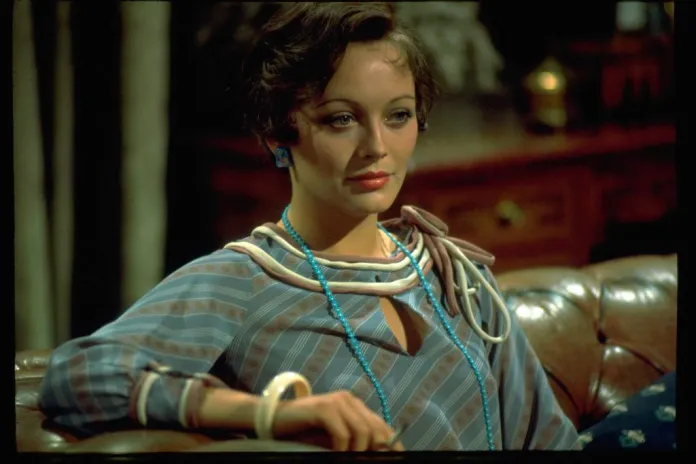
Richard is played beautifully by David Langton, at the time an obscure journeyman performer. Other cast members were more famous in their day. By the time of his appearance as Hudson, the Bellamys’ staid, reactionary butler, Gordon Jackson had already starred in such well-received films as Yesterday’s Enemy (1959) and The Great Escape (1963), the former of which secured him a BAFTA nomination for Best British Actor. Angela Baddeley, highly memorable as Mrs. Bridges, the cook, had appeared regularly on the stage and screen since the 1930s. Whatever the cast’s credentials, much of the show’s genius lies in its democratic approach to plotting. If one episode follows Lady Marjorie Bellamy’s (Rachel Gurney) receipt of an unsatisfactory inheritance, the next might turn on the proper apportionment of downstairs work. It would have been easy to dismiss the house’s servants as beneath our notice — or the aristocratic Bellamys as unworthy of it. Upstairs, Downstairs does neither. Both maid and master are fully formed beings in the show’s ethical world, pursuing life as seems right to them and deserving of the viewer’s attention.
This doesn’t mean that Upstairs, Downstairs lacks an ideology. Indeed, the show is practically a sacred text for audiences who believe the flattening of hierarchies to have been, on balance, a disaster for Western civilization. Especially in its early seasons, the series gives substantial play to the notion that people of all classes should know their role and embrace it. While the lesson applies most obviously to Eaton Place’s employees, its fullest expression attends the upstairs family, who neglect the strictures of elite decorum at their peril.
Take, for instance, the character of Elizabeth (Nicola Pagett), the Bellamys’ uncompliant daughter and one of the most tiresome characters in television history. Over the course of her two seasons on the show, Elizabeth runs away from her presentation to the king, befriends Bloomsbury radicals, smashes windows with suffragettes, and lazily condemns the beau monde values from which she benefits. For these sins, she is first married to a closeted homosexual, then paired with a foreign chancer who discards her, then exiled to America. Conservative wish-fulfilment, luridly drawn? I can’t entirely deny the charge. Yet note that Elizabeth’s error is a failure not of political theory but of duty. “I know my place, all right. I’m proud of my place,” says housemaid Rose (Marsh) in what may well be the series’s most important scene. “As long as you — all of you — know yours and keep to it.”
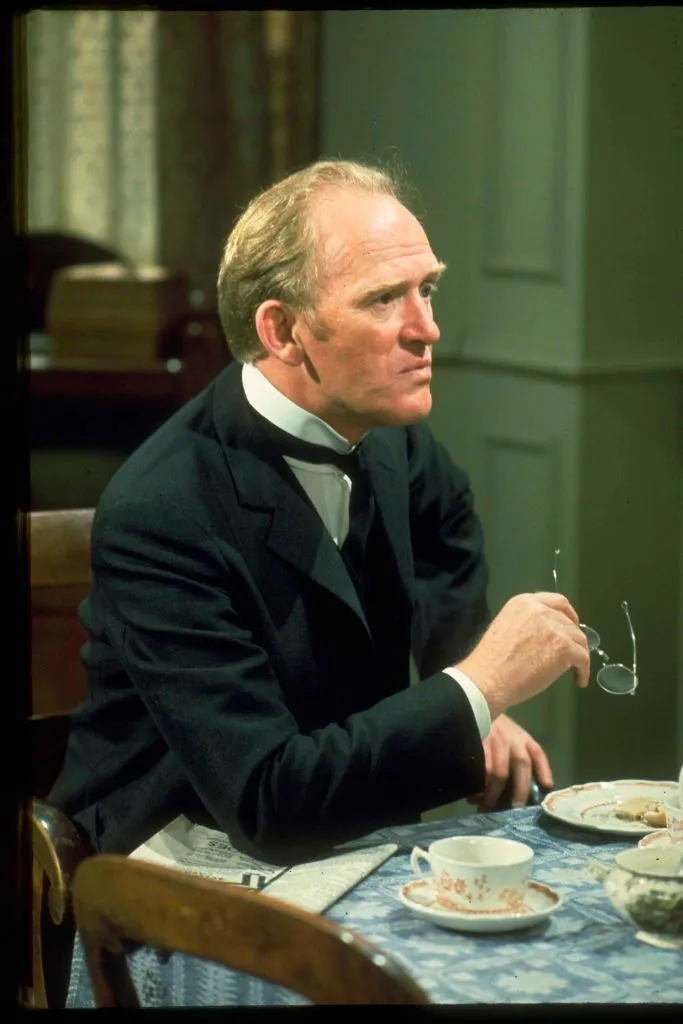
Like Downton Abbey 35 years later, Upstairs, Downstairs repeatedly dramatizes the maxim that servants were more conservative than their masters. At times, this principle is played for laughs, as when Hudson replaces the “best” sherry glasses with the “old” ones before hosting a middle-class guest for lunch. Mostly, however, the business is sternly sincere. When, in a standout episode, Hudson laments that there is “no future for any of us” in service if standards fall, the audience is meant to nod along, not grimace. Nor does the show frame as foolish the butler’s decision to remain with the Bellamys during a crisis, at great professional cost. Loyalty demands nothing less.
I may be convincing the reader that Upstairs, Downstairs is propaganda for Tories. Such a characterization would be grossly unjust. For all its concessions to Edwardian values, ITV’s production is often attuned to the simple human ironies that have driven narrative art for centuries: Richard’s chuckling, for example, upon hearing the upright Hudson wagering on the ponies. Still other plots concern political questions we will never resolve: the propriety of string-pulling or the scourge of insider trading by ministers of the state. At the end of that particular episode, Richard’s daughter-in-law, Hazel (Meg Wynn Owen), conspires with his attorney to save our hero’s skin at another man’s expense. A violation of honor? Or a woman’s commonsensical solution to a problem? The show doesn’t tip its hand.
To put it another way, Upstairs, Downstairs is no stranger to the fallenness of man. Its characters may live in the long shadow of Queen Victoria, but even they can’t stand at ramrod when all around them the ground is shifting. In the show’s moral universe, “Thou Shalt Nots” remain etched in stone, even as the letters have begun to dirty and obscure. The story’s tension lies in whether and how the men and women onscreen will clear away the grime, see what is right, and do it.
That work is not always gratifying or easy. Case in point: an episode (perhaps my favorite) in which Lady Marjorie conducts an affair with a young army officer. Played by noted Sondheim interpreter David Kernan, Captain Charles Hammond is no passing Lothario but a man of substance and skill. Marjorie must leave him all the same. A lesser show might have smoothed the edges of the decision, attributing some special merit to Richard or making Hammond a villain in the end. “Magic Casements” merely shakes Marjorie back to her senses. Better still, it makes clear that Richard knows all. He, too, must do his duty and forgive.
I have said little yet of the show’s smaller virtues: its humor; its eye for absurdity; its ear, following Jane Austen, for the number of coins jangling in its characters’ pockets. An illustration of the last of these concludes the episode just mentioned, in which marital infidelity threatens Eaton Place with scandal and ruin. Seeing his employers reconciled, Hudson sighs his relief: not only because he admires the Bellamys but because his job, once gravely imperiled, is now safe.
As if that all weren’t enough, Upstairs, Downstairs delivers a fourth season that is quite simply the best World War I content ever produced. Without once setting foot on a battlefield, the show makes startlingly vivid the sacrifices of ordinary people as Britain lurches from Ypres to Gallipoli to the Somme. The terrors of “shell shock,” the soldier-civilian divide, the transformation of the British economy and workforce: All are present in 13 small masterpieces that will reward careful viewing a century from now, never mind today.
REVIEW: WERNER HERZOG’S TYPES OF TRUTH
Two in particular are worth describing. In “News from the Front,” Richard and Marjorie’s son, James (Simon Williams), reveals military gossip that leads to the toppling of the Asquith government and the forcing of a coalition. “Facing Fearful Odds,” meanwhile, considers the seeming cruelty of naval discipline, as a young sub-lieutenant faces court-martial for cowardice. It is no accident that both episodes feature an appearance by Sir Geoffrey Dillon (Raymond Huntley), the Bellamys’ solicitor and arguably the series’s most compelling guest star. More importantly, however, both resurrect a lost world of social and legal manners that is at once unfamiliar and heartbreakingly real.
That, in the final tally, is the brilliance of Upstairs, Downstairs. In its specificity, the show offers glimpses of an age just as complicated as our own, if differently troubled. In its generality, it suggests that human nature doesn’t change. Part of the joy of watching the Edwardians lies in the knowledge that, despite great upheavals, they built something worth thinking about generations later. It’s comforting to think that our descendants may one day watch a show about us, for similar reasons.
Graham Hillard is editor at the James G. Martin Center for Academic Renewal and a Washington Examiner magazine contributing writer.