
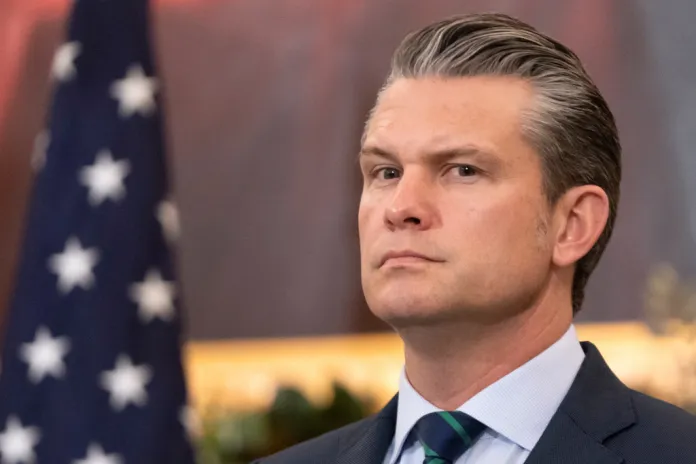
A federal appeals court in Washington, D.C., on Tuesday cleared the way for President Donald Trump’s ban on military service by individuals who identify as transgender or have gender dysphoria, staying a lower-court order that blocked War Secretary Pete Hegseth from enforcing the policy.
The 2–1 decision by a three-judge panel of the U.S. Court of Appeals for the D.C. Circuit sharply rebuked U.S. District Judge Ana Reyes, concluding that her ruling in March overrode military judgment and applied a standard of review the courts are not entitled to use when second-guessing force-readiness decisions. Judges Gregory Katsas and Neomi Rao, both appointed by Trump, formed the majority, while Judge Nina Pillard, appointed by former President Barack Obama, dissented.
In the lengthy opinion, Katsas wrote that the Pentagon offered more than enough justification for the restrictions, pointing to long-standing medical-fitness rules, the Mattis-era review of gender dysphoria, a 2021 Department of War study showing substantial nondeployability following diagnosis, and a 2025 literature review finding limited evidence that common treatments improve readiness. The majority said Reyes, an appointee of former President Joe Biden, “afforded insufficient deference” to military leaders and replaced their judgment with her own.
The panel also rejected Reyes’s finding that the policy was rooted in animus toward transgender people. The opinion stressed that courts must assess the policy on its face and the materials supporting it, not political statements made elsewhere, and noted that the Supreme Court already allowed the same ban to take effect in May in a parallel case from Washington state.
“The district court independently erred in universally enjoining the Hegseth Policy rather than merely providing as-applied relief to the plaintiffs,” the majority wrote in a footnote citing Reyes’s March decision.
Majority leans on Supreme Court Skrmetti decision
The majority added that their justification was rooted in the recently decided United States v. Skrmetti decision, in which the Supreme Court ruled 6-3 this summer to uphold a Tennessee law banning hormone treatments for minors with gender dysphoria.
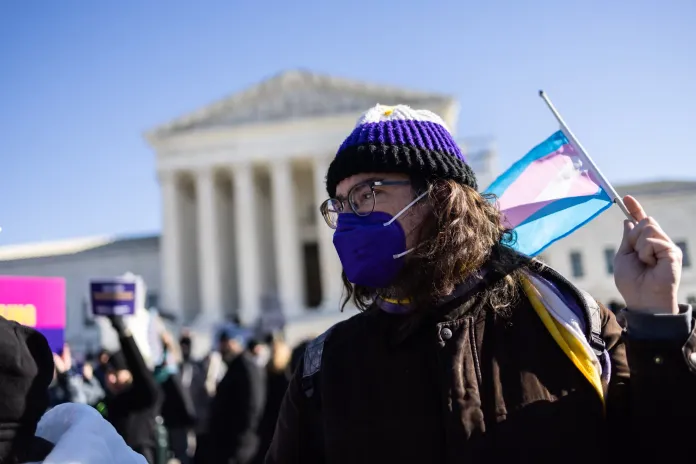
In Skrmetti, the high court held that such restrictions “classify on the basis of medical use” rather than sex or transgender status. This means they do not trigger heightened scrutiny — a framework the D.C. Circuit said “would seem to cover” the Hegseth policy, which similarly turns on the medical condition of gender dysphoria.
The majority added that Skrmetti casts “significant doubt” on any claim that classifications involving transgender status warrant heightened review, noting multiple justices emphasized that the equal protection clause does not treat transgender status as a suspect or quasi-suspect category.
‘Negative attitudes’ against transgender identity-fueled policy, Obama judge claims
Pillard, in dissent, accused the administration of acting on “negative attitudes about transgender identity,” echoing the challengers’ broader narrative and dismissing the military’s evidentiary record as irrelevant. She argued that the policy functions as a categorical purge of transgender service members, not a medical standard, and faulted the Pentagon for declining to identify any concrete readiness problem associated with current personnel. Pillard emphasized that the policy sweeps in even those who have long served without incident, citing declarations from senior officers who said transgender troops had shown “no detrimental effect” on readiness.
She also pointed to internal Air Force directives requiring transgender service members facing separation to present themselves in the uniform and grooming standards of their birth sex — a requirement she framed as punitive rather than operational.
TRUMP STARTING TO SEE WINS IN TRANSGENDER COURT BATTLES
The immediate effect of Tuesday’s order means Reyes’s ruling from March will remain frozen, and Hegseth’s policy will stay fully in force while the case continues.
The plaintiffs can now seek rehearing before the full D.C. Circuit and, if unsuccessful, petition the Supreme Court. However, the justices have already signaled their willingness to keep the policy in effect during litigation, making any emergency relief unlikely.