
The Justice Department’s efforts to revive its collapsed prosecutions of former FBI Director James Comey and New York Attorney General Letitia James confronted new legal hurdles over the weekend as judges scrutinized investigative tactics and restricted access to evidence prosecutors once relied on.
The most consequential blow came Saturday, when U.S. District Judge Colleen Kollar-Kotelly issued a temporary restraining order blocking prosecutors from accessing a trove of digital records seized years ago from Columbia Law School professor Daniel Richman, Comey’s longtime confidant, occasional attorney, and the central figure in the government’s theory of the case.
Kollar-Kotelly, an appointee of former President Bill Clinton, found that Richman is likely to succeed on his claim that investigators violated his Fourth Amendment rights by retaining “a complete copy of all files on his personal computer” and later searching them “without a warrant.” The judge said DOJ could not even clarify who currently possesses Richman’s data or where it is stored, writing that “uncertainty about its whereabouts” justified immediate intervention.
Her order requires prosecutors to identify, segregate, and secure Richman’s computer image, iCloud data, and Columbia email archives, and to refrain from accessing any of it without court approval.
Why Richman matters for the case against Comey
The order cuts directly into the evidentiary spine of the Comey case. Prosecutors had built their original false-statement and obstruction charges around the 2017 FBI leak investigation known as Arctic Haze, which examined media disclosures surrounding the former Secretary of State Hillary Clinton email inquiry and the President Donald Trump-Russia probe.
Internal FBI memos from that investigation show that Comey personally arranged for Richman to be designated a special government employee with access to sensitive information so he could consult with Comey “outside of the FBI’s regular leadership.” Those records describe Richman as a de facto “liaison to the media” during periods of damaging press coverage.
Investigators focused on a 2017 New York Times article referencing purported Russian-sourced intelligence involving former Attorney General Loretta Lynch, a document the FBI later assessed as fabricated. Records released by Congress indicate that Comey nevertheless directed Richman to reference that material with reporters to defend his conduct in the Hillary Clinton case.
That long record of sanctioned media contacts is central to prosecutors’ allegation that Comey misled Congress in 2020 when he reaffirmed his prior denials of authorizing leaks. Identifying and interpreting Richman’s communications, including those seized from his devices and cloud accounts, is essential to the government’s theory about what Comey allowed Richman to do on his behalf behind the scenes.
The restraining order also intersects with concerns long flagged by the court. U.S. Magistrate Judge William Fitzpatrick recently warned that the FBI case agent who testified to the grand jury may have reviewed privileged or improperly seized material from Richman’s devices, possibly contaminating the case before the indictment was tossed for unrelated reasons.
Those questions were never resolved because U.S. District Judge Cameron Currie dismissed Comey’s indictment on Nov. 24 after finding that acting U.S. Attorney for the Eastern District of Virginia Lindsey Halligan was unlawfully installed. DOJ is still considering whether to seek a new indictment, but any renewed effort would have to contend with severely narrowed access to the Richman material.
Judges went further for Jack Smith
The decision by Kollar-Kotelly contrasts sharply with how courts treated similar issues in then-Special Counsel Jack Smith’s classified-documents investigation. There, federal judges repeatedly pierced the attorney-client privilege after finding Smith had met the crime-fraud threshold.
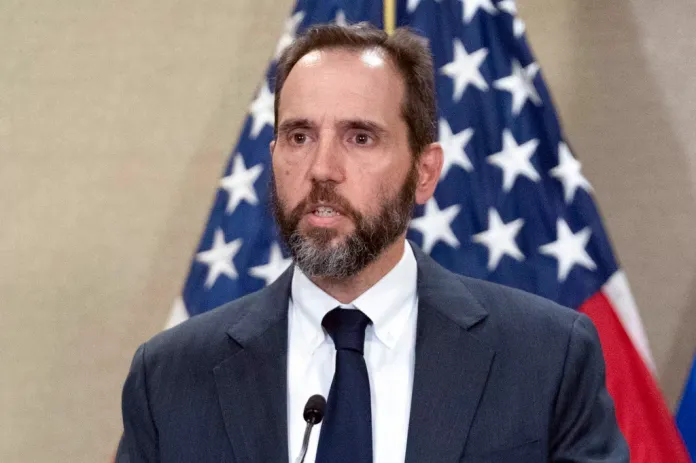
The most sweeping example came when Chief Judge Beryl Howell ordered Trump lawyer Evan Corcoran to testify without privilege protections and turn over contemporaneous notes — a ruling the D.C. Circuit later affirmed. Judges also compelled testimony from other Trump attorneys, including Christina Bobb, after determining Smith had shown sufficient evidence of obstruction.
That aggressive posture underscores the gap between cases in which prosecutors make a strong evidentiary showing and cases, like Comey’s, where judges raise fundamental questions about the integrity and handling of the underlying evidence. Critics say judges more readily approved novel or aggressive prosecutorial moves in the Trump cases while carefully scrutinizing prosecutors’ requests in the cases against Comey and James.
DOJ deadline to respond approaching
Kollar-Kotelly placed the dispute on a fast track, ordering the DOJ to certify by Monday that it has complied with her sequestration order and to file its legal response to Richman’s petition by Tuesday. Her restraining order remains in effect through Friday unless she cancels it earlier. No hearing date has been set.
A source familiar with the DOJ’s thinking, speaking to the Daily Caller, called the ruling “judicial activism,” arguing that the judge issued the order before the government had a chance to respond. The source described the development as a “minor setback” and insisted the underlying legal issues favor DOJ’s position.
Letitia James case hits another wall
The government’s parallel effort to relaunch the mortgage fraud prosecution of New York Attorney General Letitia James is also faltering.
GRAND JURY DECLINES TO INDICT LETITIA JAMES AFTER EARLIER CASE COLLAPSED
A Norfolk grand jury last week refused to indict her on bank-fraud and false-statement charges after hearing a fresh presentation meant to cure the flaws that had doomed the original indictment. That case, like Comey’s, collapsed after Currie ruled Halligan’s appointment illegal.
Both James and Comey have denied wrongdoing and accused the Trump administration of political retaliation. Prosecutors could make yet another attempt or pursue charges in both cases.