
In Dealing with Feeling, the latest work of speculative fiction by Marc Brackett, the fantasy is simple: What if, at long last, we could tame the human heart? What if we overcame “the biggest obstacle to achieving our best selves” by developing “care and compassion for ourselves”? What if we could “gain control over our lives,” find “success — at home, at school, at work, and everywhere else,” could solve “virtually every problem we’ll ever have, from the personal to the political to the global,” and finally “create the life” we want? “The mind is its own place, and in it self/can make a Heav’n of Hell, a Hell of Heav’n/What matter where, if I be still the same,” John Milton asks. What, asks Brackett, if we were no longer prisoners of that place, but its God?
Science fiction‘s task is to imagine our future; its secret wish is to invent it. Brackett, while casting himself as a mere psychologist and psychology as a mere medical science, plays with the tradition of Gene Roddenberry, Robert Heinlein, B.F. Skinner, and L. Ron Hubbard by making the wish explicit: Dealing with Feeling‘s vision of the future is cleverly rendered in the form of the pop-psych self-help book that made it possible and delivered in the breezy style of its narrator who is also called Marc Brackett but who, unlike the author, has left his career as a fantasist behind to become the director of the Pynchonesque “Yale Center for Emotional Intelligence,” where he made the scientific breakthroughs that powered humanity into its new age.
Nearly all science fiction has some kind of technological McGuffin, some new subatomic particle, aerospace innovation, or infinite energy source; the particulars of the fantasy depend on the anxieties and preoccupations of the era that produces the work. H.G. Wells’s Victorian England imagined the power of electricity begetting time machines and magic submarines. The height of the space race imagined the warp core taking a united humanity to distant worlds. It’s no surprise, then, in this age of self-care, BetterHelp, and the relentless pathologizing of all human interaction in the language of the clinic, that Brackett’s source of magic power is not antimatter, plasma manifolds, or reverse tachyon emissions, but feelings — the power that was locked inside us all along. Use your emotions to create the life you want is the subtitle of Brackett’s self-help text-within-a-text. Once properly tapped, pathos proves more powerful than any hyperdrive.
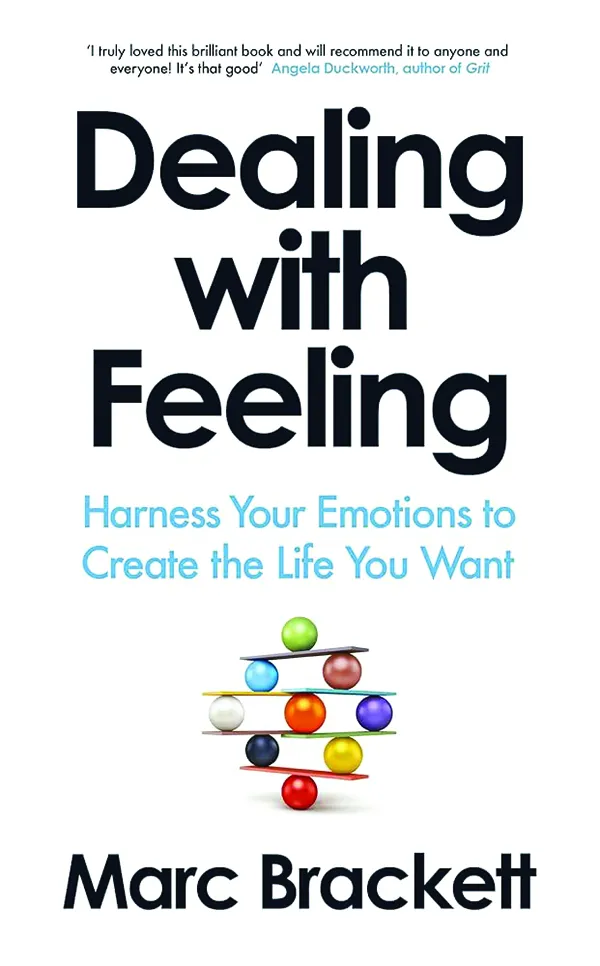
This is not a new idea. The notion that our unruly hearts are the source of all our troubles — the true cause of “everything that has ever happened,” and mostly for ill, as Brackett says — is among the oldest insights in human life. Plato, Aristotle, Confucius, Mencius, Epictetus, Siddhartha Gautama, Nagarjuna, Vasubandhu, Zeno of Citium, Marcus Aurelius, Seneca, Lao Tzu, Zhungzi, Xunzi, Han Fei, Patanjali, Adi Shankara, Mahavira, Dogen, Hakuin Ekaku, Al-Ghazali, Augustine of Hippo, the Desert Fathers, Thomas Aquinas, Blaise Pascal, and Sigmund Freud are only a few among the many who recognized the ways we are betrayed by our own passions. They knew the path to enlightenment and peace — or at least the end of needless misery — lay in dealing with feeling. Each developed some system, method, discipline, meditation, cultivated detachment, habitus, zen, asceticism, wisdom, or psychoanalysis to at long last allow mankind to find its way into the vanishing space between the impulse and the act, the desire and the pursuit, the affect and the action, and master our souls. But each failed. We have been trying to solve this problem for millennia. The fiction here is a world where we suddenly succeed. The “science” is how.
Like the million dead generations that dreamed of flight before the advent of the jet engine, all those bygone philosophers and saints were simply born too soon to see what the wizards at the Yale Center for Emotional Intelligence could accomplish with the help of new technology. Much of the plot of Dealing with Feeling follows Brackett’s narrator as he brings the power of corporate optimization language, replication-resistant psychology studies, “evidence-based medicine,” “simple tools,” and easy-to-remember acronyms to bear against the tempest of human life. Building on cognitive behavioral therapy (yet another old philosophy that made no appreciable impact on the overall level of human emotional discontent), Beckett replaces the endless meditation, self-denial, philosophical rigor, and years spent on the analyst’s couch — approaches only really achievable by the most dedicated practitioners — with simple “proven” ways to achieve “emotional regulation.”
The simplicity is key: the world can only change when any reasonably dedicated person can truly master “how to respond to what life throws at us” and become “the best version” of themselves, when the whole world can actually experience the “positive impact” of Brackett’s methods first-hand. We see this in an early chapter when Brackett wanders, Zarathustra-like, into a crowd of skeptics. “Emotional regulation is the most important skill a human being can possess,” he proclaims. But the crowd is wary: they believe he wants to smother them, or to draw them into some kind of controlling cult. Cognizant that the “nuanced labels” used by previous psychologists have made the secrets of total self-control inaccessible to the vast majority of mankind, Brackett speaks to them in language they can understand. “What if I told you that the goal of emotional regulation is to learn how to use your emotions wisely, to get the outcomes you desire, and to have a more fulfilling existence?” he asks them. Don’t they want “successful, satisfying lives, with healthy, loving relationships, meaningful achievement, and lasting inner peace (or as close as we’re ever likely to get)”? Yes. Yes, they do.
Soon, Brackett reveals his secrets to eager listeners: How “cost-benefit analysis and motivation” are essential to not speaking and acting “in ways that mess up our own lives and sometimes the lives of other people.” He explains how they must learn to transition “from unhelpful to helpful methods for dealing” with emotions, to replace “hot cognitive processes” with “cool cognitive processes” (except when the hot ones are more useful for success), how when “we can’t change the world, we have to change the way we view it” (which, in turn, changes the world), how “whenever we’re triggered and about to say or do something rash, we need to ask ourselves Is it worth it?” He teaches them how to co-regulate, quiet the mind and body, be a good listener, celebrate others’ success, build emotional strength, and bring clarity from chaos. He reveals how all of this is possible using his one weird trick, the technological miracle he has been developing “for the past thirty years”: RULER. It stands for “recognizing, understanding, labeling, expressing, and regulating” emotions. The secret is to do all of those things in that order and then make a good choice at the end. It gets a little help from its cousin, PRIME: prevent unwanted emotions if we can, reduce them otherwise, initiate desirable emotions, maintain the feelings we want, and enhance those whenever possible. It’s all as easily done as said, with just a little practice. The crowd is won over. A “new path forward begins.”
From the initial room of skeptics, Brackett takes his revolution on tour, helping a varied cast of characters (mainly spouses in unhappy marriages, workers stuck in dead-end jobs, and children who don’t want to visit their aunts and uncles) become the people they want to be through “small acts” of “dealing wisely with [their] feelings, one by one.” Much of the action takes place in schools. Like any good revolutionary, Brackett knows that durable change depends on capturing the youth, and nearly 100 pages are dedicated to his efforts to set up RULER programs in thousands of schools worldwide. Within a generation, the world is unrecognizable: “Not perfect, of course. But better.” Of course, like any sci-fi, Brackett can’t actually tell you how the warp core works, and when a character encounters a particularly difficult problem, the novel tends to hand-wave it away (“in reality, it’s a bit more complicated” is a common refrain), but that’s to be expected. This is science fiction. If Brackett ever strains his readers’ credulity, it’s in just how easy it all proves to be. He encounters skepticism and difficulty throughout the book, but not real resistance, failures, or fonts of drama. The plot depends in large part on just how miraculous this all is, but still: if we are to believe that Brackett succeeded where Lao Tzu and Saint Augustine failed, we might have expected him to work a little harder; perhaps he would have needed to invent a third acronym on the fly.
But then, perhaps this is part of the point. The real strength of Dealing with Feeling — the power cleverly concealed by the framing device of the self-help book, by the utter confidence of its narrator — is the way it asks what kind of future Brackett brings about. One begins to notice the ways characters leave the plot: confronted with a real problem, they regulate their emotions and feel better, but rarely stick around to address the source of their original distress. We see a man go home, ready to finally have an honest conversation with his wife, but the conversation occurs in the lacunae. We see a woman write a difficult email to her boss, initiating a well-regulated confrontation about conflicts in the workplace, but we never see the result. A father finally connects with his bullied teenager, but for all we know, the bullying continues. Brackett himself slips here and there: he yells at an in-law, he struggles to reconcile with his bigoted parents, he finds himself irritated by a stranger and has to “lecture” himself: Marc, don’t say it, don’t react to this, but still, sometimes, he does. “It’s not easy,” he says.
Like Marx, Brackett is light on the details of the world after the revolution. The most sustained scene we get takes place in a classroom where “a little boy walks into his kindergarten classroom and goes straight to the Mood Meter.” There, like every student every day, he sets his current emotional state to one of four options: pleasant and calm, pleasant and energized, unpleasant and energized, and “low-key and unpleasant.” He picks the last option and sits down. A few moments later, a little girl comes in and asks him why he is so unpleasant and low-key. “My dog is sick,” he says. “How are you feeling?” she asks. “Sad,” he says. There are no tantrums, confusion, or recognizable traces of how five-year-olds act in our unenlightened world. They are perfectly self-aware, open, and clear. “Do you want to come with me to the strategy wheel?” the girl asks. “OK,” says the boy. They spin a little wheel that randomly generates ways to “deal with difficult feelings.” They settle on drawing. The boy draws a picture of himself playing with his dog. He feels better now. “He stares at it awhile, then rises, goes back to the mood meter, and moves his photo” to the happy quadrant. We never find out what happened to the dog.
When I imagine this scene, I imagine these children dead-eyed and monotone. I imagine a practiced voice asking, “Do you want to come with me to the strategy wheel?” emitting out of a wearable health device forever. I think that I am meant to picture it this way. About a hundred pages into Dealing with Feeling, the narrator lets slip that “happiness is not always a realistic goal.” Fair enough. It is not, he adds in a startling confession, “even a desirable one.” On its surface, the book concerns how we might reach a place where even a little boy learns to numb the protestations of his heart, practicing until he can regulate away his anguish over a dying dog with the help of a wheel derived from an acronym. But at its heart, this book is about what kind of world its gleeful Brackett would bring about.
A great deal of science fiction imagines a future for the human race and hopes the human race, so inspired, will work to make it a reality. But just as often, the genre intends its prophecy as a warning, a future to be prevented despite the dreams of well-intentioned men. Dealing with Feeling is science fiction. But does it belong to the utopian tradition or the dystopian one? If the future it describes were possible, should we even want it? For once, Brackett leaves us to figure out how we feel.
Emmett Rensin is the author of The Complications: On Going Insane in America.