
Senate Democrats will force a vote next week on a bill to extend expiring Obamacare subsidies for three years, rejecting bipartisan proposals and drawing criticism from Republicans that it is an unserious attempt to avert skyrocketing out-of-pocket premiums that take effect on Jan. 1.
The legislation, which is expected to receive a vote on Dec. 11 as part of a bipartisan deal last month to end the government shutdown, is likely to garner only Democratic support and fall well short of the 60-vote filibuster threshold to pass. But it will offer Democrats their latest healthcare messaging opportunity ahead of the 2026 midterm elections.
It remained unclear whether Republicans, who said Democrats settled on a measure designed to fail, would counterprogram and offer an alternative bill to address health insurance costs. The pandemic-era enhanced subsidies will expire at the end of the year.
“Any Republican who claims to care about premium increases on January 1 has only one realistic path, and that’s to support our bill for a simple, clean, three-year extension,” Senate Minority Leader Chuck Schumer (D-NY) said. “If Republicans block our bill, there’s no going back.”
The determination to settle on a more partisan proposal is the culmination of weeks of bipartisan talks that failed to produce a broadly supported alternative, in large part because of a long-running impasse over GOP demands to expand abortion restrictions under the Affordable Care Act.
Republicans in both chambers have floated shorter extensions with modifications, such as lower income caps to reduce eligibility. Just minutes before Schumer announced Democrats’ legislative avenue, a group of House centrists unveiled a bipartisan one-year extension.
Opting for a more partisan route breathed new fire into Republican accusations that Democrats were insincere about blunting rising costs for most of the 24 million marketplace recipients who are forecasted to leave millions without the ability to afford insurance.
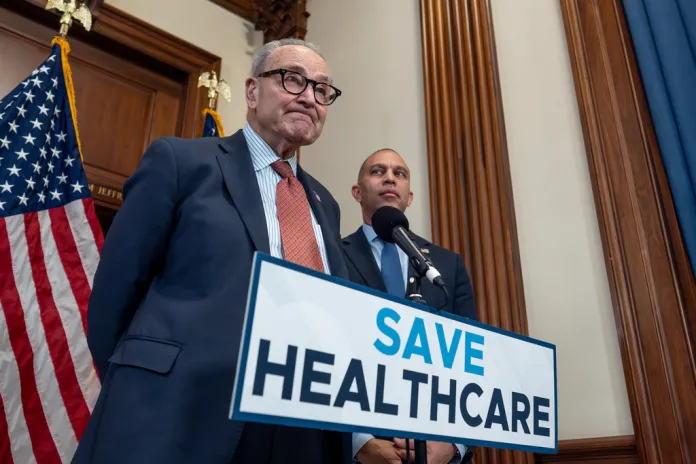
“This isn’t a serious offer,” Senate Majority Whip John Barrasso (R-WY) said. “This is not an offer that they’re trying to get Republican buy-in at all. That’s not it. This is complete messaging on their part.”
Schumer’s tactic also ensures unity among his members after the shutdown exposed renewed divisions in the caucus and skepticism in his leadership over the party’s failure to use the saga to score a subsidy extension. Republicans have faced their own divisions regarding the Biden-era subsidies, which most say line the pockets of insurance corporations rather than lower actual costs.
OBAMACARE SUBSIDY DEAL FURTHER OUT OF REACH AS BIPARTISAN TALKS SPUTTER
Senate Republicans were still weighing whether to vote on a GOP alternative, according to Barrasso.
“The only path next week is supporting our bill, and while Democrats are united in fighting for the American people, Republicans are too busy fighting amongst themselves,” Schumer said. “They can’t even come up with their own plan.”