
Israel is poised to take center stage for Democrats once again in Michigan’s high-stakes Senate primary, reviving deep divisions within the party over U.S. foreign policy in the Middle East.
Nowhere are the simmering tensions over the war in Gaza among Democrats more pronounced than in the Wolverine State, where a once-reliable coalition has splintered.
In cities like Dearborn, anger over U.S. support for Israel has fueled a political shift, with many Arab American voters distancing themselves from the party they long backed. Last year, Donald Trump carried Dearborn — a striking reversal driven by frustration with the Biden administration’s handling of the conflict.
“In Michigan, it’s a scab that hasn’t really closed – when national Democrats think about Michigan and think about it along these political fault lines, the trauma of last November certainly comes rushing right back,” said Jon Reinish, a Democratic strategist.
Rep. Haley Stevens’s (D-MI) entrance into the fiercely contested race to replace retiring Sen. Gary Peters (D-MI) on Tuesday virtually guarantees the topic will again be a flashpoint. Stevens is an outspoken defender of Israel, while one of her competitors, Abdul El-Sayed, an Ann Arbor-based former health official supported by Sen. Bernie Sanders (I-VT), voted “uncommitted” in the 2024 election.
“Given the state, given the political history of the state, the demographics of the state, I think you’d be hard-pressed to say that [the war in Gaza] wouldn’t be a defining issue of this primary,” said Randy Jones, a Democratic political consultant.
“I think you’re going to have folks on both sides of this issue who want to make it the defining issue,” he added.
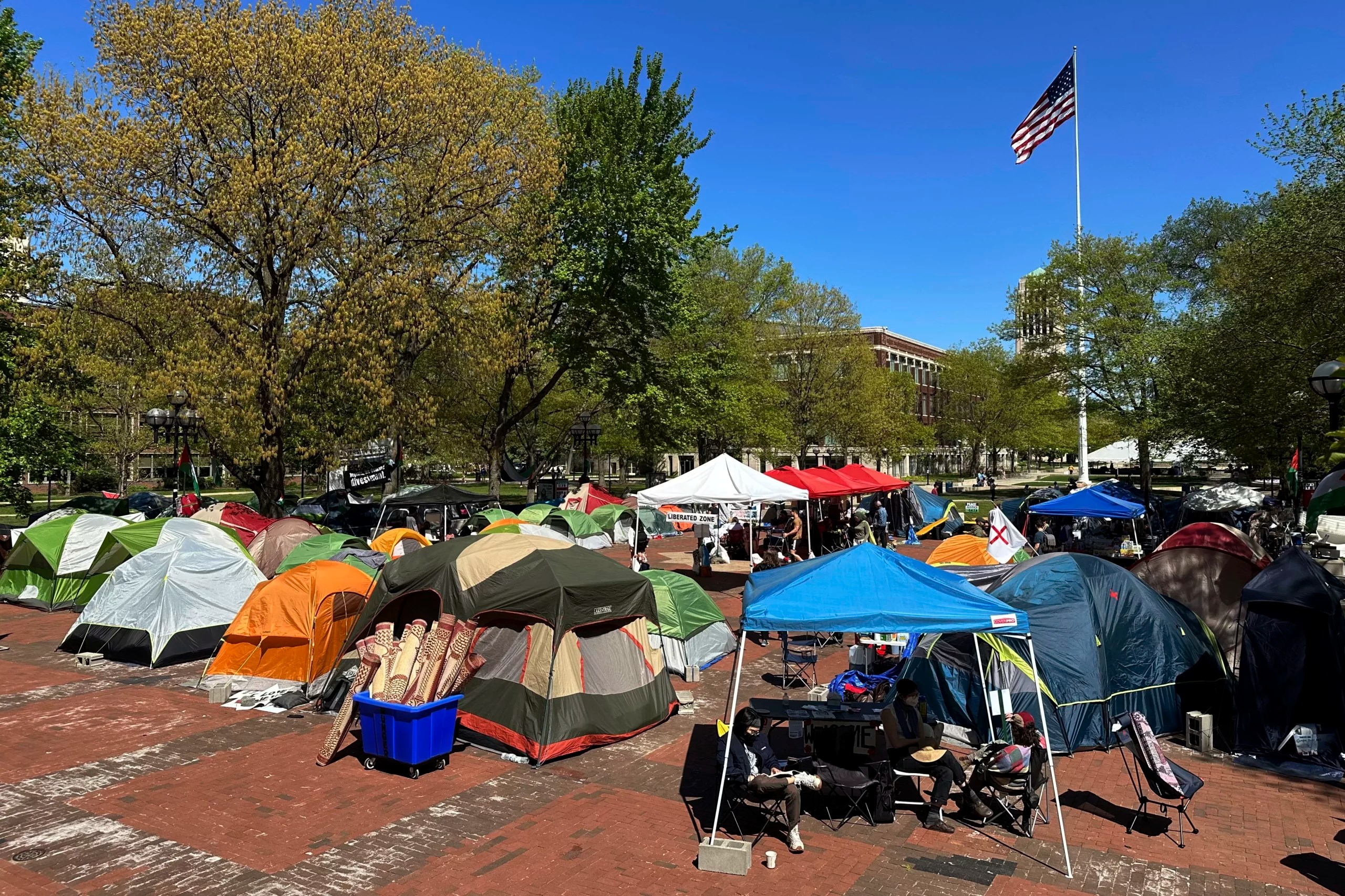
Stevens has previously earned strong backing from Michigan’s Jewish community. Her stance garnered significant support from pro-Israel organizations, notably the American Israel Public Affairs Committee, which played a key role in helping her defeat former Rep. Andy Levin (D-MI), a Jewish progressive and former synagogue president, in 2022.
Despite Levin’s deep personal and family connections to Israel, AIPAC opposed Levin’s bid, arguing that his policy positions did not demonstrate strong enough support for the U.S.-Israel alliance. Levin has not decided whether to make a comeback run for office but told the Washington Examiner that he is being encouraged to “look at different races.”
In the Senate race, Stevens is gaining favor among pro-Israel groups, though many have yet to formally endorse a candidate. While AIPAC has traditionally steered clear of statewide contests, one source familiar with the group’s thinking believes they ultimately will spend in support of Stevens.
“Though we have not yet made a decision in this race, Rep. Stevens has emerged as a pro-Israel stalwart during her tenure in the House of Representatives,” Marshall Wittmann, a spokesman for AIPAC, said in a statement provided to the Washington Examiner.
Other pro-Israel groups see Mallory McMorrow, a state senator from Oakland County, as a reliable ally, citing her condemnations of antisemitism and alignment with the party’s pro-Israel faction. The entrance of Stevens and McMorrow into the Senate race has fueled expectations that much of the focus of pro-Israel groups will be directed toward thwarting El-Sayed’s campaign.
During the 2024 elections, El-Sayed opposed former President Joe Biden’s stance on the Israel-Hamas conflict. That led him to join over 100,000 voters in casting a protest vote against Biden in Michigan’s Democratic primary last February as part of the Uncommitted Movement. El-Sayed has called for halting U.S. military aid to Israel and has described Israel’s actions in Gaza as “genocide.”
Recent polling indicates a significant shift in Democratic attitudes toward Israel, with growing support for Palestinian causes. As of March 2025, 69% of Democrats express an unfavorable opinion of Israel, up from 53% in 2022, according to the Pew Research Center. A Gallup poll from the same period revealed that 59% of Democratic voters sympathize more with Palestinians than Israelis, a reversal from previous years.
“This issue has given us a political black eye, and I don’t see a resolution any time soon,” said a Democratic operative, speaking on condition of anonymity to reflect candidly on the situation. “Our best-case scenario is that this issue fades from the headlines within the next year and President Trump’s actions become the defining issue.”
The Israel-Hamas war laid bare sharp rifts within the Democratic Party during the last election cycle, and those fault lines resurfaced this month when 15 Senate Democrats supported Sanders’s unsuccessful push to block $8.8 billion in arms sales to Israel over humanitarian concerns in Gaza. Now, there’s mounting concern the issue could again complicate a key Michigan race.
Jones, the Democratic political consultant, argues that Democrats must move beyond political pressure and actively engage in open dialogue, especially on divisive issues.
“Democrats have to be willing to listen, and not just listen, but they have to be willing to learn. They have to be willing to understand, and they have to be willing to have a conversation,” he said. “I think a lot of times today on this issue and many others that are so politically charged, Democrats are afraid to engage. They’re afraid to have a conversation.”
The state is rapidly emerging as a focal point in the battle for the Senate in 2026, with control of the Republicans’ 53-47 majority hanging in the balance in a key swing state that Trump carried last November. On the Republican side, former Rep. Mike Rogers (R-MI), who narrowly lost Michigan’s Senate race last fall to now-Sen. Elissa Slotkin (D-MI), has announced he is running again.
“I would certainly say this to the so-called ‘progressive’ wing of the party. Do you want to hold the seat? Do you or do you want to open up the very distinct possibility that we could lose a long-held swing state, an all-important Senate seat, because we’ve chosen to squabble over that issue, and then that’ll mean that we did not learn our lesson from 2024,” Reinish said.
HALEY STEVENS LAUNCHES RUN FOR MICHIGAN SENATE
While the war in Gaza is a major focus now, Reinish noted it’s far too early to gauge its impact on the 2026 midterm elections, pointing to how quickly global events can shift and how public opinion may look very different by then.
“Who among us can say where exactly the conflict in Gaza between Israel and Hamas is even going to be in 2026 — and American perceptions of it, and micro population perceptions of it, like, who knows where that’s going to be? A year from now, nobody can say,” he added.
Marisa Schultz contributed to this report.