
Estonia is shutting its border with Russia after the government claims the Kremlin hired residents of a neighboring country to set fire to a major defense company, and neighbors are now weighing similar measures.
The country’s Internal Security Service arrested eight individuals from Latvia on Saturday amid an alleged attempted arson of defense company Threod Systems. Officials claimed there was “clear evidence” the group was paid by the Russian intelligence agency GRU to perpetrate the attack.
“Russia must understand that hostile actions against Estonia come with consequences. Attempts to intimidate, destabilise, or undermine our security will not go unanswered,” said Foreign Minister Margus Tsahkna. “Closing the border crossings will reduce Russia’s ability to conduct hostile activities in Estonia and strengthen our efforts to prevent sanctions circumvention.”
Threod Systems is a high-profile defense firm in Estonia that produces drones and other weaponry, much of which is ultimately sent to aid Ukrainian forces abroad. While detailed information about the eight arson suspects has not yet been released, statements from Estonian authorities suggest they fit the standard profile of Russian agents acting in foreign countries.
“Russian intel prefers to recruit local lowlifes, pay them a few hundred Euros to get them to do stuff — high return-on-investment versus old-school spy stuff,” an Estonian diplomat told the Washington Examiner. The diplomat downplayed the importance of the weekend arson attack, calling such threats the “perennial headache of living next door to that so-called country of Russia.”
ISS Director General Margo Palloson said on Monday that often the Kremlin can pay hired thugs “just a few hundred euros” to participate in what amounts to state-sponsored terrorism. The phenomenon has parallels to Islamic terrorism carried out in Western Europe by cash-strapped criminals believed to be working at the behest of clients in Iran.
Now, Estonia is completely ending cross-border transit with Russia to prevent future incidents. The closure is expected to begin on Dec. 1, and fellow Baltic nations are considering similar actions.
Lithuanian President Gitanas Nauseda said Monday his country “could also make such decisions,” though he noted that its position was compromised due to being a landbridge between mainland Russia and the exclave of Kaliningrad.
“We know these threats all too well, having faced various forms of hybrid attacks and sabotage attempts ourselves,” a Lithuanian diplomat told the Washington Examiner. “Every act of sabotage must strengthen our resolve and unity, and carry a higher cost for Russia.”
The Kremlin has pushed back on Estonia’s decision, accusing the government of manufacturing the attack to drive public opinion against Russia.
Russian Foreign Ministry spokeswoman Maria Zakharova called it “yet another bout of aggressive and unbridled Russophobia” and Kremlin spokesman Dmitry Peskov complained that the “entirely baseless” accusations would ultimately harm Estonia, not Russia.
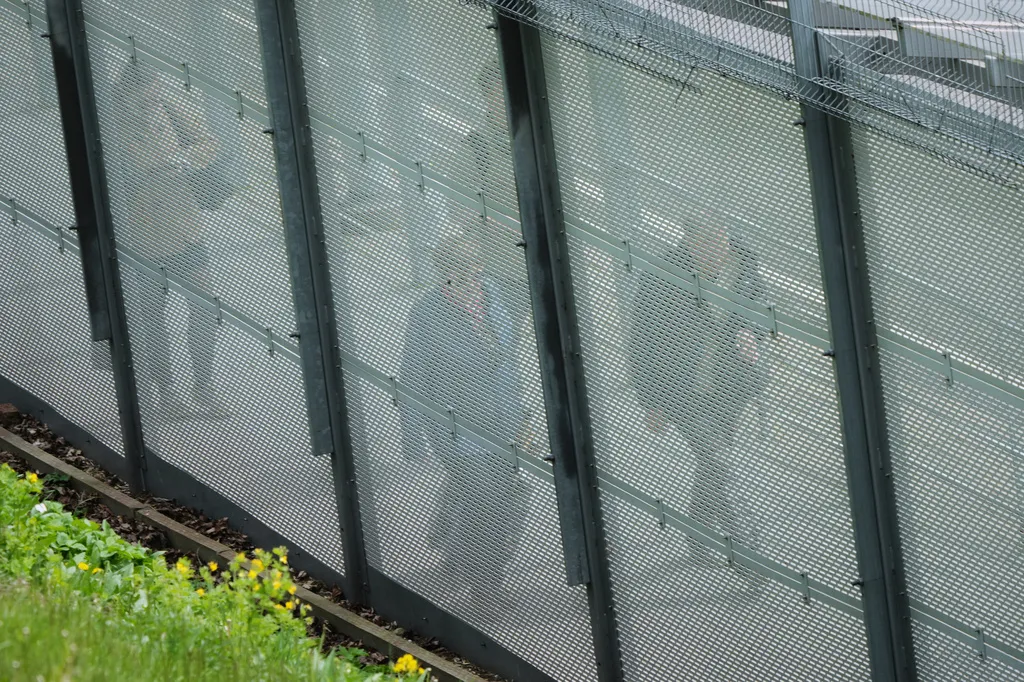
“Of course, a decision such as this to close all checkpoints and border crossings. Well, it’s as if Estonia is building a wall,” Peskov complained. “As history shows, many countries have built walls, which have brought nothing good to those who erected them.”
“Russia calling the step ‘Russophobic’ is rich,” the Estonian diplomat told the Washington Examiner. “A phobia is an irrational fear. Loathing Russia is eminently rational.”
UKRAINE STRIKES CRIMEA’S KERCH BRIDGE IN HISTORIC ATTACKS
The Baltic countries are widely viewed as the front lines of a cold war between Western and Eastern Europe. A hypothetical Russian invasion of the Suwalki Gap on the Lithuania-Poland border could pincer the Baltics and cut them off from the rest of NATO — forcing a serious discussion of whether powers like the United States, France, and Germany are prepared to go to war for three countries with a population rivaling the state of Maryland and a GDP less than that of Columbus, Ohio.
This vulnerability and reliance on their NATO allies have driven the Baltics to become model members of the alliance, topping per capita contributions to mutual defense and offering their territory for the strategic placement of military bases. Lithuania recently lifted a ban on hosting nuclear weapons for foreign states.