
President Donald Trump spent the closing weeks of the midterm campaign saying, “Pretend I’m on the ballot.” He repeated it in campaign videos and telephone rallies, convinced that he was the key to Republicans maintaining control of Congress.
Voters took him up on the offer, and the results were a complete repudiation of the previous two years.
Democrats won big. They not only won the House but also the Senate, won governorships Republicans had controlled for years, and flipped congressional seats in states Trump carried comfortably in 2024. In Kansas, Adam Hamilton became the first Democrat elected to the U.S. Senate since 1932, while Democrats in Texas were elected statewide, making it the first time a Democrat held statewide office since 1994. Economic concerns, which had helped return Trump to the White House just two years earlier, had become a liability for the GOP. Voters were angry about prices, frustrated with their household finances, and increasingly blamed the president’s policies for making things worse.
But something else happened on Election Day that Democrats should pay attention to before deciding how to use their newfound power. In several states where Democratic candidates won big, voters also approved measures providing tax relief or making it harder for government to raise taxes.
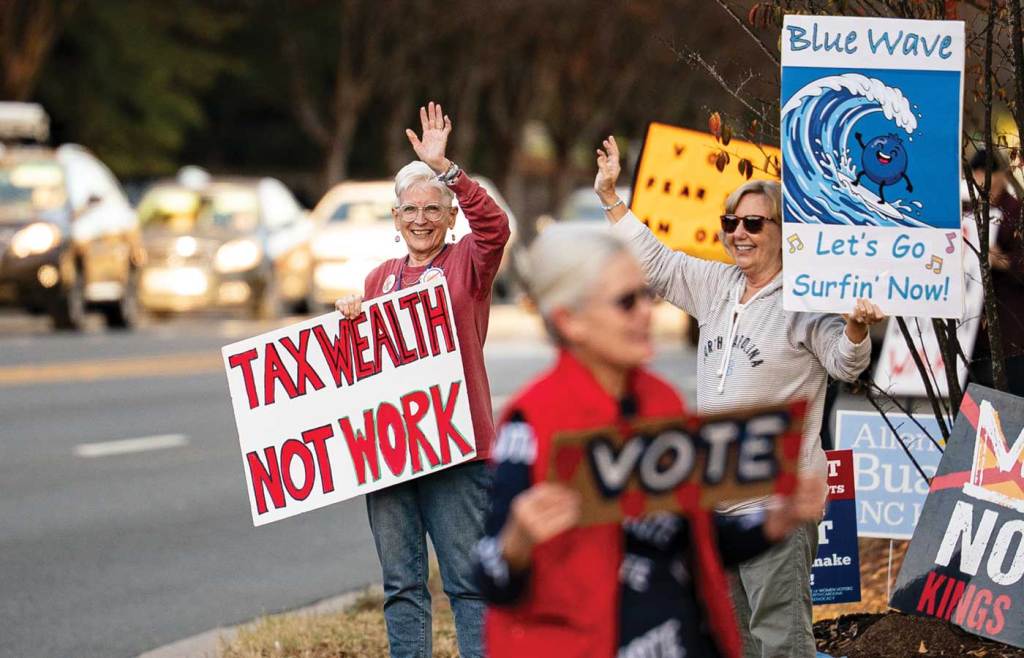
Democrats won big, but there was a clear message: “Stay out of our wallets and pocketbooks.”
According to NBC News exit polling, 39% of voters identified the economy as the country’s most important issue. Nearly two-thirds, 65%, said Trump’s policies had made economic conditions worse, while 62% held him responsible for high prices. Almost 8 in 10 reported that inflation was creating financial hardship for their families.
CBS News found that voters whose financial situations had deteriorated over the previous two years supported Democratic House candidates. The Associated Press reported similar results among voters concerned about groceries, gasoline, and healthcare costs.
Trump promised to bring prices down on Day 1, and voters responded accordingly when the promise didn’t materialize.
His tariffs, which he repeatedly defended as a way to rebuild American manufacturing, protect domestic industries, and ease trade deficits, became part of the affordability debate. Trump hailed the implementation of some tariffs in April 2025 as “Liberation Day.” Trump and the administration insisted their policies were working, but voters were looking at grocery bills, interest rates, and energy bills without seeing relief. The Biden administration tried the tactic of insisting things were going well and that it was just “the vibes” that were off. But a bank account does not lie, and there are no “vibes” involved when people see their dollars aren’t going as far now as they did before the Biden administration.
That frustration carried Democrats to victories in places where Republicans had grown accustomed to winning, including Iowa. Democrats flipped the governorship, with Rob Sand defeating Zach Lahn by roughly 11 points. Josh Turek defeated Ashley Hinson for the U.S. Senate, and Democrats captured three of Iowa’s four congressional districts.
It was a remarkable reversal in a state Trump carried by double digits just two years earlier.
However, Iowa voters also approved a constitutional amendment requiring a two-thirds vote in both chambers of the legislature to increase individual or corporate income tax rates or create a new income tax. The measure passed with 56% support. Iowa voters swept in Democrats while making it harder to raise corporate and individual income taxes.
North Carolina delivered a similar message. Democrats performed well in the state, but voters also approved two constitutional amendments restricting taxation. One lowered the maximum allowable state income tax rate from 7% to 3.5%. The other required the legislature to establish limits on increases in local property tax levies. Both received approximately 60% support.
North Carolina’s income tax rate was already below the new constitutional ceiling, so the amendment didn’t immediately reduce anyone’s taxes. What it did was make it harder for future legislatures to raise them. The property tax amendment put additional restrictions on local governments, where rising home assessments have left homeowners facing higher tax bills even when their incomes haven’t increased.
Florida showed how voters were motivated by the size of their property tax bill relative to their support for statewide candidates.
Gov.-elect Byron Donalds (R-FL) and Sen. Ashley Moody (R-FL) survived their statewide races, but neither enjoyed the comfortable victories Florida Republicans were accustomed to during the Ron DeSantis era. Donalds barely crossed 50%, while Moody received approximately 51%.
Still, on the same ballot, Amendment 3, a property tax relief measure championed by DeSantis, received nearly 62% of the vote. The amendment increases the homestead exemption for nonschool property taxes and reduces the annual assessment-growth cap for non-homestead properties. It cleared Florida’s demanding 60% threshold for constitutional amendments, outperforming Moody and Donalds by roughly 11 and 12 percentage points, respectively.
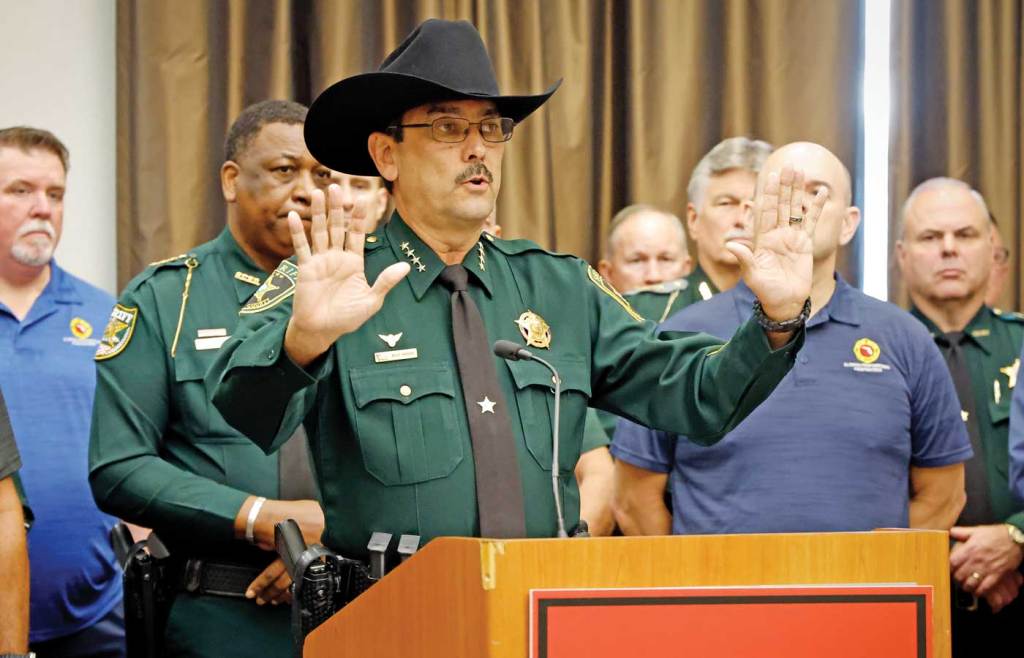
Local governments, which enjoyed a surge of property tax revenue in the last six years of anywhere from 50% to 135% depending on the region, and union-affiliated groups, notably police and firefighters, spent heavily trying to convince voters that Amendment 3 would force cuts to public services and put lives in danger. Voters ignored the fearmongering and approved it anyway.
The results were especially notable because Florida Republicans had dominated statewide elections in recent years. This time, their candidates struggled to get much beyond 50%, while a measure reducing property taxes won support from three-fifths of the electorate.
The enthusiasm for tax relief extended well beyond the Republican voting base.
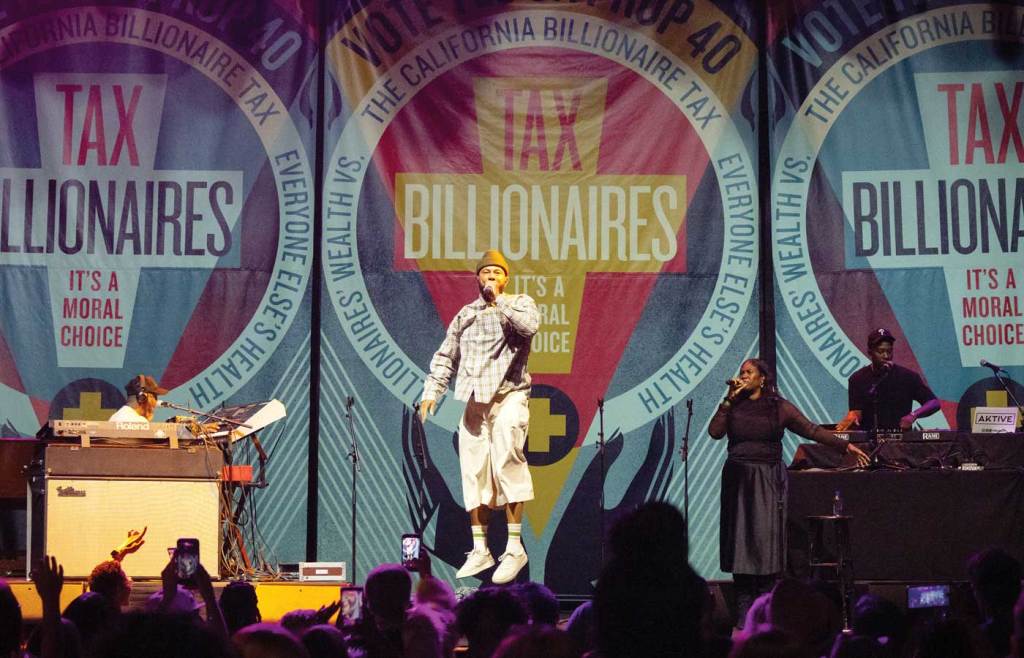
California offered another example. Democrats won comfortably in the state’s major races, as expected. But Proposition 40, a proposed one-time 5% wealth tax on billionaires, went down to defeat.
The measure would have imposed a one-time 5% tax on the net worth of California residents with more than $1 billion in assets. This would be the first time a state would attempt to collect taxes on money that technically does not exist. Income taxes are based on wages, and capital gains taxes are based on the sale of assets and investment income. This would tax people on the value of the assets they hold.
Opponents warned that the tax could drive wealthy residents and investment out of California, damaging the state’s economy and revenue base.
Voters rejected it, with approximately 53% voting no.
Elsewhere, voters delivered similar messages.
In Tennessee, nearly 67% approved a constitutional amendment prohibiting a statewide property tax.
In North Dakota, voters in Divide and Traill counties rejected proposals to exceed existing property tax limits.
There were exceptions. Colorado voters supported a graduated income tax and rejected a competing proposal to cap rates at 4.4%. Washington state voters declined to repeal a new income tax on households earning more than $1 million.
Still, the results in Iowa, North Carolina, Florida, and California present a problem for Democrats, who see their victories as an endorsement of higher taxes and an expansive, left-wing government spending agenda.
The question is whether the party understands what voters were telling them, and the early evidence suggests they did not get the message.
In Texas, Democrats won the governorship and control of the state House, although Republicans retained the Senate. On the first day of bill filing for the 2027 session, Democrats introduced proposals to expand Medicaid, increase the minimum wage, eliminate certain tax breaks for data centers, legalize marijuana, ban Flock cameras, and roll back the requirements that sheriffs cooperate with Immigration and Customs Enforcement.
Compare that agenda with what Texas voters said mattered most before the election.
An October University of Texas/Texas Politics Project poll asked voters an open-ended question about the single most important issue influencing their vote. Cost of living led at 21%, followed by the economy at 15%. Combined, economic concerns accounted for 36% of responses, far ahead of immigration, corruption, or any other single category.
Economic concerns led among Democrats, Republicans, and independents.
It is a warning signal to congressional Democrats when they take control of both chambers in January.
The party’s left wing has spent years pushing Medicare for all, higher taxes on billionaires, wealth taxes, abolishing ICE, and congressional investigations targeting corporate executives. Those proposals have been the red meat of the left-wing agenda and the party’s activist base for years, and Democrats now have congressional majorities that could give some of them new life.
But voters didn’t go to the polls demanding wealth taxes or Medicare for all. The national exit polls showed an electorate frustrated with prices and household expenses. State ballot results showed that even voters who supported Democrats were willing to restrict government taxing authority.
A Congress that spends its first months pursuing wealth taxes, the abolition of ICE, expensive new spending programs, wide-ranging, viral-generating investigations and hearings, and other ideological fights while Americans continue to struggle with household expenses could backfire as the presidential primary season heats up in the spring and summer of 2027.
There is a lesson to be learned from Trump’s defeat, and it isn’t particularly complicated.
The president spent much of the campaign describing an economy he insisted was thriving. He pointed to tariffs, tax cuts, and trade agreements as evidence that his policies were working. Yet voters consistently told pollsters they were struggling with everyday expenses.
Trump believed his economic message would overcome those concerns. Instead, voters judged the economy by what they were experiencing, not what the president said they should be experiencing.
Democrats now face the same test.
They can look at their congressional majorities, flipped governorships, and Republican losses and conclude that voters embraced the Democratic Party’s broader economic agenda. Or they can examine what voters said about the cost of living and how they voted on taxes when given the opportunity to decide those questions separately.
A GUN-CONTROL GROUP HAS PLANS FOR SAFE CHATTING WITH AI
Trump told Americans to pretend he was on the ballot. They did, and Republicans paid the price for an economy voters believed was headed in the wrong direction.
If Democrats interpret that result as an invitation to reach deeper into Americans’ wallets and engage in political fights they have no intention of winning, but instead are geared toward their activist base, they’ll have missed the message voters sent them.
Jay Caruso (@JayCaruso) is a writer living in Florida.