
New York’s 1970s punk scene remains one of the most talked-about eras in rock history – Blondie, Talking Heads, and the Ramones all managed to catapult from CBGB’s in the East Village to international fame. The band Television never managed that transition, though they were just as revered and, in some respects, more innovative. And on the death of their legendary guitar player, Richard Lloyd, at age 75 after a bout with cancer, a remarkable career deserves its due.
In Rip It Up And Start Again, Simon Reynolds’s history of post-punk, he says of Television, they were “either the last sixties group or the first to make eighties rock.” They certainly didn’t sound like any other punk band of the era, which tended to use guitars as a loud, blunt instrument. It’s punk heresy to suggest, but the dueling guitar interplay between Television’s Richard Verlaine and Lloyd had more of a musical kinship with the Grateful Dead’s Jerry Garcia and Bob Weir than any punk peers.
And while their punk peers were eager to break with the musical past, Lloyd soaked it up. His family moved from Pittsburgh to New York when he was still young, and he spent his formative years sneaking into the city’s clubs, where he saw classic rock gods Led Zeppelin up close, but also blues pioneers such as Buddy Guy and John Lee Hooker.
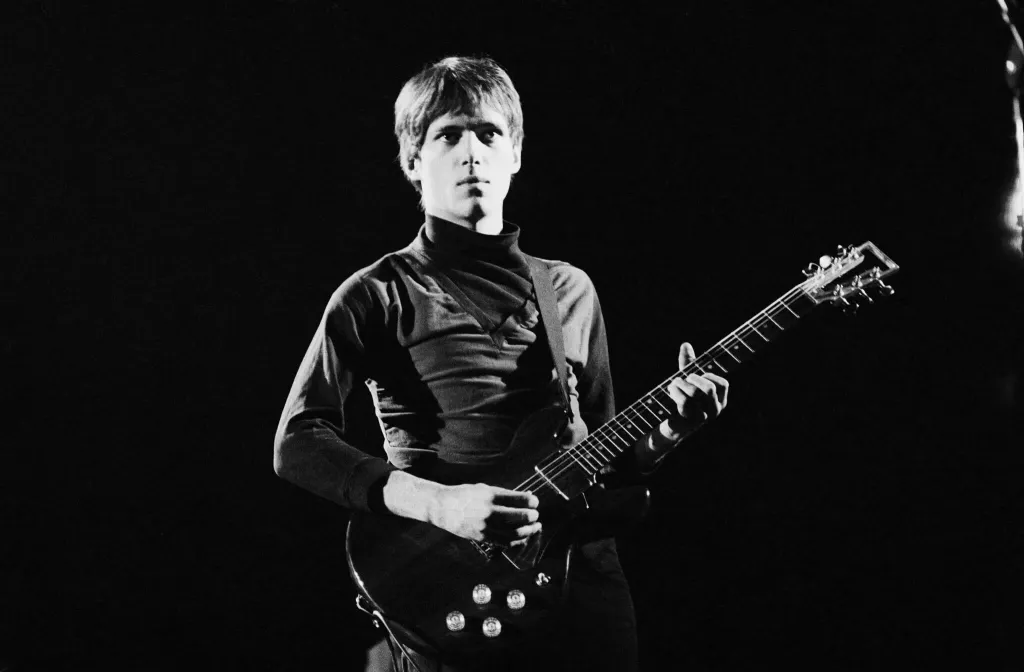
Jimi Hendrix was a particular influence. Lloyd took lessons from Hendrix acolyte Velvert Turner, and once had a memorable, if bizarre, encounter with his idol. In 1969, he found himself seated at the same table after Hendrix performed at a small club in the Village. Lloyd decided it was time to tell his hero how much his music meant to him, and Hendrix responded by slugging Lloyd three times for no apparent reason. Lloyd fled, but Hendrix later found him outside the club where he began weeping and apologizing (Lloyd’s admiration remained undiminished. In 2009, he released a record of faithful Hendrix covers, The Jamie Neverts Story).
But Lloyd learned the right musical lesson from Hendrix, which was that inspiration should fuel innovation, not invoke the past. By the time Television started turning heads in the mid-70s, they sounded nothing like anything anyone had heard before. Blues rock took a backseat to jazz inflections. Verlaine and Lloyd’s songs were all angular rhythms and interlocking lead lines of arabesque arpeggios that were the musical equivalent of falling down the stairs. This is best showcased on the title track of their 1977 debut, Marquee Moon. It starts with a bizarrely catchy stabbing riff, and over the course of 10 minutes, evolves into a drawn-out guitar battle between Lloyd and Verlaine.
The record earned the band cult status in the United Kingdom, but barely made a dent commercially in the United States. A very good but not as good follow-up record, Adventure, helped cement Television’s legend, but the band broke up in 1978. Still, it’s impossible to understate their influence – Television blew open the doors of unexplored sonic possibilities and defined guitar playing for post-punk, new wave, and indie. Marquee Moon “was just such a throw-down to me,” U2 guitarist the Edge said. “The electric guitar had really become such an unoriginal-sounding instrument.”
Post-Television, Lloyd battled sobriety issues but managed to put out a solo record, Alchemy, that is much more conventional-sounding – “Misty Eyes” is a lost power-pop gem. Unfortunately, it didn’t do much for his career, nor did any of his respectable ‘80s output.
But by the time the ’90s rolled around, Lloyd was in-demand as a session player. One of his biggest successes was Matthew Sweet’s 1991 record Girlfriend, which produced a number of radio hits and is one of the most beloved alternative rock albums of the decade. Notably, Lloyd played guitar on the record with Robert Quine of Richard Hell and the Vovoids, another beloved New York punk scene contemporary, and there is real musical chemistry. Their frenetic squalling playing on that record remains captivating and iconic.
Also by the early ’90s, Television’s legend had grown enough that the band got back together. They released a quality third record in 1992 that sounded as if the band had never left. Lloyd would tour off and on with the reformed Television until 2007, while still recording and performing solo through last year.
Lloyd could be cantankerous and eccentric at times. He was known to rant at audiences and eat onions like apples — supposedly it helped his voice. However, Lloyd also had a reputation for being unusually thoughtful. Wilco’s Jeff Tweedy, who took guitar lessons from Lloyd and was a late-career friend, reports he could be quite humble and described him as “philosophical … a holistic guitar practitioner and teacher.”
Ultimately, it’s unsurprising that sentiments bordering on spirituality ooze out of his remarkable memoir, Everything is Combustible. “When a man learns to walk he must learn to fall, so perhaps falling comes first in learning,” he wrote. “Learn to fall and do not be frightened of the heights from which you fall.” It’s an apt epitaph for Lloyd, who was in one of the few bands in rock history that seemed to fall upwards. And now that Lloyd himself has fallen a final time, there’s no shortage of musicians willing to pick up his legacy and carry it to greater heights.
Mark Hemingway is a senior writer at RealClearInvestigations and the Books Editor at the Federalist.