
I’m interested in understanding compulsory military service, an experience so very different from my own, so I recently spoke with former Army Sgt. Cliff Cahoon, who was drafted during the Vietnam War. The conversation has given me much to contemplate.
Cliff graduated from Ingraham High School in Seattle in 1967. The Vietnam War was raging hot. Cahoon wanted to enlist, but promised his mother he would instead take his chances with the draft.
I asked, “How did you feel, graduating near the height of the war, at risk of being forced to fight in the Army?”
Cliff hesitated a moment. “I was somewhat philosophical about it.”
In June 1968, his mother handed him a newly arrived letter. “Greetings … You are required to report …” His mother was upset, but Cliff had no choice.
“I just took it as it came,” Cliff told me. “You just deal with what you’ve got.” He joined “hundreds of people” at a Seattle office for medical evaluation and swearing in. After basic and infantry school at nearby Fort Lewis, he and others were shipped to Vietnam. In a matter of months, he was made an infantryman and assigned to the 101st Airborne Division.
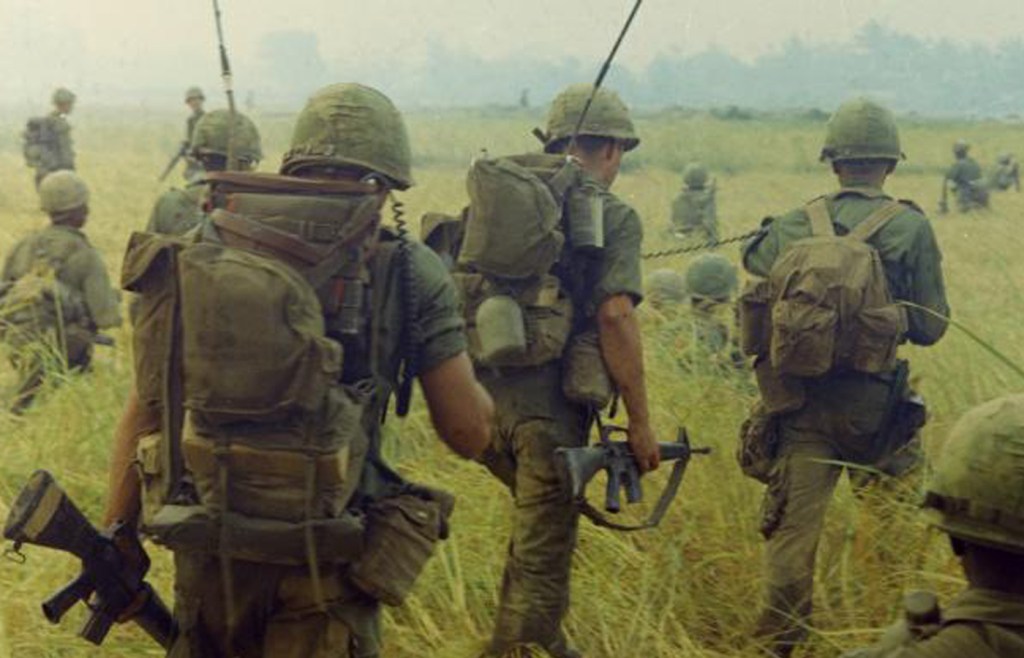
Cliff had no jump training. He learned rappelling from helicopters instead, but in Vietnam, he only did one practice exercise. Helicopters delivered them to landing zones. If the landing zone were hot, the bird would fly in and hover for a brief moment. Sometimes they had to jump 10 to 12 feet.
For a year in Vietnam, starting in November 1969, Cahoon and his unit went out on night ambushes, waiting in the dark to attack the enemy. He lived in the Vietnamese jungle around Phu Bai, a “tropical paradise full of terror,” slightly south of Hue. In his entire tour, he spent maybe 12 days in camp.
On one of those days, Cahoon’s unit was to receive training in jungle warfare and booby traps. But the trap class was canceled. Someone had sneaked in a live explosive, killing one of the students. This taught him that “you can’t trust anything.”
It was something of a miracle I even had the opportunity to talk to the man. During his 12 months in Vietnam, Cliff Cahoon was awarded three Purple Hearts for shrapnel injuries. Bullets zipped by so close they hit his rifle’s magazine and ripped through a notebook in his rucksack.
“They pale in comparison to what other people have gone through,” Cahoon said of his many combat experiences. “But a firefight is a firefight. Sometimes you get lucky. Sometimes you don’t.” Was Cahoon lucky? Maybe it’s all relative.
In November 1970, it was time for Cahoon to leave Vietnam. He spent 10 days in an out-processing center to turn in gear and wait for the “freedom bird.” Everybody he had known from basic training had been sent to different locations in Vietnam. Now, many of them were reunited and were able to share their experiences. Finally, they were on the plane. Wheels up. Everybody was quiet.
When the pilot announced they were outside of Vietnam airspace, the men cheered, finally safe from any attacks.
Back in America, Sgt. Cahoon had seven months of remaining enlistment. He was stationed at Fort Ord in California. It was easy duty. Instead of the Vietnamese mud, he slept in a sleeping bag on a cot. He had weekends off. That helped him relearn the world. Cahoon described it as “a calming period.”
MAGAZINE: WHEN THE ARMY CALLS, HEROES ANSWER
Then, one day, his enlistment was over. Cliff had purchased a car. He drove off the base and out of the Army forever. His military experience was over, but challenges remained.
Cliff Cahoon’s war and postwar experiences are too significant to compress into a single story. Both deserve the respect and honor of being more fully explored. I believe Sgt. Cahoon was a brave soldier. I’ll tell you more about his experience next time.
Trent Reedy, author of several books including Enduring Freedom, served as a combat engineer in the Iowa Army National Guard from 1999 to 2005, including a tour of duty in Afghanistan. *Some names and call signs in this story may have been changed due to operational security or privacy concerns.