
The Federal Trade Commission sued Dollar General, alleging the discount retailer repeatedly charged customers more at checkout than prices advertised on store shelves, in weekly flyers, and on its website.
The lawsuit, filed Monday, alleged the pricing problems have persisted for years despite thousands of failed inspections, tens of thousands of consumer complaints, and multiple enforcement actions.
“Dollar General continues to advertise one price while charging a higher price at checkout,” the more than 90-page complaint stated.
Between 2019 and 2026, Dollar General entered into seven settlements with six state attorneys general and consumer protection agencies over inaccurate pricing, paying more than $6 million in penalties, according to the lawsuit. The FTC alleged the company has failed to implement adequate safeguards to prevent continued overcharging, despite its own internal audits identifying recurring pricing discrepancies.
“Dollar General has betrayed the trust of millions of American consumers and imposed significant financial harm on communities and consumers who are already struggling to make their paychecks last,” Christopher Mufarrige, director of the FTC’s Bureau of Consumer Protection, said in a statement.
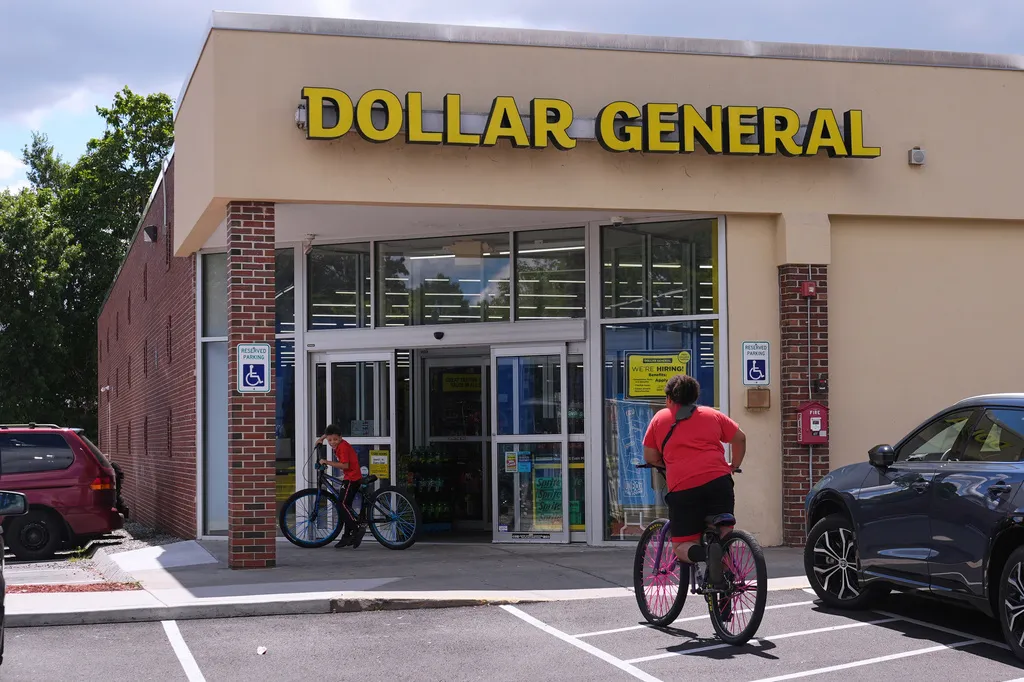
The lawsuit argued the alleged practices disproportionately affect consumers who depend on the retailer for affordable essentials. Approximately 80% of Dollar General stores are located in towns with 20,000 or fewer people, and roughly 75% of the U.S. population lives within five miles of a store.
The company’s core customers are predominantly low- and fixed-income households, according to the complaint. Dollar General’s CEO has described some of those customers as people who “run out of money before the month runs out.”
The complaint detailed examples of customers being charged more than advertised.
In October 2025, a Pennsylvania shopper reported that a weekly flyer advertised five two-liter sodas for $5, but the store charged $2.95 per bottle at checkout.
“This has happened numerous times on many different occasions. I am tired of being ripped off,” the customer wrote, adding that checking receipts and driving back to the store for refunds cost time and money.
Federal investigators encountered similar problems during undercover purchases at Dollar General stores in Ohio, Pennsylvania, Missouri, and Maryland between January and April 2026. Every purchase resulted in multiple products ringing up above their advertised prices, according to the complaint.
During a Jan. 16 visit to a Cleveland store, 13 of 58 items rang up at prices different from those listed on shelves or product labels. Eight discrepancies were overcharges, producing a net overcharge of $3.25.
A Texas customer also alleged in January 2026 that employees acknowledged the pricing problem but said they could not correct it. The customer claimed to have lost hundreds of dollars to overcharges over seven years of shopping at the retailer.
The FTC also alleged Dollar General charged customers more than the prices advertised through its website and mobile application.
Dollar General denied the accusations put forward in the lawsuit.
“The lawsuit filed today by the Federal Trade Commission … and several States suggests that we have abandoned our mission and willfully disregarded the affordability needs of our customers,” the company wrote in a statement. “Nothing could be further from the truth.”
Dollar General said it complied with the FTC’s February 2026 investigation and provided the agency with documents, data, and sworn testimony.
DEMOCRATIC PRESIDENTIAL CONTENDERS EYE TAX CUTS TO WOO GOP VOTERS
“Although we respect the FTC’s role in protecting American consumers and the State representatives’ role in protecting the citizens of their respective states, we will defend this litigation vigorously,” the company wrote.
The states joining the lawsuit are Alabama, Arizona, Arkansas, California, Connecticut, Florida, Illinois, Iowa, Kansas, Louisiana, Michigan, Mississippi, Nebraska, New Jersey, North Carolina, Ohio, Oklahoma, Tennessee, Utah, and Wisconsin.