
Three civil rights cases could ultimately unravel one of the transgender rights movement’s greatest Supreme Court victories, according to legal analysts.
The three separate filings are workplace discrimination lawsuits, filed by aggrieved transgender federal workers, that challenge President Donald Trump’s executive order on “Restoring Biological Truth to the Federal Government.” They allege various violations of Title VII of the Civil Rights Act of 1964, which prohibits sex-based discrimination in the workplace.
The filings cite Bostock v. Clayton County, a 2020 Supreme Court case, as legal authority that has had far-reaching implications for women’s civil rights protections. In Bostock, the justices ruled 6-3 that discriminating against employees on the basis of their “transgender status” constitutes unlawful sex discrimination under Title VII.
Justice Samuel Alito predicted in his dissent at the time that, as a result of Bostock, “The entire Federal Judiciary will be mired for years in disputes about the reach of the Court’s reasoning.” Indeed, the majority opinion, as it was worded, led to widespread legal uncertainty and loose interpretations of the Supreme Court’s decision.
Although the case addressed only Title VII discrimination in the employment context, former President Joe Biden invoked Bostock in his expansive rewrite of Title IX, a distinct statute that forbids sex-based discrimination in federally funded educational programs.
CLEARING UP THE CONFUSION SOWN BY BIDEN’S REWRITE OF TITLE IX
Transgender activists have since celebrated both Bostock and Biden’s revision of Title IX regulations to include “gender identity,” the latter of which opened the door for biological males to identify as women and accordingly infiltrate female-designated spaces.
Despite the chaos Bostock would cause, the Supreme Court did not explicitly explain what exactly “transgender status” means in its ruling, and it still has not provided clarity more than six years later, even though the high court has had ample opportunity to do so.
But the three Title VII cases currently advancing through different district courts may very well force the Supreme Court to revisit Bostock.
Trump’s gender mandate triggers Title VII complaints
Seawright v. EEOC, the latest transgender Title VII complaint against the Trump administration, caught the legal world’s attention earlier this month when a California magistrate judge allowed the case to proceed.
The complainant, a self-described “queer transgender man” who goes by the name Marc Seawright, had resigned from the Equal Employment Opportunity Commission over what the former federal employee perceived to be “animus against transgender workers.”
Seawright is alleging that the EEOC implemented a range of “transphobic” reforms to agency practices in accordance with Trump’s gender directive, which ordered all federal departments to recognize men and women as biologically distinct sexes. The federal government “condoning misgendering” and dismantling the display of employees’ preferred pronouns in electronic communications are among Seawright’s chief complaints.
Like Seawright, the other two pending Title VII cases show signs of prevailing at the district court level.
In Mittereder v. Noem, plaintiff Danielle Mittereder, a biologically male Transportation Security Administration officer, is fighting being barred from using the women’s restroom at work and from “conduct[ing] pat-downs of female passengers, consistent with her gender identity.”
LAWFARE TARGETING TRUMP’S GENDER ORDER THREATENS PROTECTED STATUS FOR WOMEN
Federal Judge Michael Nachmanoff, a Biden appointee, denied the Department of Homeland Security’s motion to dismiss, and the case is heading for a summary judgment hearing in November.
Similarly, in Withrow v. United States, a biological man named LeAnne Withrow is suing for access to the women’s bathroom while at work. Judge Jia Cobb, another Biden appointee, was assigned to oversee the case.
Katz Banks Kumin LLP, the law firm representing Seawright, declined to comment. Withrow’s legal counsel, Democracy Forward and the American Civil Liberties Union, did not respond to the Washington Examiner’s requests for comment, nor did attorneys for Mittereder.
Knocking on the door of undoing Bostock
Some court watchers suspect that the trio of cases would threaten the holdings in Bostock if they reached the high court.
“This is arguably a case of the transgender lobby inadvertently ultimately undoing one of the lobby’s most important wins,” said Kara Dansky, author of The Abolition of Sex: How the ‘Transgender’ Agenda Harms Women and Girls.
In Bostock, a funeral home fired one of its workers, a biological man who demanded the ability to wear the female employee uniform, use the women’s restrooms, and be referred to as “she,” “her,” and “Ms.” Thus, the male plaintiff argued that he was fired for “being transgender.”
“However, whether these new cases challenge the underlying premise of that decision may hinge on whether that decision was limited to situations in which an employee was fired, rather than being discriminated against in some other way,” Dansky told the Washington Examiner.
Elspeth Cypher, a retired Massachusetts Supreme Court judge, said the justices could take up one of the three cases at issue, but the most important factor will be whether the lower court has a record defining “transgender status,” enabling them to make an informed decision.
Cypher’s women’s rights organization, the Women’s Liberation Front, has filed a motion to intervene in Withrow, seeking to advocate on behalf of all women, given that the female perspective, as well as language grounded in sex realism, is often missing from transgender litigation brought by biological men.
“It is difficult to predict what will happen, but one of the reasons we wanted to represent women’s interest in Withrow is we do not have a clear definition of ‘transgender status’ as it is used in Bostock,” said Cypher. “That is not surprising because different definitions of transgender are used by the trans rights advocates.”
For example, she said sometimes “transgender” refers to individuals who identify as “nonbinary,” being neither male nor female. There is also ambiguity around the usage of the word “gender.” Some use it interchangeably with “sex,” while other times, “gender” is used to describe one’s “feeling” of belonging to the opposite sex.
“But what does gender mean in that instance?” Cypher questioned. “The opposite sex? The opposite gender expression?”
Many judges, including conservative-leaning jurists, have adopted transgender activist terminology and repeated such loaded phrasing in their decisions without unpacking what that jargon actually means.
“The Supreme Court did not define ‘transgender’ or ‘transgender status’ in Bostock v. Clayton County, so it is not possible to know what it meant by those terms,” added Dansky, a former ACLU attorney.
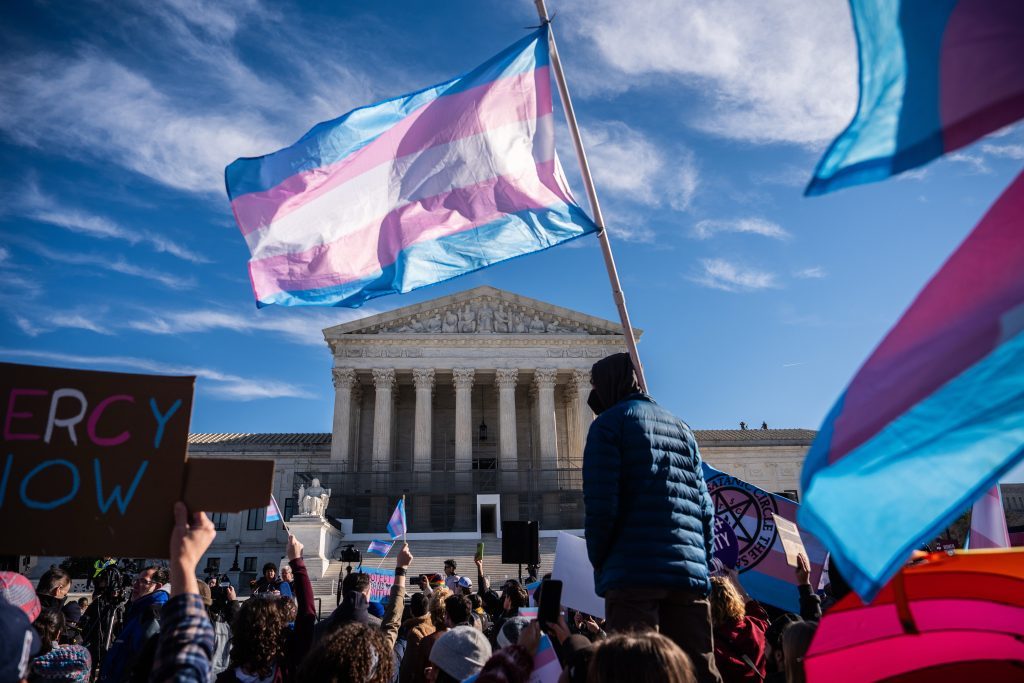
The majority opinion, authored by Justice Neil Gorsuch, ruled broadly that “transgender status” is “inextricably bound up with sex” and that discrimination on these grounds “inescapably intends to rely on sex” and “applies sex-based rules.”
Dansky said the court might have meant “something along the lines of ‘not conforming with stereotypes imposed on the basis of sex.’ If it meant that, it didn’t have to rule that way because that is already the law, thanks to a 1989 Supreme Court decision called Price Waterhouse v. Hopkins.”
The landmark Hopkins ruling established that sex stereotyping in the workplace is a form of unlawful sex discrimination under Title VII. In that case, plaintiff Ann Hopkins had sued her former employer, the accounting firm Price Waterhouse, for denying her partnership because she did not fit the company’s expectations of how a woman should act and dress.
“These new cases could very well end up before the Supreme Court,” said Dansky, “and I am hopeful that if one of them does, the court will tell us what it meant by ‘transgender’ and ‘transgender status’ in 2020.”
NEW HAMPSHIRE URGES SUPREME COURT TO REINSTATE STUDENT ID VOTING BAN AHEAD OF ELECTION
Cypher urged for the preservation of women as a distinct class based on the immutable characteristic of sex, warning that women’s protected status would be essentially erased by the emergence of an arbitrarily-defined super class that “swallows” the meaning of biological sex.
“If women lose that protection in law, then we cease to exist as a legal category and lose along with it any hope of maintaining our right to single-sex sports, prisons, spas, bathrooms, awards, and intimate care in hospitals or assisted living settings,” Cypher said.