
What can the United States and its allies do to head off a Chinese invasion of Taiwan before it actually happens? A lot, it turns out, as the Hoover Institution’s Eyck Freymann ably explains in Defending Taiwan, his detailed and compelling exploration of the brewing conflict. Only with determined, concerted action can liberal democracies across the globe hope to deter Chinese President Xi Jinping from achieving his lifelong goal.
In Freymann’s estimation, “by 2049, the centennial of the People’s Republic of China, Xi aims to solidify [Chinese Communist Party] control, transform China into the dominant power in the Indo-Pacific, and restructure the global economy to serve CCP interests.” Xi’s strategy is “fundamentally incompatible with vital U.S. interests,” including “his efforts to undermine the security of U.S. allies, seize the lead in key AI applications that could threaten strategic stability, and reshape the international economic order to serve China’s interest at the expense of the United States.”
One key component of Xi’s approach involves seizing Taiwan, an eventuality that, in 2022, then-CIA Director William Burns told Face the Nation, Xi had instructed the People’s Liberation Army to be prepared to execute by 2027. Taipei in the hands of Beijing would gravely damage America’s geostrategic and economic position in myriad ways, which include, according to Freymann, financial and macroeconomic instability; the toppling of the dollar’s hegemony; a severe threat to AI dominance; the end of a free and open Indo-Pacific; a robust challenge beyond the first island chain to Japan, Korea, and the Philippines; the erosion of faith in America’s reliability as a backstop to its allies; and the effective end of the dream of a democratic China.
How likely is this to come about, and how would it unfold?
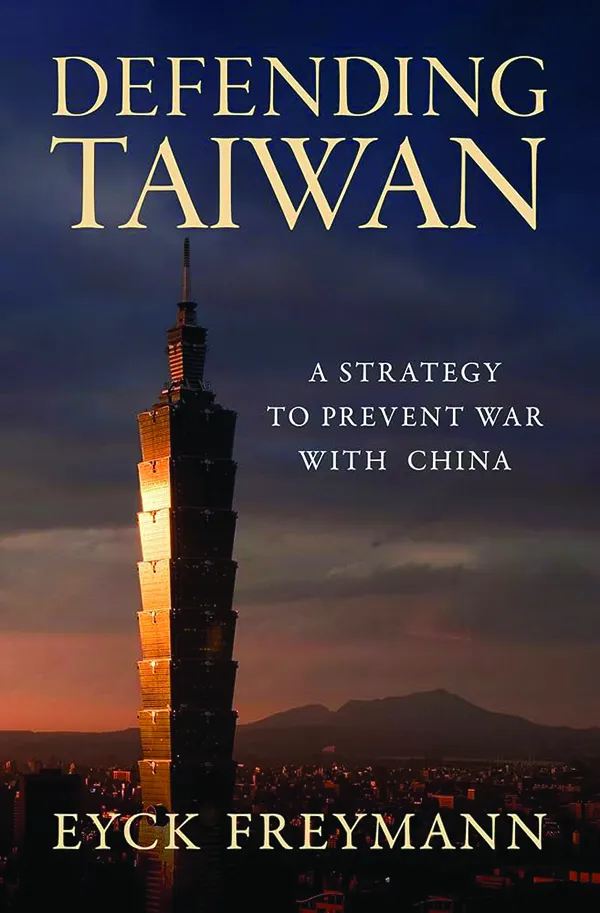
Freymann begins by exploring the nature of the threat presented by Beijing, starting with the ambiguity inherent in the United States’s One China policy. This policy, in turn, comprises several subparts, beginning with the 1972 Shanghai Communique, in which Washington “acknowledges that all Chinese on either side of the Taiwan Strait maintain there is but one China and that Taiwan is part of China.” Notably, the U.S. did not and does not recognize that claim. It only acknowledges it. This core principle begat the Second Communique, in which the U.S. maintained “cultural, commercial, and other unofficial relations with the people of Taiwan,” and the Third Communique, in which Washington committed to phasing out arms sales to Taipei, provided that Beijing continue to demonstrate restraint.
Meanwhile, the 1979 Taiwan Relations Act, under which Congress equated American treatment of Taiwanese officials with that of other countries, stated the U.S. would not oppose peaceful reunification, and firmly rejected any boycotts, embargoes, or other nonpeaceful attempts by Beijing to seize the island. And finally, in 1982, the Reagan administration issued the Six Assurances, which, among other things, reiterated the TRA and insisted that Washington would not “consult with the PRC on arms sales to Taiwan” or “exert pressure on Taiwan to enter into negotiations with Beijing.”
Against that backdrop, China could employ a number of overt and covert tactics to pressure and eventually overwhelm Taiwan. The Chinese army could blockade or quarantine the island, effectively usurping control of its air and sea borders. Freymann assesses that resupplying Taiwan in such a scenario would likely cost two orders of magnitude more than the Berlin Airlift. An amphibious invasion of the island would prove costly and difficult to Beijing, and while Taipei likely could not repel such an incursion on its own, Freymann estimates “it could very likely disrupt and delay an invasion long enough for the U.S. and allies to intervene.” A “porcupine strategy” could buy time, but how well Taiwan’s air defenses and infrastructure could weather the Chinese army’s onslaught remains an open question.
Thus, the U.S., Freymann argues, “should show that it could use a crisis to secure its interests through bold steps that would be impossible in peacetime.” He presents four “pillars of deterrence” that, he reckons, will decrease both the likelihood of a Chinese invasion as well as its severity, should it occur. In this way, Washington could “harness the initial global reaction to the outset of a crisis, build a durable coalition, keep up morale in Taiwan, and structure the conflict on favorable terms for a potential long-term struggle.”
The first pillar entails the exertion of political deterrence, beginning with “strengthening [American] reassurances to Taiwan’s democracy, deepening defense cooperation, and encouraging Taiwan to improve its resilience,” Freymann writes. It will also require converting strategic ambiguity into what Freymann labels “structured ambiguity,” or the notion that “any time Beijing attempts to alter the status quo through force or coercion, the United States may recalibrate its policy proportionately and preemptively to stabilize the situation.” He also urges the U.S. to form a united front ahead of time with Japan, the United Kingdom, Australia, and Canada.
The second pillar involves strengthening conventional deterrence, which necessitates bolstering surveillance and reconnaissance efforts, enhancing America’s long-range strike capabilities, improving logistics, growing and hardening the surface fleet, supercharging drone development and deployment, and, underneath it all, revitalizing the defense-industrial base. Along the way, Washington must redouble its commitment to the ocean floor and the skies above by building more submarines and projecting power in space.
The third pillar demands preserving strategic stability and maintaining technological leadership. In recent years, China has juiced its nuclear weapons program, multiplying by a factor of three its preexisting stockpile of around 600 warheads. In response, Freymann suggests “nuclear sharing” with Japan and Korea — especially as China, North Korea, Russia, and Iran have cemented their own ties — along with a general modernization of the American nuclear arsenal. Artificial intelligence, too, plays a central role: Not only does Taiwan play host to TSMC, the world’s most advanced semiconductor foundry (which produces nearly all of Nvidia’s most pioneering chips), but AI’s integration into military operations, cyber warfare, and nuclear deterrence is already altering the balance of power. The U.S. must retain and extend its AI lead not only as an end in itself but as a means of deterring China.
Finally, the fourth pillar requires employing economic tools to forestall a Chinese invasion — a substantial challenge given the interconnectedness of global commerce. “Sanctions, blockades, and other tools that interfere with third countries’ ability [to trade] with China are likely to backfire,” Freymann contends. The “strategic decoupling” favored by the Trump administration, if carried out at scale, is likely to lead to “the worst global economic crisis since the Great Depression” and may impose only limited costs on China, which has recently strengthened its economic resilience.
Instead, Freymann urges “avalanche decoupling,” a flexible, gradual ratchet that would entail avoiding the disruption of noncritical supply chains, sustaining the hegemony of the dollar, providing incentives for cooperation, and eschewing penalization of neutral countries. Specifically, he calls for the creation of an Economic Security Cooperation Board that would serve as a modern Marshall Plan by “offer[ing] financial, material, and technical support to its members” and by providing “a framework for collective resilience against China’s economic coercion.”
In this day and age, can a splintered and polarized U.S. actually be expected to provide an “integrated strategy that draws on every source of national power to preserve the peace?” Amid a Ukrainian stalemate following four years of fighting and a standoff in the Strait of Hormuz, can liberal democratic countries truly band together in the name of freedom? It’s hard to be optimistic. Yet Freymann urges us not to despair. “We can sustain the honorable peace for another generation,” he concludes. “This moment calls not for panic but for courage, preparation, and a steady hand.” Amen.
Michael M. Rosen is an attorney and writer in Israel, a nonresident senior fellow at the American Enterprise Institute, and author of Like Silicon From Clay: What Ancient Jewish Wisdom Can Teach Us About AI.