
The many titles of former Republican Congressman Trey Gowdy include accomplished attorney, including as a federal prosecutor and solicitor (district attorney) in his home state of South Carolina; Fox News personality and host of the network’s Sunday Night in America; and husband and father of two.
Of all the things he does, though, his favorite thing is to write.
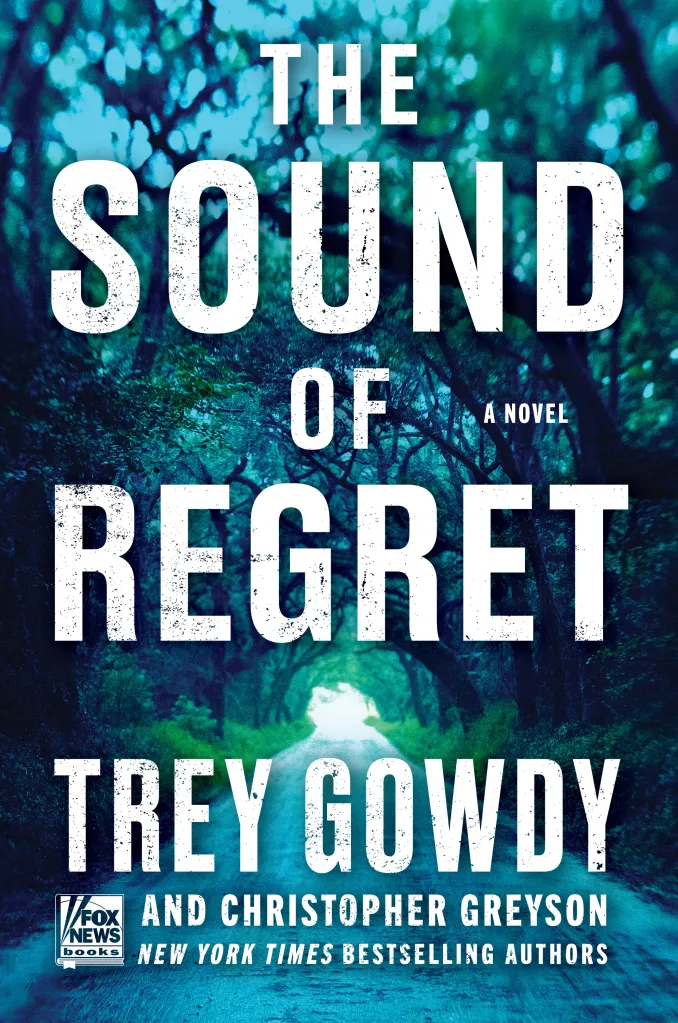
In addition to his self-help books, Doesn’t Hurt to Ask: Using the Power of Questions to Communicate, Connect, and Persuade (2020) and Start, Stay, or Leave: The Art of Decision-Making (2023), he has developed a sideline as a crime novelist. Gowdy’s latest effort is The Sound of Regret, a sequel to last year’s The Color of Death, which again revolves around fictitious district attorney Colm Truesdale. Cowritten with Christopher Greyson, the novel came out on Aug. 25 from Fox News Books.
Gowdy sat down with the Washington Examiner to talk about his new book. The interview has been edited for clarity and length.
Washington Examiner: What were your intentions in writing The Sound of Regret?

Trey Gowdy: Well, I had this book in my head probably for around a decade. No offense to Baptist preachers, but my mind tends to wander when I go to church with my wife.… I would sit there, and when I was walking or doing stuff by myself, [I would think], “If I ever wrote a book, this is kind of the way it would go,” and it was going to remain locked away in the cobweb-filled mind that is mine.
And I was actually also talking to [former White House press secretary] Dana Perino, who is a wonderful human being and someone that I love and respect very much.… I’d written self-help books, or what they call “self-help” — I’m not sure it helped anyone, but they call it self-help — and she and I were both kind of thinking it’d be nice to write fiction, but I think both of us kind of lacked the courage to do it, maybe. She had a fantastic fiction debut [Purple State], and this got me into writing The Color of Death, but it was all one book in my head. So The Color of Death, The Sound of Regret, and then the third book — if I had been left to my own devices, it would have been all one book.… I envisioned it as one continuous story. So that’s what I’m doing now, as I am in the second kind of “chapter,” if you will, of what was always going to be a three-chapter anthology.
Washington Examiner: Do you think you’ll be writing more, beyond this third installment?
Gowdy: You know, it depends.… If people enjoy it and you enjoy doing it, you should continue doing it. If either of those other predicates is not true, if you don’t like it and other people don’t like it, you probably will not be doing it.… Crime just saps your soul. I mean, to write about it, to think about it. My wife keeps saying, “Can you put a little bit of light in the book? Just a little bit, not a lot, just some light.” So I had another really sad thought go through my head last night, and thought, “You know what? I may, when this is all over, team up with a female collaborator and write a sad romance novel.”
Washington Examiner: A sad romance novel?
Gowdy: Sad as in unrequited love, which is my favorite literary concept of all: liking someone and not having them like you back. If I had to pick one literary device or convention, it is that, and don’t ask me why. I never lived through it. [It is] not like the love of my life in high school wouldn’t go to the prom with me.… I’m not the first person to think of that, but I love writing. Of all the things I do — my friends don’t believe it, because I’m a lawyer, and lawyers like to argue and fight and all that stuff — my favorite thing in the world to do is to write.
Washington Examiner: What would you say you get from writing that you don’t get from your other roles, like being a TV personality or arguing as an attorney?

Gowdy: Creativity. I wrote a book called Doesn’t Hurt to Ask, where I was trying to equip people on how to not win an argument, because you can’t win an argument, but how to win a conversation. That does not require a lot of creativity for me because I did it. I can tell you how to do it, [it’d] be like you telling me how to change a tire. It’s not a whole lot of creativity.… Fiction is different. No. 1, you don’t get fact-checked, so that’s good. No. 2, you can go wherever your mind wants to let you go.
Washington Examiner: How did you pick your collaborator for this book?
Gowdy: Well, I interviewed some folks, and I — shockingly, for someone who used to be in politics — can get along with just about anyone. But I really want someone to plus up what I know to be my weaknesses. I’ve never really written dialogue before, and I’d never even heard the expression “points of view” before I worked with Chris and our editor, Sean Desmond.
So Chris and I swapped. We have it down kind of to a science right now: He’s not a lawyer, so courtroom scenes are a whole separate language that lawyers devise for themselves. All that stuff, I can contribute. He can come up with ancillary characters that are maybe secondary to the primary characters, but very important. He does not have a dark mind, so … the awful human beings that are in this book that do awful things, I don’t think he likes to think about those things. I don’t like to think about them; I just have lived them, so it doesn’t require a whole lot of recall for me.
Washington Examiner: Can you elaborate on the characters and their character development? Are they inspired by real people?
Gowdy: Prosecutors are not hard for me to create because I was around them. Judges are not hard for me to create. I mean, they’re all different but have certain similarities. You could pick a nice judge. You could pick a non-nice judge … some of the names would only be known by my friends. Somebody reading in Idaho has no idea why I would pick that as a judge’s name. But my judge friends in South Carolina know exactly who I’m talking about, or who that would be modeled after.
It’s weird who hates you and who doesn’t when you’re a prosecutor. You immediately assume that the people that you put in prison are your enemies, and by and large, that is not true. If you don’t cheat, if you treat them as respectfully as you can … I actually prosecuted a man in a death penalty case, and he represented himself, which means I had to meet with him every morning for 15 minutes, literally have a civil conversation about the way court would go that day with a guy that I was trying to put on death row, and he currently is on death row. So there’s actually more civility even in criminal trials than there is in a typical congressional hearing.
Washington Examiner: What do you want readers to take away from this book?
Gowdy: The way our system really, truly works, and it’s not like Law & Order: [Special Victims Unit]. It’s not the way the miniseries portray it. We have to have witnesses in the criminal justice system. That’s the lifeblood of the system. But some of the witnesses and the way we have to develop them or incent them — you know, for me to sit down with a young man and say, “Your options are to wear a wire and be labeled a rat for the rest of your life, or you can go spend two decades in a federal prison. Those are your options.” And I’m not trying to make people feel sorry for these kids, but I used to come home all the time and tell my wife, “If that young man I just met had grown up in your house, he’d be on his way to college, not on his way to prison.”
Victims were my focus in [The Color of Death]: what being a victim does to you, what it does to your family, what it does to the people that have to stand in your stead. The best lawyers in the world put themselves in the position of the victim when they’re standing in front of a jury, but you cannot do that when the victim is dead. How do you do that? You don’t know what it’s like to be dead, but you somehow have to find a way to channel that.
I would say [The Sound of Regret] is more from a witness standpoint, having to weigh and balance “Do I get involved?” … We had a drive-by shooting of a child in my home county. It was an outdoor birthday party. You mean to tell me nobody, nobody saw the car, nobody? But getting them to cooperate and come forward and work with the police is an incredible challenge.
Washington Examiner: I’m very curious about your thoughts on Trump’s Department of Justice and how the current administration has been running the agency.
REVIEW: INSIDE ISRAEL’S ‘WAR ROOM’ OF RIVALS
Gowdy: I came out of the DOJ. I have a tremendous amount of respect for our judicial system. I think some days [they are] maybe our last best hope for keeping the republic together. Both sides believe that it’s been politicized.
I can tell you, when I was there, I had no idea the politics of anyone else in our office. It never came up. We never discussed it. I was actually hired as an [assistant U.S. attorney] by Janet Reno because the Republicans would not give me an interview, even though I was a Republican. They wouldn’t interview me for the job. So it was a Democrat U.S. attorney named Pete Strong that gave me a chance to fulfill my lifelong dream, and I never recall ever having a political conversation with Pete or anyone else in our office.
Judith Y. Kim is the senior digital engagement editor at the Washington Examiner.