
The Justice Department concluded Friday that the federal government cannot criminally enforce a prohibition on licensed dealers selling handguns to law-abiding adults ages 18-20 because the restriction violates the Second Amendment.
The department’s Office of Legal Counsel said in a 49-page opinion that young adults are among the people whose right to keep and bear arms is protected by the Constitution. The finding means the DOJ cannot prosecute federally licensed dealers solely for selling handguns to otherwise eligible buyers in that age group.
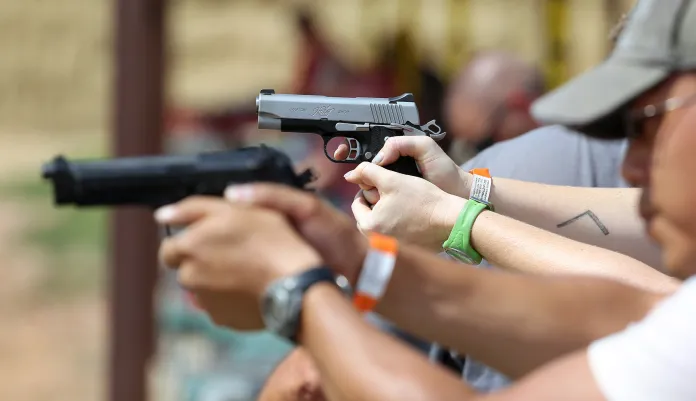
The opinion does not repeal the federal statutes, 18 U.S.C. Sections 922(b)(1) and (c)(1), or amount to a court ruling striking them down. However, it directs how the executive branch may enforce provisions that generally prohibit licensed dealers from selling handguns and handgun ammunition to people younger than 21, and it could signal the department’s willingness to back young adult plaintiffs who may be struggling to obtain a firearm.
“Section 922(b)(1) and (c)(1) may not be enforced to impose criminal penalties on dealers who sell handguns to a class of law-abiding adults who, in nearly every other relevant respect, are members of the political community,” Assistant Attorney General T. Elliot Gaiser wrote in the opinion dated Thursday and released Friday.
Gaiser, who leads the Office of Legal Counsel, said the Constitution expressly imposes minimum-age requirements for elected offices but contains no such qualification on the right to bear arms. He also pointed to voting, jury service, military conscription, and adult criminal penalties as evidence that the law otherwise recognizes 18-year-olds as adults.
“Our laws deem an eighteen-year-old ‘mature enough to be drafted, vote, serve as a juror, and be sentenced to death,’” Gaiser wrote.
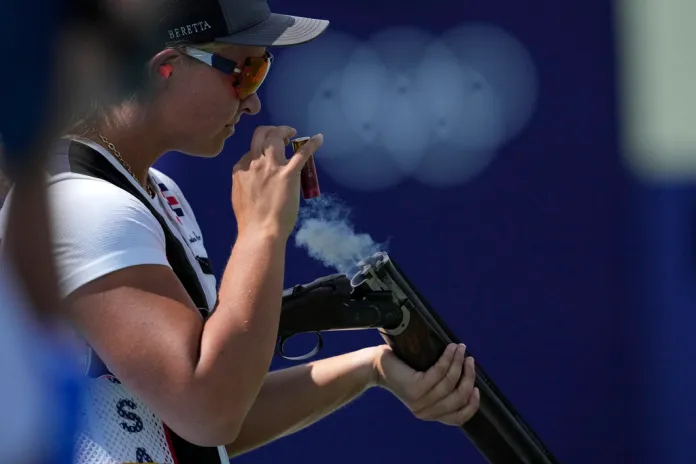
The opinion highlighted Austen Jewell Smith, who represented the United States in skeet shooting at the 2020 Tokyo Olympics when she was 18.
“Yet, due to statutes predicated on concerns over an eighteen-year-old’s ability to handle a pistol as a responsible adult, it would have been a federal felony if a licensed dealer had sold her such a firearm before she left or after she returned to her studies at the University of Texas at Arlington,” Gaiser wrote.
The department also rejected the argument that historical restrictions on selling weapons to minors justify the modern federal prohibition. Many 19th-century laws cited in defense of age restrictions applied to people who were legally minors at the time, Gaiser wrote, while the modern age of adulthood is 18.
The OLC determined that the government could not identify a sufficiently similar historical restriction to overcome the presumption that the Second Amendment protects handgun purchases by law-abiding adults.
The opinion addresses a question that has divided federal appellate courts and that the Supreme Court declined to resolve on June 30. The justices denied petitions involving federal and state firearm restrictions for adults younger than 21, leaving conflicting lower-court decisions in place. A denial of review does not indicate whether the justices agreed with those rulings.
The 3rd, 5th, and 8th circuit courts have struck down firearm restrictions affecting 18- to 20-year-olds. The 4th, 10th, and 11th circuits have upheld comparable federal or state limits.
DOJ SUES CALIFORNIA CITY OVER ‘ILLOGICAL’ $1,600 GUN PERMIT FEE
The opinion marked the latest step by the DOJ under President Donald Trump to challenge gun restrictions through the Civil Rights Division’s Second Amendment Section. The section, led by longtime gun-rights lawyer Barry Arrington, treats the right to own and carry firearms as a civil right within the division’s enforcement responsibilities.
The DOJ on Wednesday also sued San Jose, California, and its police department, arguing that the city’s nearly $1,600 application fee for a concealed-carry license was so high that it unconstitutionally prevented ordinary people from exercising their Second Amendment rights.