
Argentine President Javier Milei escalated his rhetoric over the Falkland Islands overnight after President Donald Trump appeared to question whether the United States would support the United Kingdom in a future conflict with Argentina over the disputed territory.
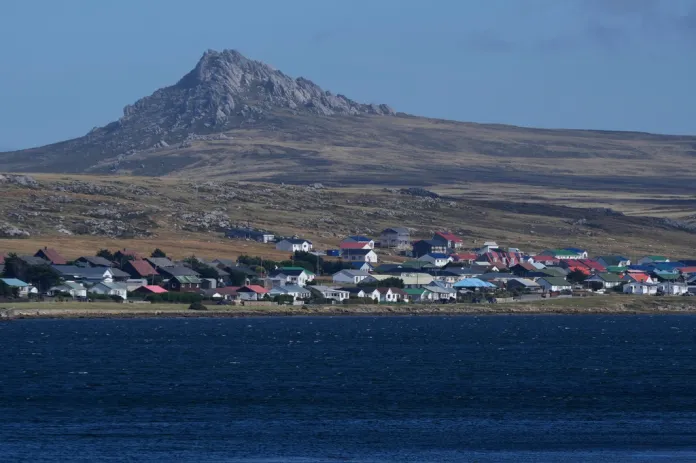
The Falkland Islands, known as the Islas Malvinas in Argentina, are a resource-rich self-governing archipelago in the South Atlantic that has been at the center of a long-standing sovereignty dispute between Argentina and the U.K.
In a speech, Milei said Argentina must eventually “recover” the islands, urging Argentines to “not stand idly by” and to “show a united front to the world.”
Milei also announced plans to sanction oil companies operating in waters around the islands. The comments were aimed at the Sea Lion oil project, a major offshore development more than 100 miles north of the Falkland Islands, being developed by Israel’s Navitas Petroleum and British company Rockhopper Exploration.
Milei’s comments came after Trump, who has a close ideological relationship with Milei, was asked whether the U.S. would assist Britain if Argentina and the U.K. were to become embroiled in another conflict over the islands.
“I always review every position — that’s just one of many,” Trump said.
Trump’s remarks come after speculation that the administration could reconsider aspects of the U.S.-U.K. relationship earlier this year.
The U.K. government, however, quickly reaffirmed its position on the Falklands.
Foreign Secretary Ed Miliband said Britain’s position on the islands was “unwavering.”
“The islands are British and will remain so because that is the overwhelming position of the Islanders,” Miliband wrote on X. “Their right of self-determination is paramount, grounded in international law and we will resolutely uphold it.”
Defense Secretary Wes Streeting also pushed back against Milei’s comments, saying the Argentine president’s statement reflected domestic politics rather than the status of the islands.
“Milei’s statement overnight tells us more about domestic politics in Argentina than it does about the Falkland Islands,” Streeting wrote on X. “The Falklands are British because Falkland Islanders choose to be British. Our commitment to the Falklands is absolute and unshakeable.”
Rockhopper, meanwhile, sought to downplay the possible impact of Argentina’s planned sanctions.
The Salisbury-based oil and gas company, which is developing Sea Lion alongside Navitas, said the partnership operates under “valid petroleum licenses lawfully granted” by the Falkland Islands government and with the “full and ongoing support” of the U.K. government.
“The partnership believes that the recent developments are not expected to have a material effect on the development activities of the Sea Lion Project, including the timetable for completion of the project’s development,” the company said.
The sovereignty dispute over the Falklands dates back centuries. The islands were believed to have been uninhabited before European discovery in the 17th century and subsequently became the subject of competing British and Argentine sovereignty claims.
The US should not change its stance on the Falkland Islands
In April 1982, Argentine forces invaded the islands, triggering the Falklands War. British forces retook the territory two months later, restoring British administration.
But tensions still remain. In a 2013 referendum, Falkland Islanders overwhelmingly voted to remain a British overseas territory, with virtually all votes cast supporting the status quo. Argentina has rejected the referendum as irrelevant to the sovereignty dispute, while Britain has maintained that the wishes and right to self-determination of the islanders are central to its position.