
A recent New Jersey law is raising free speech concerns among anti-abortion advocates over its increased penalties for interfering with “reproductive health care” clinics, with some activists worrying it could discourage peaceful prayer and sidewalk counseling outside abortion clinics.
Gov. Mikie Sherrill (D) signed S2260 on Friday, describing it as a safeguard for patients and healthcare workers facing violence, intimidation, or physical obstruction. The law also expands New Jersey’s protections against certain out-of-state investigations and legal actions involving abortion and transgender procedures on children.
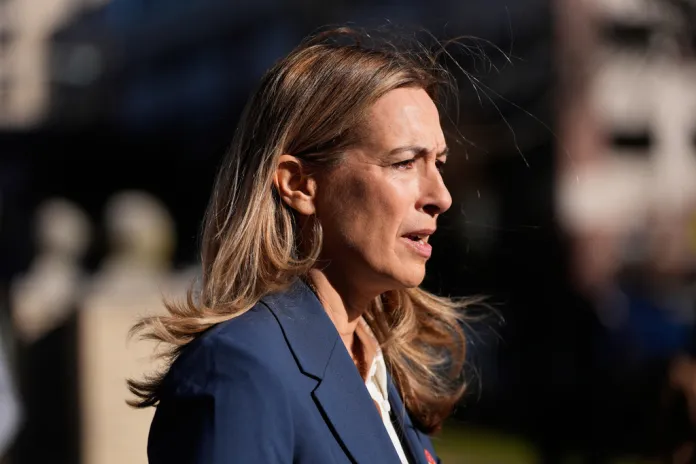
“No one should fear intimidation or violence for seeking health care, and no health care professional should fear punishment from another state for providing care that is legal in New Jersey,” Sherrill said at a press event for the signing of the law.
Opponents have focused partly on a new crime called “interference with reproductive or gender-affirming health care services.” Prior to the finalized bill text, critics said the measure could lead to banning prayer outside abortion clinics, but the final law contains no provision expressly prohibiting prayer or establishing a buffer zone that excludes demonstrators from a defined area. An earlier version of the legislation would have prohibited people from knowingly approaching within 8 feet of patients, clinics, or other demonstrators, without their consent, for purposes including protest, counseling, or education within 100 feet of a reproductive health facility, but lawmakers removed that provision from the final bill.
Matt Britton, general counsel of the Institute of Law and Justice, 40 Days for Life’s legal arm, said the law largely creates additional consequences for conduct already prohibited in New Jersey.
“It does not ban prayer,” Britton told the Washington Examiner. “What it bans is illegal conduct in front of abortion facilities and pro-life pregnancy centers that is already illegal.”
The underlying concern expressed by New Jersey activists is that police or prosecutors could attempt to stretch the law beyond its text, forcing peaceful demonstrators to defend constitutionally protected conduct.
New Jersey Right to Life Executive Director Marie Tasy told Lifenews.com that terms listed in the law, such as “threat,” “intimidate,” and “coerce,” are “inherently subjective,” creating uncertainty for people who pray, display signs, or offer alternatives to abortion outside clinics.
“Peaceful sidewalk counseling, prayer, holding signs, or simply offering help and alternatives outside a facility can easily be labeled ‘intimidation’ by someone who claims to feel threatened,” Tasy said, warning that the possibility of criminal charges could chill protected expression.
The enacted text, however, places specific conditions on criminal liability. It applies when a person purposely or knowingly inflicts or attempts to inflict bodily injury, physically obstructs someone entering or leaving a “health care facility,” damages property, or uses force or a threat of force to intimidate, threaten, or coerce a patient, provider, volunteer, or assistant.
The law also requires a connection between the conduct and an effort to interfere with women seeking abortions. Its intimidation provision should therefore not be triggered solely because someone reports feeling uncomfortable or threatened by another person’s peaceful presence.
Britton said S2260 is closer to a state counterpart of the federal Freedom of Access to Clinic Entrances Act than a traditional buffer-zone law. Peaceful prayer, holding signs, and offering information remain lawful, he said.
Still, Britton acknowledged the concern that authorities could bring an unfounded charge. Even if a case is later dismissed, the accused person may incur legal expenses and experience disruption.
“The punishment is the process,” Britton said.
Britton previously represented Pennsylvania-based anti-abortion activist Mark Houck, a Catholic father who was indicted during the Biden administration for “assaulting” an abortion clinic monitor. Houck was acquitted by a jury and has since received a payout from the federal government over the unscrupulous charges.
While legal experts told the Washington Examiner that New Jersey’s law is unique among other state FACE Act laws or redundant measures that add extra charges onto already-existing crimes, Houck’s former attorney said he sees it as part of a broader reaction to the 2022 Supreme Court decision that found states are in charge of setting limits on abortion access.
“Once Dobbs overruled Roe, it got thrown back to the states,” Britton said, referring to the 2022 decision Dobbs v. Jackson Women’s Health Organization that overturned Roe v. Wade. “And once Donald Trump became president, the federal government stopped using the federal FACE Act against pro-lifers, and they applied it fairly to anybody who broke the law, right? And because of that, the states began to pass their own laws.”
Expansion of private lawsuits
The law also creates civil exposure. Abortion recipients and providers may sue over conduct that violates the law’s interference provisions without first obtaining a criminal conviction. Available remedies include injunctive relief, compensatory damages, punitive damages, and legal fees.
Britton said the provision could have a chilling effect by making activists fear that a clinic or individual might sue even when police decline to bring charges. His institute stands ready to represent 40 Days for Life participants who follow the organization’s statement of peace, he added. Those guidelines prohibit volunteers from blocking sidewalks, threatening or touching people, damaging property, yelling, using profanity, or photographing patients and clinic workers.
40 Days for Life operates nine vigils in the Garden State, including one held throughout the year, and estimates that 2,000 to 3,000 people participate annually.
Shawn Carney, CEO of 40 Days for Life, said he fears the prospect of enforcement will cause some volunteers to stay home rather than risk arrest or litigation. He argued that officials must not treat opposition to abortion itself as intimidation.
“They just want to get rid of free speech,” Carney said of the original stricter language under the law. “They want zero public opposition to abortion,” he said. “If they deem that you are intimidating at all, they can get rid of you.”
Earlier versions of the legislation included broader language addressing emotional harm and recording people within 100 feet of a facility. Those provisions were removed before passage.
The distinction leaves anti-abortion activists confronting a narrower issue than several initial descriptions suggested. Prayer outside an abortion clinic is not prohibited, but opponents of the measure worry the new criminal and civil framework gives authorities and private litigants another avenue through which to test the boundaries of protected activity.
Whether those concerns materialize will depend on how police, prosecutors, and courts apply the new law. Britton said peaceful activists should not be deterred from lawful activity, but he pledged to challenge any enforcement that crosses constitutional lines.