
CHAUTAUQUA, New York — The road here feels like one of those places that America keeps tucked away on purpose — the kind that you don’t stumble into by accident. You come in from the hills and hollows and farm country, past the modest storefronts and weathered porches, and then the land opens up near Chautauqua Lake, where the place that gave the movement its name still seems to hold the memory of a nation trying to teach itself how to learn.
It began in 1874, not as a grand national idea, but as a practical one. John H. Vincent, a Methodist minister, and Lewis Miller, an inventor and businessman, gathered Sunday school teachers at the lake for a summer assembly. They wanted to educate people who were teaching others, and they understood something that still feels almost radical: Knowledge should not belong only to the educated elite, and learning should not be confined to winter classrooms and elite institutions. It could happen outdoors, among ordinary people, with lectures, music, religion, recreation, and conversation mixed together like threads in the same cloth.
That was the beginning. But what happened next tells the real story.
Chautauqua did not stay a gathering for teachers. It became a movement because it answered a hunger that was bigger than its founders probably imagined. In towns across the country, especially in places far from cities and universities, people wanted a way to make sense of a nation changing quickly. Factories were rising. Railroads were knitting distant places together. Immigration, industrialization, and modern life were remaking work, family, and faith. Chautauqua offered something steady in the middle of all that motion: a place to listen, to argue, to sing, to pray, to read, and to believe that a better self and a better public life were still possible.
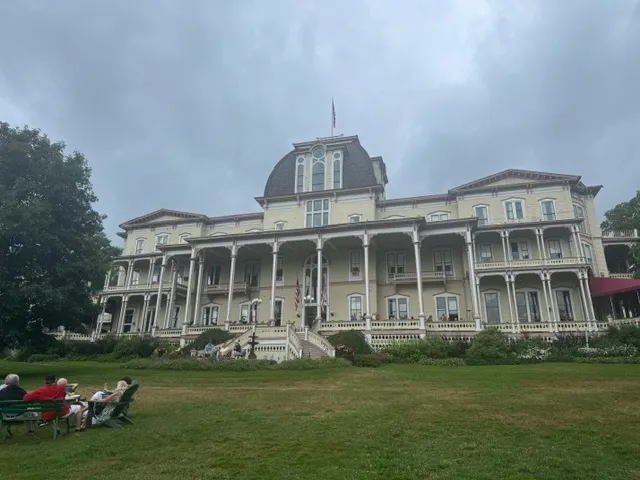
If you want to understand why Chautauqua mattered, you have to understand the country it met.
This was an America in which many people lived in rural communities and small towns, too far from major lecture halls, museums, and universities to participate in the cultural life of the larger nation. Chautauqua brought that life to them. It did not ask people to leave home and become someone else. It came to where they already were.
That is why it spread so quickly, especially through the countryside and into the valleys and ridges of Appalachia, where distance had always shaped who got access to opportunity.
And that is where the movement’s significance deepens, because Chautauqua was never just about entertainment or even education. It was about dignity.
In Appalachian New York, especially along the lake and through the hills of the southern tier, the movement found a place that matched its spirit. This is a region that has long understood the value of self-reliance, but also the pain of being overlooked by distant centers of power. The Chautauqua idea fit that landscape because it treated small places as worthy of serious thought. It said that people living in the backroads, lake towns, and farming communities deserved the same exposure to literature, debate, and culture that cities enjoyed. In a country where geography often becomes destiny, that was no small promise.
The summer assemblies became a model. Soon there were traveling Chautauquas: tents, programs, and speakers moving from town to town, carrying the same blend of uplift and instruction into hamlets and county seats across America.
SALENA ZITO: HOW PITTSBURGH BECAME THE EARLY ALARM BELL FOR THE DSA’S RISE
A farmer could hear a lecture on history. A mother could attend a concert or a discussion about public affairs. A young person could encounter ideas beyond the horizon of the local schoolhouse. The movement’s genius was that it never reduced learning to one thing. It recognized that people are not just minds, not just workers, not just believers. They are whole lives, and those lives need food for the spirit as much as information for the brain.
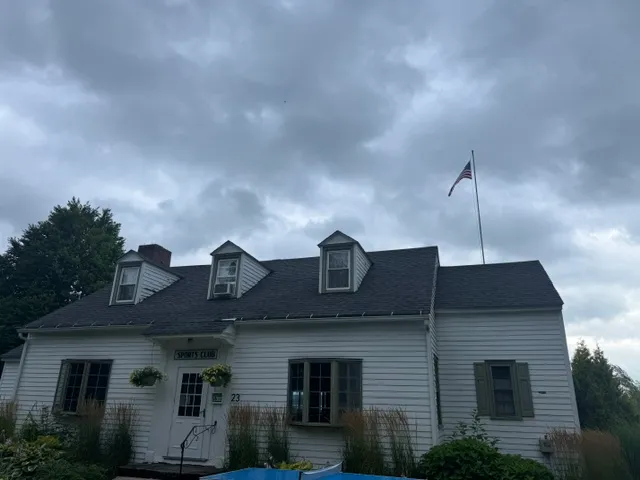
The effect on people was real and lasting. Chautauqua gave many people their first taste of a broader intellectual world. It helped normalize the idea that adults should keep learning after formal schooling ends. It made public lectures and performances part of everyday life. For many, it was also social in the deepest sense: a chance to gather, to be seen, to feel part of something larger than a single town or denomination or occupation. In an age before radio, television, and the internet, that mattered enormously. It was a civic experience as much as a cultural one.
And because it was rooted in place, it also carried a kind of moral geography. Chautauqua in New York was not merely a scenic backdrop. It was the origin point — the wellspring. The lake itself, with its long shape and surrounding hills, became a symbol of how something local can become national without losing its first meaning.
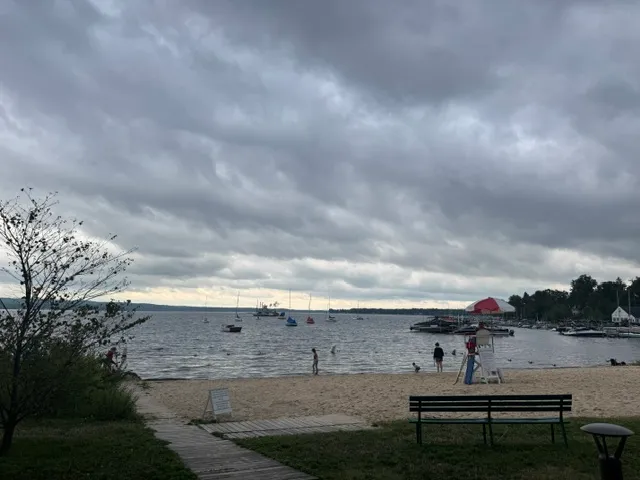
The grounds at Chautauqua Institution still reflect that original idea: learning inside a living community, connected to ordinary life. There is a reason the place still feels different. It is not a museum piece. It is a working inheritance.
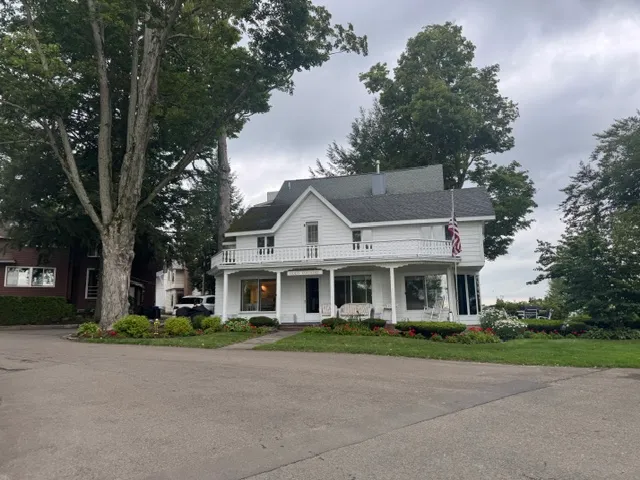
The homes here are a vibrant mix of late Victorian cottages and historic inns that celebrate the original turn-of-the-century porches, decorative trim, and a close-knit walkable layout that embraces the institute’s sense of connection to the past. Most of the older homes were built as summer cottages. They are a blend of craftsman, Victorian, and 20th-century styles that gives the entire community an intimate and charming feel.
Yet the modern institution has drifted, at times, from its founding promise of broad, genuinely pluralistic exchange. Critics, some longtime supporters among them, have argued that Chautauqua’s programming has leaned heavily in one ideological direction, narrowing rather than widening the range of viewpoints presented on its stages. For an institution built on the premise that ordinary people deserve exposure to the full spectrum of public thought, that perceived imbalance has struck some as a quiet but meaningful departure from its roots.
Efforts to correct that tilt have not always been embraced, but they have persisted. Advocates for a more balanced Chautauqua forum have pushed to reintroduce ideological diversity into the lecture halls, bringing in voices such as mine, which focus on reporting from on the ground on the concerns of working-class and non-coastal communities that are too often underrepresented in elite discourse. They’ve not been embraced, but they have been tolerated on the fringes.
These efforts have served as a reminder that Chautauqua’s credibility depends not on reinforcing a prevailing consensus, but on its willingness to host disagreement openly — and to trust its audience to wrestle with it.
SALENA ZITO: THE LINCOLN MOTOR COURT: A MASTERCLASS IN AMERICAN EXCEPTIONALISM
That tension between ideal and reality was overshadowed, and in some ways exposed, by a far more jarring rupture in August 2022. Salman Rushdie, long a symbol of the risks attached to free expression, was attacked onstage just moments before he was to speak. The violence was swift and devastating. Rushdie suffered life-altering injuries, including the loss of sight in one eye and severe damage to his liver and hands.
The attack did more than injure a writer. It shattered the assumption, long part of Chautauqua’s identity, that this was a place set apart, where ideas could be exchanged without fear of physical consequence. The calm, almost pastoral sense of intellectual refuge that had defined the grounds for generations was abruptly stripped away. What remained was something more unsettled: a recognition that even here, in a place built for civil discourse, the conflicts of the outside world could not be kept at the gate.
In the aftermath, the institution continued, as it had to. But the illusion of insulation was gone. And with it came a harder question, one that cuts closer to the institution’s purpose: whether Chautauqua can still serve as a true meeting ground for divergent ideas in a country increasingly defined by division — and whether it is willing to do the work required to be that place.
The movement peaked in the early 20th century, when millions attended Chautauqua events and assemblies across the country. But even as the tent shows faded and newer forms of entertainment took hold, the deeper idea remained. The belief that ordinary people deserve access to ideas, art, and public discourse did not disappear. It changed form. It moved into libraries, adult education programs, public radio, town halls, summer institutes, and the countless local efforts that still try to make learning communal rather than isolated.
That is why Chautauqua still matters today. In an era that often rewards speed, noise, and tribal certainty, it stands for something slower and more human. It suggests that conversation is not a luxury. It suggests that culture can be shared, not hoarded. It suggests that a nation built on distance still needs places where people can gather face-to-face and think together.
In Appalachian New York, the significance is even sharper. This is not just the birthplace of a movement. It is proof that a place that is often thought of as regional can shape the national imagination.
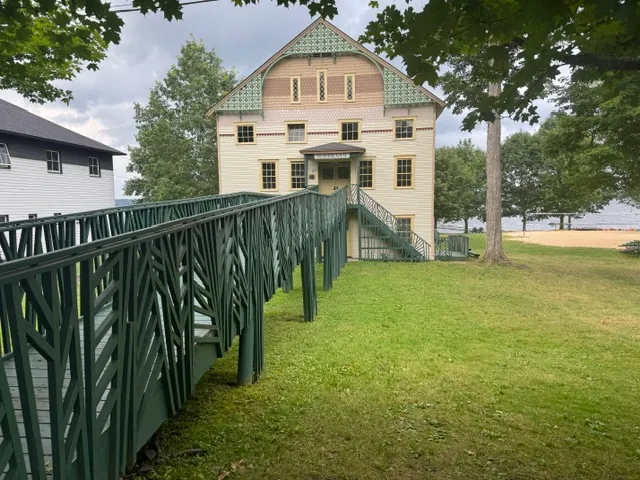
(Salena Zito/Washington Examiner)
SALENA ZITO: THE FORGOTTEN BATTLE THAT SAVED WESTERN PENNSYLVANIA
The lake, the institution, the old assembly grounds. They remind us that ideas do not only come from capitals and coasts. Sometimes they come from a summer camp on a lake in western New York, from a Methodist minister and a businessman, from teachers who wanted to learn more so they could teach better, from people who believed the common citizen was worthy of uncommon opportunity.
That is the Chautauqua story: not a relic, but a promise kept in motion. It began with a few people and a simple purpose. It spread because the country needed it. And it endures because we still do.