
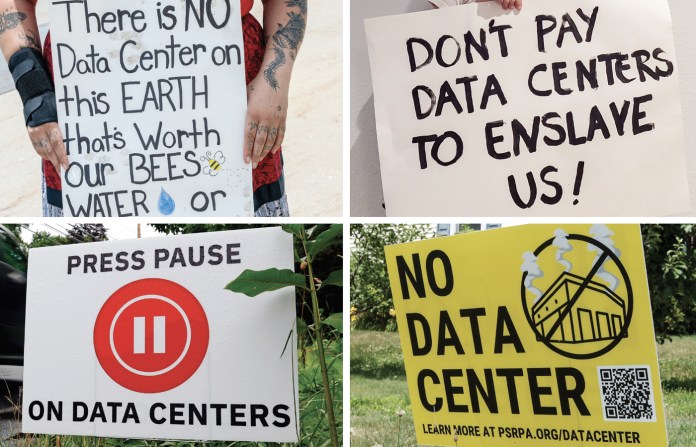
It’s no surprise that politicians and activists on the Left vigorously oppose data centers, the massive, low-slung buildings housing the advanced computer chips that are powering the artificial intelligence revolution. And it’s also not exactly shocking that China has sought to stir up local opposition to these hyperscale structures, given that Beijing and Washington are locked in a fierce and highly consequential race toward AI supremacy.
But what’s raised eyebrows this summer has been growing unease in red states and among some Republican politicians — most notably, Gov. Greg Abbott (R-TX) — as rural residents in particular have rebelled against the seeming imposition in their communities by giant technology companies of new infrastructure of gargantuan proportions.
Unfortunately, while at least some of the arguments mustered against data centers have merit, they largely neglect the significant benefits that they bestow even on local jurisdictions. Increased electricity generation, lower utility rates, higher employment, and accelerated growth all typically accompany data center construction, to say nothing of their critical importance in winning the AI competition. And while the tech titans must work hand in glove with local communities to introduce infrastructure in a careful, measured, and effective manner, we simply cannot cede the field to the People’s Republic of China.
So what exactly is going on?
As I explained in these pages in May, ferocious opposition to these data centers emanated from progressives such as Sen. Bernie Sanders (I-VT) and Rep. Alexandria Ocasio-Cortez (D-NY), who have vigorously attacked the AI infrastructure we need to win the AI race.

In March, Sanders and Ocasio-Cortez introduced the “AI Data Center Moratorium Act” in the Senate and the House, respectively, asserting that “we cannot sit back and allow a handful of billionaire Big Tech oligarchs to make decisions that will reshape our economy, our democracy and the future of humanity.” In an April Wall Street Journal op-ed, Sanders insisted that AI was “undermining our democracy,” “damaging the environment,” “pos[ing] an existential risk to the human race,” “threaten[ing] our privacy,” and “reshaping how we as human beings relate to one another.”
Last month, we learned that China itself had sparked supposedly homegrown concerns with data centers. In a blistering report issued in June, entitled “PRC-linked influence operations are targeting AI debates in the US,” the tech pioneer OpenAI found that actors originating in China “used our models in support of apparent covert influence operations that promoted narratives in an attempt to manipulate a legitimate debate about American AI and wider tech policies.” In particular, in clear violation of the terms and conditions of OpenAI’s platform, a cluster of Chinese users “generated social media comments and images claiming that data center buildouts for AI were increasing electricity prices for average families.” Another cluster created and distributed content “criticizing US tariffs as attempts to dominate technological competition and specified in their prompts that the content should not include China’s leader Xi Jinping in the output and instead include only President [Donald] Trump.”
If that weren’t bad enough, even conservatives have gotten in on the act. In recent years, Texas’s population and economy have boomed as Abbott and his allies in Austin have provided powerful incentives for tech companies to relocate from high-tax, high-regulation states such as California. As recently as November 2025, Abbott was hailing Google’s $40 billion investment in the Lone Star State, calling it “the epicenter of AI development” and marveling at how the tech company’s commitment “will bring three new data center campuses to the state to power the new era of AI innovation” and “will create thousands of jobs, provide skills training to college students and electrical apprentices, and accelerate energy affordability initiatives throughout Texas.”
No longer. In early June, amid his campaign for reelection, Abbott sent a letter to the chairman of the state’s Public Utility Commission, urging him to “ensure that data centers’ interconnections will result in reduced residential electrical bills,” to “require data centers to pay for all of their electric infrastructure costs to ensure that no residential ratepayer is burdened by those costs,” and, more generally, to “identify necessary actions that can be taken under those authorities to safeguard Texans, their property, and resources.” Abbott also vowed to work with the state legislature to “ensure data centers add to Texas’ electric capacity,” “require that all new data centers be built with water-efficient technologies such as closed-loop cooling systems,” “repeal sales tax exemptions and other outdated or unnecessary incentives for data centers,” and “require data centers to reduce impacts on local communities by implementing best practices such as setbacks, noise-reduction technology, and other measures that take into account the concerns of neighbors.”
Thus, the governor’s sudden about-face on a key driver of the state’s prosperity came as a surprise to many, even during campaign season. More alarmingly, at a reelection event in East Texas, Abbott expressly promised to “prohibit [tech companies] from building AI data centers in rural Texas neighborhoods.” According to the Texas Tribune, as many as half of all planned hyperscale facilities in the state will be built in unincorporated areas, so Abbott’s campaign commitment bodes ill for the future of Texas technology. And in May, another Texas Republican, Department of Agriculture Commissioner Sid Miller, echoed Sanders and Ocasio-Cortez by arguing that “it is time for a temporary moratorium on new hyperscale data center development in Texas.”
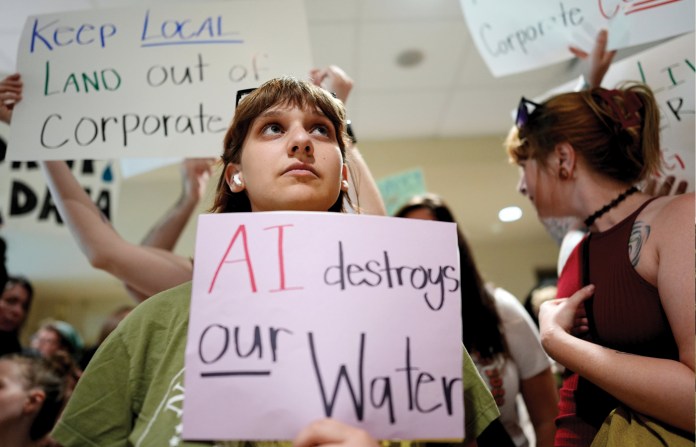
Thus, unfortunately, the vilification project birthed by Sanders and Ocasio-Cortez, juiced by Beijing, and now supercharged by Abbott and friends has borne fruit. According to Josh Zoffer, a venture capitalist and former economic adviser to President Joe Biden, anti-data center activism has led to the cancellation of projects worth some $85 billion. In May, the Brookings Institution published a study estimating that “more than 100 local communities have enacted moratoriums, more than 300 state data-center bills were filed in the first six weeks of 2026, and several states that once competed to offer the largest tax incentives — Virginia, Georgia, and Oklahoma — are now reconsidering those programs entirely.” In mid-July, New York became the first state to impose a full moratorium. “As data center development threatens to hike up utility bills, deplete our natural resources, and create uncertainty for New Yorkers,” Governor Kathy Hochul (D-NY) announced, “it’s my responsibility to take action and lead.”
So things are looking grim for data centers. Is all this criticism, now at least partially bipartisan, warranted? In a word, no.
As Alex Epstein, the founder and CEO of the Center for Industrial Progress and an unabashed AI enthusiast, posted on X, “The average American needs to know: 1) Data centers are the best thing that’s happened to you since fossil fuels. 2) All of the alleged problems with data centers are either fake or solvable.”
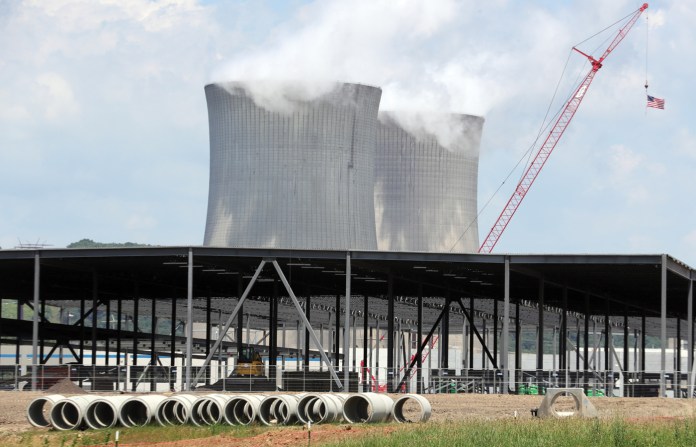
Specifically, setting aside the urgent need to win the AI race itself, data centers generally confer important benefits on local communities in the form of a strengthened electrical grid, lower utility prices, and increased employment.
First, as I outlined in my May article in this space, American AI titans are investing untold sums in expanding energy generation to power the facilities they’re building:
“Data centers, naturally, levy massive power demands on the electrical grid, and for this reason, many of the leading U.S. tech companies have invested heavily in increasing capacity. Early this year, OpenAI announced a billion-dollar alliance with SB Energy; Microsoft is working to bring the Three Mile Island nuclear facility online for the first time in decades; Meta has been exploring space-based solar energy; and Nvidia has partnered with Siemens and Bill Gates to develop a fusion power plant.”
In fact, several recent analyses have found that data centers actually lower electricity costs in their vicinities. Last month, the Electric Power Research Institute concluded that “data centers caused average retail electricity rates to fall modestly in the United States from 2015 to 2024.” Specifically, the nonpartisan nonprofit found that “existing large power system fixed costs, economies of scale in transmission and distribution, and declining unit costs for generation imply that durable demand growth lowers average prices.”
Similarly, if less definitively, a study by Lawrence Berkeley National Laboratory discovered that “residential customers may have benefited from load growth from 2019 to 2025 in some states” and that “the presence of significant data center and cryptocurrency growth does not appear to alter these conclusions.”
And a March 2026 report by the Institute for Energy Research found that “there is no statistically significant correlation between the number of data centers in a state and its current electricity prices.” Specifically, in 2025, the ten states with the highest data-center concentration averaged 14.46 cents per kilowatt-hour, statistically identical to the 14.39 cents/kWh in all other states. The study also found no relationship between the concentration of data centers and faster rate increases.
To be sure, electricity prices can fluctuate, sometimes wildly, when hyperscale facilities are first introduced and before additional infrastructure has been built.
“Data centers create a surge in demand on local grids,” explained Julie Cartwright of the American Institute for Economic Rsearch. “When transmission capacity is constrained and new generation has not yet come online, prices spike.” But supply and demand even out fairly quickly thereafter.
In addition, independent analyses have identified significant benefits that data centers provide to their local communities in terms of higher wages and job growth. Specifically, Brookings found that “counties that receive their first large data center see total private employment rise by 4%-5% over five to six years,” including an increase of 11% in construction employment and a 22% spike in IT sector jobs, including software development and telecom services. Equally promising, the Brookings study concluded that “wages rise by 3%-4% for both existing workers and new hires, without a significant increase in home prices.” And earlier this month, Vawn Himmelsbach of AP Moneywise reported that “tech giants spending $700 billion on AI data centers are recruiting military veterans to fill thousands of jobs.”
Moreover, data centers spur both innovation and economic growth more generally. In a Financial Times article entitled “Data centres are a crucial test of US industrial resolve,” Josh Zoffer also notes that “demand from data centres is already catalysing billions in foreign direct investment from companies such as Hitachi and Siemens to build US manufacturing capacity for advanced electrical equipment.” And in a December 2025 study, the Federal Reserve estimated that data centers’ “contributions range from about 0.8 to 1.1 percentage points” of GDP growth — hundreds of billions of dollars every year.
In response to Texas Ag Commissioner Miller’s proposed data center ban, the Center for Industrial Progress’s Epstein wrote on X, “Imagine if, in the early 19th century, governments had imposed a moratorium on steam engines until they could ‘fully assess’ the long-term impacts of coal mining, railroads, factories, and industrial towns.” Such a moratorium, Epstein asserted, “would have delayed the Industrial Revolution for an arbitrary amount of time, and all of us would be much poorer.”
Flashing forward 200 years, Epstein extolled the glories of contemporary technology. “Data centers are the steam engines of the AI age: foundational infrastructure for a new wave of productivity and progress,” he wrote. “It would have been a terrible mistake to block steam engines 200 years ago, and it would be a terrible mistake to block data centers today.”
The explosion of data centers has not come without costs, and even enthusiasts such as Zoffer forthrightly acknowledge that “construction and permitting rules must address environmental risks and hold operators accountable for any damage” while “hyperscalers’ demand should also be turned to the benefit of communities, with developers covering the costs of building new, clean energy generation and upgrading the grid.”
Along these lines, my American Enterprise Colleague Lynne Kiesling has outlined clear steps that tech giants and utilities must execute in tandem to ensure efficient and effective planning. “When parties cannot know the future,” Kiesling writes, in a post entitled “You Can’t Just Plug in a Data Center,” “they can still agree in advance on what happens under different future conditions. If the data center arrives on schedule, here is how costs will be recovered. If it builds more slowly, here are the minimum charges. If it leaves early, here is the exit fee. If it offers flexibility during grid stress, here is the compensation.”
Kiesling has also pioneered what she calls the “flexibility stack,” a nine-layered system comprising data center developers, regulators, utilities, consumers, and other elements that must coalesce seamlessly to foster success. “Data centers,” she argues, “are large, fast-moving, geographically concentrated, digitally controllable, and politically salient. They stress the old architecture but also reveal where it can evolve. The flexibility stack is the architecture through which latent technical capability becomes reliable system value.” Tech titans, utilities, lawmakers, and everyday citizens must collaborate to ensure data centers benefit as wide an array of interests as possible.
Even more simply, state, county, and municipal authorities should be green-lighting additional electricity generation in an “all of the above” method, from natural gas to renewables and to nuclear. As venture capitalist Josh Wolfe recently wrote in the Free Press, “the honest answer to rising prices is not less demand but more supply: build generation, build transmission, build nuclear, built data centers, built high-paying jobs, and make the AI companies pay their freight for grid upgrades.” (It also wouldn’t hurt for the tech giants to articulate their vision more clearly and succinctly; as the Wall Street Journal‘s Matt Hennessey wrote, “if winning the AI race is really so important, it shouldn’t be that hard to explain why—and to do it using language that slobs like me can easily understand.”)
But at the end of the day, the U.S. and its liberal democratic allies must win the AI race, which necessarily entails moving forward aggressively, though not recklessly, with data center expansion. As Zoffer argues, “we can respond by preventing their construction or channel the market’s voracious appetite to build them on terms that work for US workers and communities.” By encouraging the tech giants to develop their own energy generation and mitigate environmental, noise, and aesthetic concerns, we can achieve the best of both worlds — and give the lie to the overblown complaints of politicians and Beijing.
Michael M. Rosen is an attorney and writer in Israel, a nonresident senior fellow at the American Enterprise Institute, and author of Like Silicon From Clay: What Ancient Jewish Wisdom Can Teach Us About AI.