
CARLISLE, Pennsylvania — Jamie Dimon sat on the stage with President Donald Trump, Sen. David McCormick (R-PA), Secretary of War Pete Hegseth, Secretary of the Army Dan Driscoll, and investors. The CEO of JPMorgan Chase looked out at an auditorium filled with more than 1,500 people attending the inaugural Defense and Innovation Summit.
“God knows this is how you guys have ignited the American dream, and you’ve ignited security and resiliency,” Dimon said to Trump. Dimon’s unvarnished assessment is that of a man who understands that national strength is found in places like Pennsylvania, where laborers, investors, and innovators are at the heart of creating jobs and keeping the country safe.
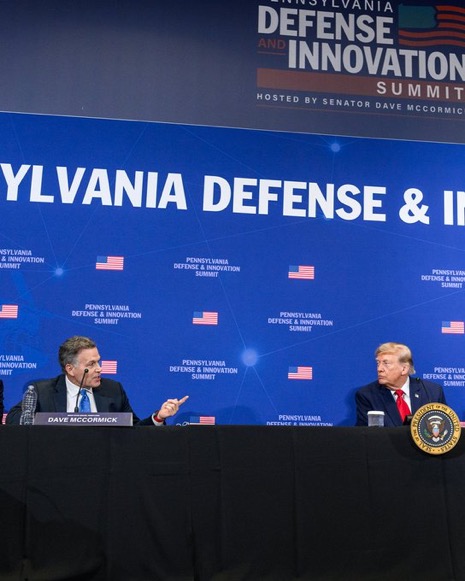
“You reignited that arsenal of democracy that we have in this country, and it’s just critical,” he told Trump in a state that the president renamed the “Money Belt” after his recent visit to Mack Trucks in Allentown.
Dimon also announced a JPMorgan Chase $24 million investment package to finance Rhoads Industries’ new submarine facility and worker training programs at the Navy Yard.
Dimon’s assessment captured the energy and anticipation that centered on the commonwealth’s role as a tangible microcosm of a national rebirth — one that McCormick recognized and worked hard to showcase.
Dimon said he spent his morning at the historic Philadelphia Navy Yard, a place that built ships during the Revolutionary War and both World Wars before being left for dead and closed down.
Today, thanks to a rare alignment of local, federal, and private initiatives, Navy Yard is roaring back to life. “You now have the ships that are going to be built there by Hanwha, a Korean company, and Rhoads Industries,” Dimon shared. “They’re both adding four or 500 jobs … if they add those jobs, another 5,000 jobs will be added to support a lot of small vendors, contractors, et cetera.”
Dimon echoed what Trump and McCormick emphasized and what all the energy, artificial intelligence, robotics, and defense manufacturers believe: that the true heart of reindustrialization belongs to the young men and women walking into America’s trade schools and apprenticeship programs.
“These welders get paid while they’re in their apprenticeship. They get healthcare while they’re in apprenticeship,” Dimon said. “When they graduate, I think after 16 weeks or something like that, they make $80,000 a year. That is the American dream. They go on and buy a house, get married, have a family, et cetera.”
SALENA ZITO: HOW MIKE ROWE’S ‘BUILD FREEDOM’ AIMS TO RESTORE THE DIGNITY OF AMERICAN WORK
Dimon believes that this formula must be replicated across the country, both to secure our future and to support our allies. “My hats are off. I applaud everyone in this room who’s helping this effort,” he concluded, looking toward the stage. “There’s nothing more important for the world’s safety for our children. Mr. President, thank you.”
The setting for these remarks could not have a more fitting backdrop. McCormick’s inaugural Defense and Innovation Summit was held at the Army War College nestled in the Cumberland Valley, just west of the Susquehanna River, surrounded by the Blue Mountain range. It is home to one of the nation’s oldest military installations, a place where the foundational dust of the American Revolution settles naturally into the high-tech reality of modern defense.
For two days, military strategists, CEOs, and elected leaders gathered to focus heavily on a radical transformation in AI, advanced manufacturing, data centers, and investments in the defense sector.
The summit was spearheaded by McCormick, who pulled no punches about the commonwealth’s rightful place in this new era.
The senator repeatedly reminded the crowd that Pennsylvania is the “point of the spear” at the intersection of national security, energy independence, and advanced technology. To McCormick, the event wasn’t just about policy. It was also a showcase for Pennsylvania’s unique capacity to solve the nation’s most complex security challenges by leveraging its deep industrial roots.
“We held this summit to showcase Pennsylvania’s amazing industrial base, drive investments into the commonwealth, and position Pennsylvania as a leader in building the military of the future from shipbuilding and drones to critical minerals,” said McCormick.
Dina Powell McCormick, the president and vice chairman of Meta, as well as the wife of the senator, moderated the “Choke Points: Critical Minerals and Manufacturing Capacity” panel alongside Lockheed Martin CEO Jim Taiclet, Blackstone COO Jon Gray, Export-Import Bank President John Jovanovic, and Palantir CTO Shyam Sankar, discussing strategies for securing defense supply chains.
McCormick told the Washington Examiner that none of this would have happened were it not for Trump’s policies and his understanding of the capabilities and skill sets in the heartland.
“The summit convened more than 600 C-suite executives representing 500 companies and more than 130 booths, demonstrating an incredible gathering of Pennsylvania’s industrial and business leadership. We also had more than 30 announcements totaling nearly $10 billion in new investment, supporting 5,000 new jobs,” he said.
Walking through the academic buildings, you could see the physical manifestation of a state putting its shoulder to the wheel. Over 1,550 people were packed into Root Hall, visiting the exhibitor booths and displays as robots walked or crawled around the first floor.
It was a curated crossroads where Pennsylvania’s premier defense contractors, agile emerging startups, energy companies, and labor unions stood side by side.
Global giants, including York County-based BAE Systems and General Dynamics, shared the floor with local workforce leaders and small robotics developers, demonstrating everything from massive defense vehicles to autonomous security tools such as Asylon Robotics’ “DroneDog.”
Jake Loosararian, the charismatic founder of Pittsburgh-based Gecko Robotics, stood in front of his booth and showcased the defense work that the company does with the Department of War. Loosararian said that Trump being in Pennsylvania is both a statement and a flag in the ground for the reindustrialization of America.
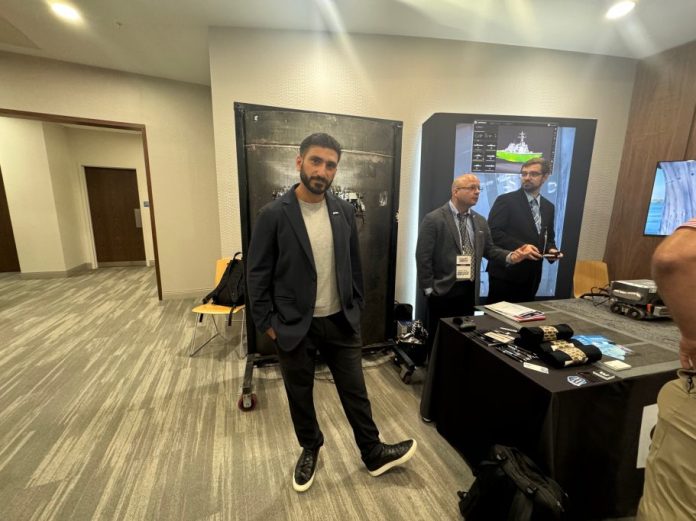
“It signifies the importance of that from a national security standpoint, not just for building, but also for sustaining the existing military assets that we have; we are ensuring that our military is ready for the fight, that’s what Gecko’s all about, and that’s what the summit’s all about.”
What is happening here is the quiet, fierce reindustrialization of the commonwealth. By linking the grit of Pennsylvania’s manufacturing heritage with the forward-facing power of energy production and AI, these industries are proving that manufacturing is a core element of patriotism.

When you combine that blue-collar muscle with the elite research of academia and university researchers, Pennsylvania effectively repositions itself as the center of gravity for American innovation. The summit itself became a massive catalyst, drawing a promised $10 billion in defense-related investments and over 4,000 projected jobs directly to Pennsylvania communities.
The day’s momentum built steadily from Wednesday morning’s very first panel, titled “Lessons from the Battlefield: The Changing Character of War.” Sitting on that stage was Thomas Tull, the Pittsburgh-based businessman, co-chairman of TWG Global, and minority owner of the Pittsburgh Steelers. Tull has turned his passion into investing in American success and grit by redeveloping dormant facilities such as the historic Alcoa plant in New Kensington into vibrant hubs for modern manufacturing and advanced AI.
Tull also chairs the multibillion-dollar U.S. Innovative Technology Fund, which funnels crucial private capital into defense technology such as autonomous systems and AI.
During the roundtable, Tull gave voice to the quiet urgency driving the innovators in the room. “We have invested billions of dollars in defense tech because we know that we need it,” Tull said. “We know that we have to, because we live in a dangerous world. We have to defend that, and we have to be leaders.”
Tull looked toward the executive branch’s procurement shifts, telling Trump, “Without the change that you’re causing, Mr. President, these things aren’t possible. It’s going to make a massive difference for the next 20 years.”
The peak of this momentum was felt clearly during the headlining panel. Trump took the stage to announce concrete victories for Pittsburgh-based innovators that tie directly into this grand strategic vision. He highlighted Eos Energy Enterprises, which secured a milestone Golden Dome for America contract from the War Department to develop long-duration energy storage systems crucial for powering a proposed domestic missile defense shield.
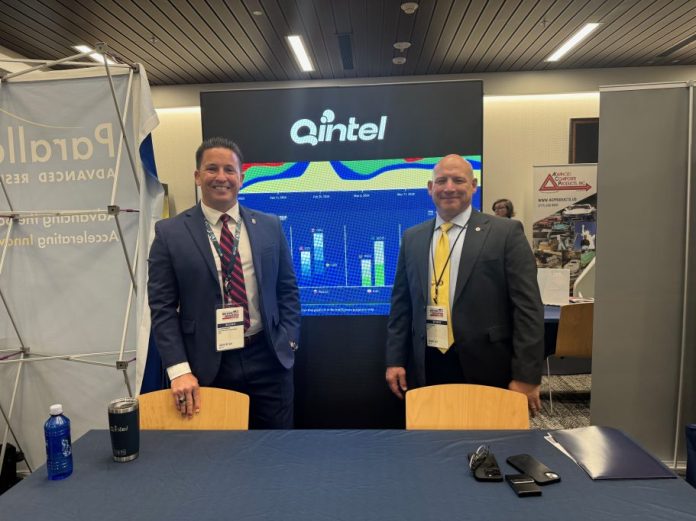
The president announced an $84 million multi-year contract for Qintel, a bootstrapped cyber intelligence firm operating right out of Pittsburgh’s North Shore, allowing it to scale its specialized services for U.S. Cyber Command. It is a vivid reminder that the front line of modern deterrence runs straight through Western Pennsylvania’s tech sector.
The men and women who attend the college and summit are the custodians of a long, proud tradition of community and defense. This base has stood the test of time since its inception as an outpost in the 1750s. Back then, Carlisle was simply an intersecting trade route. It served as the last stop for traders and settlers heading toward the forks of the Ohio.
In 1777, the Continental Army seized the post. It used it as a prisoner of war camp to house captured German Hessian mercenaries. Those very prisoners built the Hessian Powder Magazine, a stone building that still stands today.
The historic grounds have evolved significantly since George Washington permanently encamped here in 1794. It went on to become the pre-Civil War U.S. Army Cavalry School, was home to the Carlisle Indian Industrial School, and survived occupation and fire by Confederate cavalry in 1863.
Today, the U.S. Army War College continues to shape the future of military strategy. Its doors host a unique mix of minds. Alongside students from all branches of the U.S. military, the campus welcomes civilian intelligence officers and international officers.
These individuals bring diverse perspectives to the Cumberland Valley, Maj. Gen. Trevor J. Bredenkamp, the 1st president and commanding general of Army University, told the Washington Examiner.
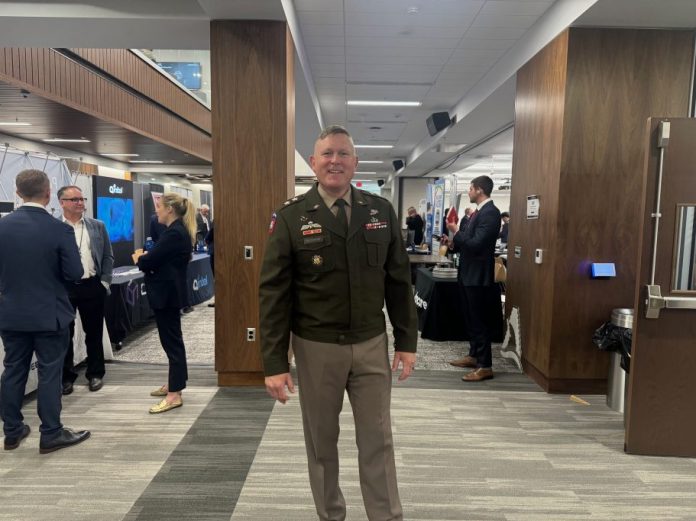
“We are uniquely charged with preparing people to lead America’s sons and daughters in the crucible of common,” said Brendenkamp. “And so all the 130 booths here, they are building the things that our leaders need to be able to understand how to employ when called. And so it’s the nexus of all that academia, industry, government, and it’s really important.”
Bredenkamp said that having Trump come to the War College is incredible.
“The president speaks a lot about peace through strength. And strength is not just weapons and equipment and technology; it’s people, and the Army is people; that is the one thing that hasn’t changed over our history,” he said.
“They say technology has changed, but the one thing that remains constant is the human dimension, and we have to be prepared to do that,” he continued. “And so shining that light on Carlisle Barracks, Carlisle, Pennsylvania, the contributions of this commonwealth to the nation for the last 270 years, and what we need to do moving forward is really important.”
The transition from a colonial frontier outpost to a premier center for strategic thought is remarkable. The very grounds that once stored gunpowder and held prisoners now foster radical transformation in modern warfare. By bridging American military might from our founding to today, the U.S. Army War College remains a vital pillar of America’s strength and resilience.
Gov. Josh Shapiro (D-PA), who was on a panel with McCormick on Wednesday, told the Washington Examiner that Carlisle Barracks has remained significant to our nation throughout its 270-year history.
Shapiro said it was fitting that McCormick held the event where so much rich history had unfolded as the commonwealth looks to the future. “The future of American national security is not what it’s looked like for the last 40 or 50 years, relying on a handful of prime defense contractors who do important work. Instead, it’s about integrating what happens at a place like this, what’s happening in our universities, what’s happening at our tech companies,” Shapiro said.
“Whether it’s at Gecko or EOS or Qintel or any of these other companies in Western Pennsylvania and all across our commonwealth, and marrying that up with our unique labor that have the ability to build stuff. All of that is going to put us in a position to thrive in the future,” he said.
Trump was all smiles at the warm welcome he received at the War College. At an event, McCormick had both Dimon and Sean McGarvey, the president of North America’s Building Trades Unions, at the same table. Trump introduced McGarvey as “the most powerful man in the room.”
McGarvey joked that because of Trump’s years spent working in development, the president knows his business better than he does.
“We’ve been in the workforce development business when it comes to construction skills for a hundred-plus years. We have 1,600 training centers across the United States, spend $3 billion of our own money every year, and we don’t need any money from anybody in the audience, anybody on the podium, the federal government,” McGarvey proudly said.
“What we need is deals, and we need deals way further up the pipeline when other decisions are being made,” he continued. “Our members have historically been just great patriots in this country, whether it was World War I, World War II, building the airstrips and the bases across the world; it was the members of the building trades that stepped up and did it.”
McGarvey told the president that in Pennsylvania, they are prepared to meet any needs necessary. “For Sen. McCormick or for anybody across this country. And we appreciate the opportunity to do so for our country, thank you, Mr. President.”
Sen. John Fetterman (D-PA) also appeared on a panel on Tuesday evening hosted by the Ruthless Podcast. Joined by McCormick, the two senators discussed the need to work together to bring projects across the line, from Washington, D.C., to Pennsylvania.
The event came exactly one year after McCormick’s highly successful Energy and Innovation summit at Carnegie Mellon University.
During the panel, Trump turned to McCormick and joked that it was the second time that the senator had persuaded him to come to the state. The president deadpanned, “Whatever you are doing next year, I’ll be here.”