
The recent memorandum of understanding between President Donald Trump’s administration and the Iranian regime has disappointed and even frightened many Israelis. Many had hoped, perhaps naively, that the American president would fulfill his promise to end Iran’s ability to terrorize its regional neighbors.
The June 17 MOU between the United States and the Islamic Republic is a 14-point document aimed to establish a ceasefire and create a diplomatic off-ramp for the recent war, a conflict that pitted the U.S. and Israel against Iran. The MOU’s 60-day duration is supposed to provide time for negotiations toward a permanent settlement.
But the document was an American initiative, not an Israeli one. A turn of events that has spurred consternation in the Jewish State.
“Israelis were very disappointed with the MOU,” said Gayil Talshir, an expert on Israeli public opinion at the Hebrew University. When Israel and the U.S. jointly launched their offensive against Iran on Feb. 28, “There were very clear targets: to dismantle the ayatollah regime; to destroy Iran’s nuclear weapons capabilities and remove its enriched uranium; to disable Iran’s ballistic missiles; and to cut off the relationship between Iran and its proxies, especially Hezbollah.”
Not one of these goals has been achieved, Talshir said. Even worse, Iran is conditioning a reduction of its nuclear arsenal to a full and unconditional IDF withdrawal from southern Lebanon while Hezbollah is still armed and dangerous.
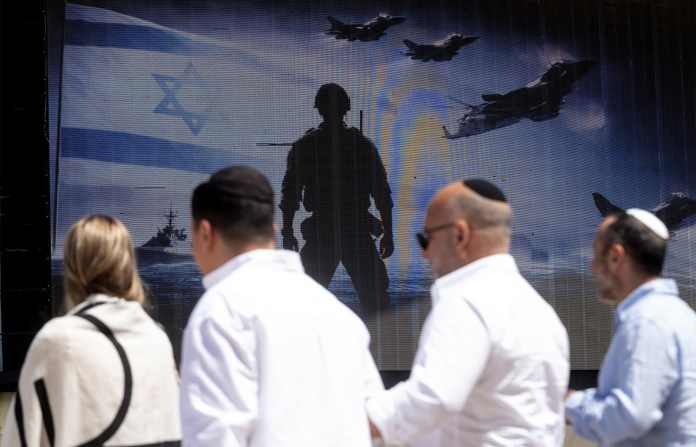
For these reasons, the MOU is seen not as the conclusion of a successful war but as a capitulation to the region’s worst bully.
The MOU calls for the “immediate and permanent termination of military operations on all fronts, including in Lebanon” by the U.S., Iran “and their allies in the current war.” It also requires the U.S. to conditionally commit to terminating all sanctions against Iran and will provide Iran with a $300 billion economic reconstruction plan. In return, Iran commits to not developing nuclear weapons and will “down-blend” its enriched materials under IAEA supervision.
The U.S.-Iran negotiating team barred Israelis from the negotiations and refused to share the MOU’s details until they were a done deal. The Israeli public, which endured unrelenting missile and drone attacks by Iran and Hezbollah, an Iranian proxy army and terrorist organization, was aware that Trump wanted to end the war quickly, but was still blindsided by the MOU’s terms.
The latest Israel Democracy Institute survey (June 28-July 1) found that only 28% of Israelis now believe that Israel’s security is a “central consideration” for Trump. That number was 61% in March, while the war was raging. Just 38% of respondents said Israel’s security situation is better than it was before the Iran war, and 72% said Israel should maintain a permanent security zone in south Lebanon, even if this means clashing with the United States.
In a June 17-20 Hebrew University survey, 69.1% of respondents described Trump’s management of the war and its aftermath as “failed” or “poor,” while only 10.8% called it “good” or “excellent.”
In the same poll, an overwhelming 92.1% said Iran had won both the war and the MOU-related negotiations, while 87% said Israel’s long-term security had been weakened.
Fraying Trump-Netanyahu relationship
Trump was once hailed as a hero in Israel. During his first term, he recognized Jerusalem as Israel’s capital and moved the U.S. embassy there in 2018. Trump then recognized Israeli sovereignty over the Golan Heights in 2019. And his administration brokered normalization agreements between Israel and four Arab nations: the United Arab Emirates, Bahrain, Sudan, and Morocco.
The polls’ findings spell trouble for Trump’s longtime Israeli ally, Prime Minister Benjamin Netanyahu, who is up for reelection in the fall.
“He is trying to present the Iran war as a great victory, but Israelis aren’t buying it,” Talshir said of Netanyahu, 76, who has been Israel’s prime minister for a total of more than 18 years over a 30-year period.
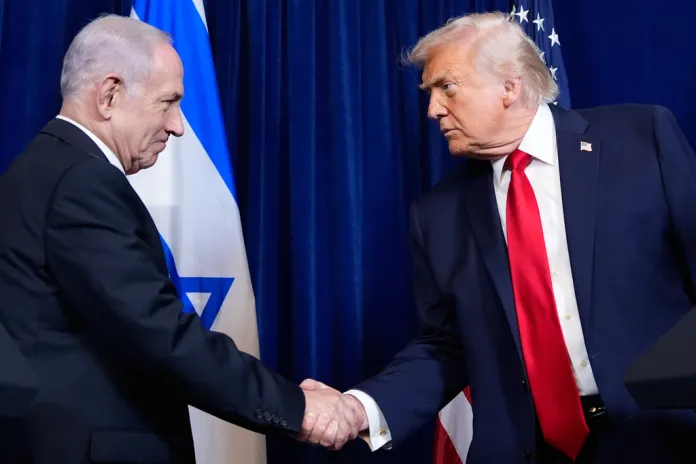
Trump’s recent allusions to Netanyahu as an underling who must obey the president could also cost Netanyahu on Election Day. Elections need to be held by Oct. 27, but could happen earlier.
“We get along very good. [Netanyahu] knows who the boss is,” Trump told Axios on July 4. Netanyahu has requested a meeting with Trump at the White House this month, according to media reports.
Mitchell Barak, founder of KEVOON Global Research, said the fact that the MOU commits Israel to a ceasefire and troop withdrawal from Lebanon “has already had repercussions” related to Israel’s security and the upcoming Israeli election.
“Israelis saw Trump as the greatest friend Israel has ever had,” Barak said. “He seemed passionate about Israel, and his relationship with Netanyahu was a plus… But at the end of the day, it looks like [Trump] doesn’t really care.”
Even Netanyahu’s staunchest critics, who predicted that Trump would ditch the prime minister the moment the president saw him as a political liability, “feel left in limbo” by the MOU, according to Ruthie Blum, a conservative commentator for the Jerusalem News Syndicate. “Gaza isn’t finished, Lebanon isn’t finished, and they’re waiting to see what Trump does about Iran’s nuclear weapons.”
Blum said that some of Netanyahu’s strongest supporters still hope that Trump will resume his pressure on Iran after the U.S. midterm elections in November. The Iran war has been extremely unpopular, especially among Republicans.
In a CBS/YouGov survey conducted with Americans immediately after the MOU was signed, 78% of respondents said they wanted the war to end. However, 69% said the U.S. had not permanently thwarted Iran’s nuclear capabilities, and 59% said Iran will likely threaten neighboring countries in the near future.
Blum, a dual American-Israeli citizen who describes herself as a Trump supporter, acknowledged: “A lot of us are in a whiplash situation. He’s driving us crazy.”
Yaakov Katz, a senior fellow at the Jewish People Policy Institute, urged Israelis to tone down their criticism of Trump and the MOU, citing the public’s unrealistic expectations and the Iran war’s unpopularity among American voters.
“Many Israelis are reacting to the US-Iran MOU with an unbelievable degree of immaturity,” Katz said in a June 17 X post. “Trump is being portrayed as a traitor, a flip-flopper, a man who abandoned Israel.”
Katz said that Trump’s decision-making “was never about Israel’s interests alone. It was about America’s interests.” Trump waged the war “expecting a certain outcome, and when that outcome did not materialize, he made a decision to cut his losses and do what he believes serves America’s interests: to end the war now, under terms that many of us wish were stronger and more favorable.”
Washington, D.C.-based counter-terror analyst Erfan Fard said Israelis aren’t the only ones worried about the MOU.
NETANYAHU TOUTS ISRAEL’S STRENGTH, COMMITS TO ‘TAKE CARE OF WHAT IS LEFT OF THE IRANIAN AXIS’
“Whether Washington intended it or not, many Iranians will interpret this agreement as a decision to prioritize regime survival over political transformation,” Fard, who was born in Iran, wrote in a Jerusalem News Syndicate op-ed. “They will see it as another example of foreign powers preferring stability to liberty, predictability to change and crisis management to democratic aspiration.”
In the short-term, Fard wrote, “Trump may celebrate the agreement as a diplomatic achievement. Tehran may celebrate its survival,” but history “tends to judge such moments by a harsher standard. It asks a simple question: Did anything truly change? Judging from the realities visible today, the answer appears to be no. The regime survived, the conflict was deferred, and the underlying problem remains. That is not a strategic victory. It is merely an intermission.”
Michele Chabin (@MicheleChabin1) is a journalist whose work has appeared in Cosmopolitan, the Forward, Religion News Service, Science, USA Today, U.S. News & World Report, and the Washington Post.