
The following is an installment of On This Day, a series celebrating America’s 250th anniversary by following the actions of Gen. George Washington, the Continental Congress, and the men and women whose bravery and sacrifice led up to the signing of the Declaration of Independence.
July 1, 1776
The heat in New York was oppressive, but inside Gen. George Washington’s headquarters, the atmosphere was downright stifling. It was July 1, 1776, exactly 250 years ago, and the American Revolution was teetering.
Looking out over the harbor, Washington could see the British naval menace sharpening by the hour. A massive armada was gathering, and the threat of invasion felt immediate.
Seizing his pen, Washington fired off an urgent dispatch to Col. James Clinton in the Hudson Highlands. British warships, he warned, were preparing to force their way up the North River. Clinton’s orders were clear: Fortify the riverbanks immediately and prepare to give the redcoats a “proper Reception.”
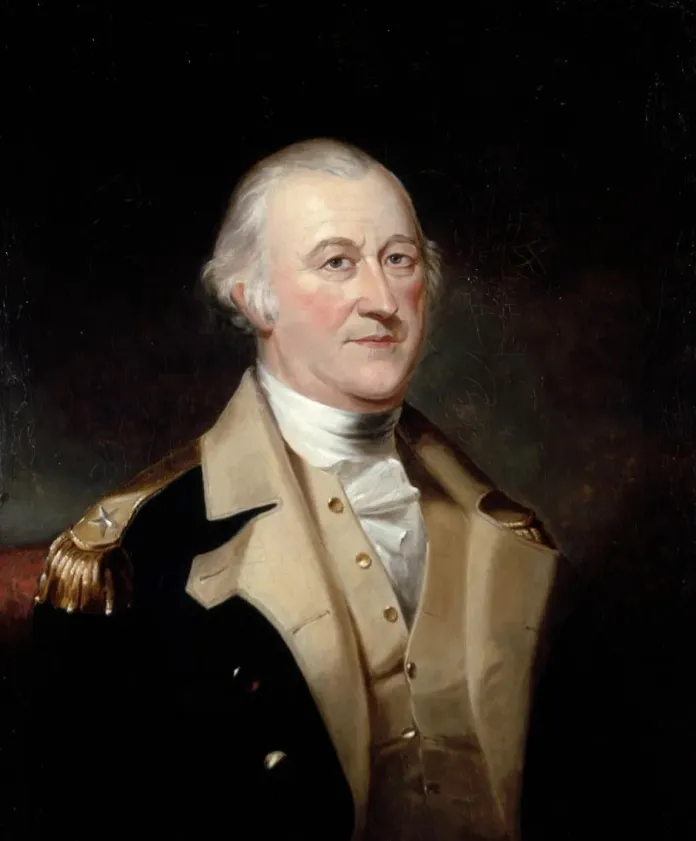
Desperate for firepower, Washington also wrote to Maj. Gen. Artemas Ward in Massachusetts. There was a rare glimmer of good news: American vessels had captured a British transport ship packed with elite Highland grenadiers. Washington offered his grim congratulations and begged Ward to send any captured weapons he could spare. Every musket counted.
Meanwhile, 90 miles to the south, a post-rider was gearing up to tear down the dusty roads from Philadelphia, carrying a letter from the president of the Continental Congress, John Hancock.
Hancock’s letter arrived with updates from the political front. Captain Peters had successfully escorted Maj. Robert Rogers, the legendary but deeply untrustworthy French and Indian War hero, to Philadelphia. Suspicious that Rogers was spying for the British, Hancock had him locked away under guard at the city barracks.
But Rogers was the least of Hancock’s concerns that day. Just outside the barracks, inside the stifling walls of the Pennsylvania State House, a chaotic intellectual war was raging.
This was the “momentous matter” that consumed Congress. The delegates were locked in the Committee of the Whole, fiercely debating Richard Henry Lee’s resolution for independence. The room was a pressure cooker of sweat, flies, and ideological fury.
John Dickinson of Pennsylvania stood before the assembly, delivering a brilliant, agonizing speech against a premature split from Britain. He warned that separating now would be like “braving the storm in a skiff made of paper.” He predicted that British troops would burn American cities, Indian tribes would ravage the frontiers, and foreign powers would devour the defenseless colonies.
As Dickinson spoke, a fierce summer storm rolled into Philadelphia. Thunder cracked outside, and lightning illuminated the tense faces of the delegates.
When Dickinson sat down, John Adams took the floor. Bathed in the shadows of the storm, Adams spoke with a raw, burning passion that electrified the room. He didn’t use elegant prose — he spoke with the force of a man who believed the continent’s destiny depended on this single afternoon. He answered every one of Dickinson’s fears with a vision of a free, self-governing people. For over an hour, Adams hammered away at the doubters, earning his title as the “Colossus of Independence.”
When a preliminary vote was finally called late in the afternoon, the room held its breath. The result was alarmingly fragile. Nine colonies voted in favor, but South Carolina and Pennsylvania voted no. Delaware was deadlocked. The New York delegates, lacking orders from home, sat in agonizing silence, abstaining entirely.
True independence hung by a thread. The delegates needed unanimity, or the rebellion would fracture before it even began. They agreed to delay the final, official vote until the next morning, leaving them just one night to lobby, argue, and horse-trade in the city’s taverns.
ON THIS DAY: THE AMERICAN EXPERIMENT SUSPENDED ON A RAZOR’S EDGE
Exhausted, Hancock returned to his desk to finalize his letter to Washington. Excusing his brief, rushed writing due to the day’s frantic arguments, he closed with a tantalizing promise to the general: “My next will Inform you I hope of some very decisive Measures.”
Hancock was writing on the very eve of history. Even as Washington braced for battle in New York, the exhausted delegates in Philadelphia went out into the stormy night, knowing that, tomorrow, they would either unite to birth a new world or fracture into treason and defeat.