
Three judges from the International Criminal Court are suing President Donald Trump and his administration in a U.S. federal court, calling the government a “sanctions regime” illicitly punishing them for their prior rulings.
ICC judges Kimberly Prost from Canada, Reine Alapini-Gansou from Benin, and Solomy Balungi Bossa from Uganda jointly filed a lawsuit on Wednesday in the federal court in Manhattan seeking immediate relief from sanctions imposed on them by the State Department and Treasury Department for their activities related to the court.
They contend that the sanctions were designed to “exert extra-judicial pressure […] by targeting their financial and other personal interests” and “coercing them into prioritizing their private interests over deciding cases on the basis of the law and facts.”
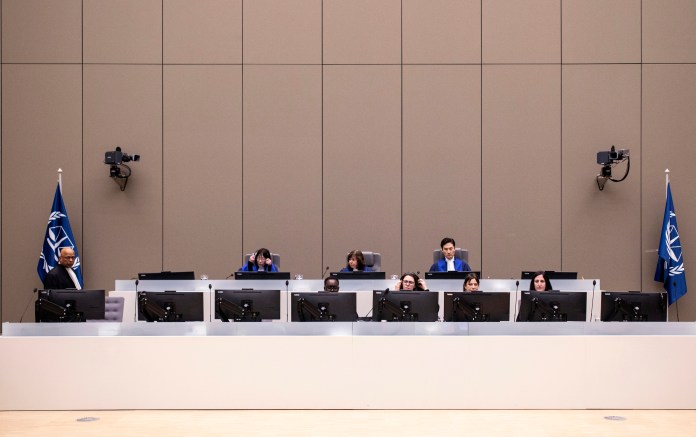
The Trump administration began rolling out sanctions against the ICC and its officials in February of last year, slowly adding to the list “foreign persons who directly engaged in efforts by the [ICC] to investigate, arrest, detain, or prosecute nationals of the United States or Israel, without the consent of either nation.”
Tensions between the ICC and the U.S. came to a boiling point when the court issued an arrest warrant for Israeli Prime Minister Benjamin Netanyahu in 2024 on charges of committing war crimes and crimes against humanity.
A press release from the State Department in August called the court a “national security threat that has been an instrument for lawfare against the United States and our close ally Israel.”
The judges, none of whom hold U.S. citizenship, argue that Trump exceeded his legal authority under the International Emergency Economic Powers Act by imposing sanctions without a national emergency. The suit also accuses the State Department and Treasury Department of violating the Administrative Procedure Act by issuing “arbitrary and capricious” decisions.
IEEPA sanctions are “tantamount to the financial death penalty,” the judges’ legal representation argued.
“Due to the sanctions, Judges Prost, Bossa, and Alapini-Gansou are no longer able, among other things, to use credit cards; access banking services; use common online platforms, such as Amazon and Google; book travel; and in some cases, obtain health insurance,” the lawsuit reads.
The U.S. does not recognize the ICC as a legitimate international authority, accusing the “bankrupt institution” of “politicization, abuse of power, disregard for our national sovereignty, and illegitimate judicial overreach.” Russia, China, Israel, and others have similarly opted out of the court entirely.
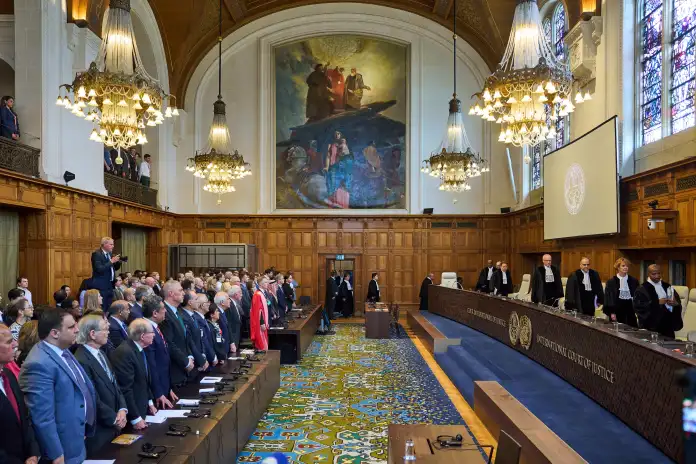
United Nations Special Rapporteur on the Occupied Palestinian Territories Francesca Albanese is currently fighting a separate legal battle against the Trump administration regarding the ICC sanctions.
Albanese was sanctioned in July of last year for her lobbying of the ICC to issue those arrest warrants against Netanyahu and other Israeli officials. Secretary of State Marco Rubio accused her of “unabashed antisemitism, expressed support for terrorism, and open contempt for the United States, Israel, and the West.”
RUBIO SANCTIONS CUBAN ENTITIES DESPITE COUNTRY’S ATTEMPT TO LIBERALIZE
Albanese’s husband, Massimiliano Cali, has appealed the decision on behalf of their minor daughter, who was born in the U.S. and is an American citizen. In contrast to the three ICC judges, Albanese is focusing on the First Amendment as the basis for her appeal.
Last month, U.S. District Judge Richard Leon ruled in favor of the Albanese family’s request for an injunction and ordered the State Department to remove her from their sanctions list as the case moved to the U.S. Court of Appeals for the D.C. Circuit.
The U.S. Court of Appeals for the D.C. Circuit has since overturned Leon’s injunction and allowed the U.S. government to reinstate the sanctions throughout the litigation process, and the opinions issued by the court signal they might not see the First Amendment argument as valid.