
At least 40 people in France have drowned in recent days while trying to escape a blistering heat wave that has gripped much of Europe.
The continent is warming at roughly twice the global average rate, contributing to more frequent and intense periods of extreme heat, according to the World Meteorological Organization.
Ahead of an emergency government meeting on the crisis, French Prime Minister Sebastien Lecornu described the drownings as a “tragic scourge” and said 40 people had died since June 18.
France recorded its hottest day ever on Tuesday, according to Meteo-France, France’s national meteorological service, with temperatures reaching 111.7 degrees Fahrenheit in a town in the country’s southwest.
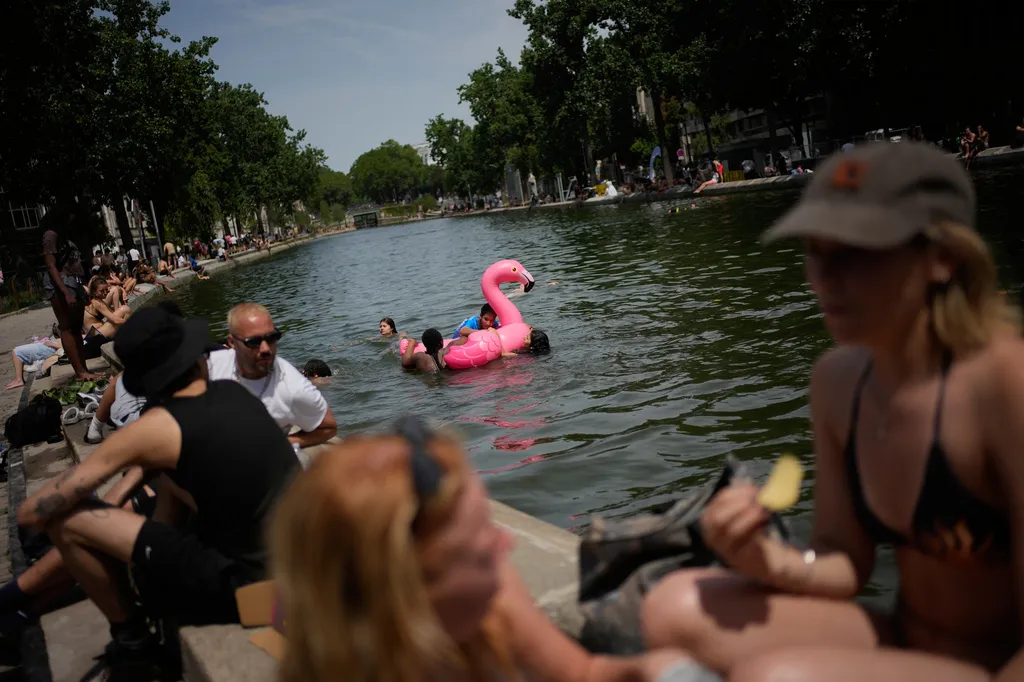
Across France, residents have flocked to rivers, canals, and lakes in search of relief from the scorching temperatures. Sports Minister Marie Barsacq urged caution, warning against swimming in unauthorized or hazardous areas despite the temptation to cool off.
Meteorologists say the heat wave is being driven by an “Omega block,” a weather pattern shaped like the Greek letter that traps a dome of hot air between cooler systems, allowing temperatures to build for days. Scientists have linked the growing frequency and severity of such extreme weather events to climate change.
Britain, Italy, Switzerland, and Spain have also been sweltering under extreme temperatures. Record heat has disrupted schools and transportation networks and forced some tourist attractions, including the Eiffel Tower, to close.
TRUMP SAYS THERE ‘WILL BE NO TOLLS’ IN STRAIT OF HORMUZ DURING OR AFTER 60-DAY CEASEFIRE
Spain’s national weather agency issued red alerts across parts of the country, warning that temperatures could reach 111 degrees Fahrenheit. Dozens of municipalities in northern Spain also canceled traditional bonfires because of elevated wildfire risk. In Belgium, soaring temperatures forced a primary school near Brussels to relocate its final exams to a nearby church.
Meanwhile, authorities in Switzerland’s northeastern canton of St. Gallen restricted water withdrawals from rivers and lakes as unusually high temperatures and low water levels strained local resources.