
Peter St. Onge’s May 11 essay “How Trump’s tariffs can paradoxically raise economic freedom” is a case study in wishcasting. It imagines a world in which President Donald Trump wielded strategic tariffs to pressure other countries to open their markets to the United States.
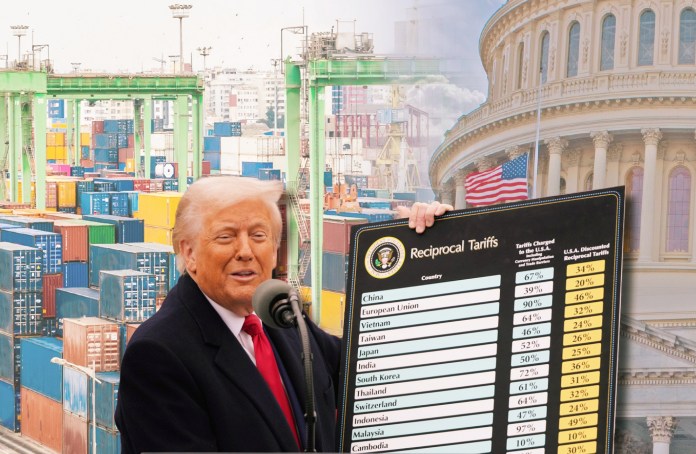
But instead of targeted reciprocal tariffs, Trump imposed an inexplicable mix of haphazard and sweeping tariffs.
St. Onge argues that Trump’s tariff policies are a “resounding” success and that they have led to the “reshoring” of domestic manufacturing.
Yet manufacturing employment has declined by nearly 80,000 jobs since the second Trump term commenced. Manufacturing output is almost the same as during the Biden years. Tariffs have made it more expensive to manufacture goods in the U.S. because roughly half of American imports are raw materials, manufacturing inputs, and machine tools and other pieces of equipment used by U.S. manufacturers and other producers.
Taxing U.S. manufacturers’ inputs makes them less competitive.
One of Trump’s objectives was to reduce the trade deficit. But the trade deficit in 2025 was higher than in 2024. Trump’s trade policies can only be regarded as a success if you are a trade lobbyist. The amount spent on lobbying trade issues has tripled. The swamp is being augmented, not drained.
St. Onge claims that “Trump has touted more than $4 trillion of incoming investment.” While it’s true that Trump has “touted” incoming investment, it’s not true that it is actually happening. Foreign direct investment during Trump’s first year is less than levels reached under former Presidents Joe Biden, Barack Obama, and Bill Clinton.
St. Onge states that “at least 15 major partners have slashed barriers onto American goods.” This confuses promises made in press releases and press conferences with actual results. St. Onge mentions a handful of specific examples of U.S. goods supposedly facing reduced trade restrictions: industrial goods exported to the European Union, milk exported to Canada, beef exported to Japan, and automobiles exported to Korea and China. But upon closer inspection, these supposedly resounding wins are revealed as either imaginary or else dwarfed by larger trade losses.
Ten months after the U.S. and European Union agreed to an unofficial framework agreement, the EU hasn’t yet reduced, let alone eliminated, tariffs on U.S. industrial goods.
Canada may have reduced trade restrictions on U.S. milk, but it imposed more economically significant 25% retaliatory tariffs on U.S. aluminum, steel, and automobiles.
Japan’s “loosened restrictions on beef” were part of the U.S.-Japan Trade Agreement from October 2019, when Trump’s first administration mostly pursued free trade with free countries.
And though St. Onge boasts that Korea and China opened their auto markets to the U.S., he fails to mention that auto exports to China fell 54% or that total U.S. domestic auto production dropped by more than 10% last year.
St. Onge claims that Trump’s use of tariffs aligns him with President Ronald Reagan, who he notes “saw tariffs as a temporary but necessary evil to achieve specific objectives, as opposed to a permanent policy crutch.” But Trump has aligned himself more with openly pro-tariff President William McKinley than with pro-trade Reagan.
Arguing that Trump’s tariff policies “are similar” to those of Reagan’s is like arguing that a Chevy Chevette is similar to a Ferrari because they both have four wheels and an engine. The Trump tariffs are approximately four times higher than those under Reagan.
Reagan saw targeted tariffs as a necessary evil. Trump sees tariffs as a major permanent fixture.
By the end of his essay, St. Onge argues that if Democrats keep Trump’s tariffs in place, the tariffs would revert to a tax on consumers and growth because Democrats wouldn’t cut income taxes and regulations, as Trump has.
TRUMP’S TARIFF DEFEATS IN COURT ARE CONGRESS’S SHAME
It’s true that cutting taxes and reducing some Biden-era regulations have helped. But Trump’s tariffs have created economic headwinds that have counteracted, not complemented, those actions.
Tariffs are taxes regardless of who imposes them. Other good policies may offset the damage, but they can’t transform tariffs into instruments of economic freedom.
David Burton is a senior research fellow at the Plymouth Institute for Free Enterprise at Advancing American Freedom Foundation. Preston Brashers is a research fellow at Plymouth.