
The Austrians gave the world the orchestral symphony, the Italians opera, and the French ballet — just don’t mention that last one to the Russians. Cinema, the youngest of the great narrative arts, was born in several countries at once, though the French have tried to claim this one as well. But the real movies — not that pretentious avant-garde nonsense, but glamorous stars, studios, spectacle, and the Golden Age magic that produced such immortal lines as “Here’s looking at you, kid” — are American.
I wanted to share my favorite American movies for the nation’s 250th birthday. But I will spare you the standard sermons praising Citizen Kane and Casablanca — though if you have not seen them, stop reading and remedy this immediately — and offer something slightly different: the films that most cleverly celebrate America, defend its traditions, and uphold its ideals.
The Searchers (1956)
John Ford’s The Searchers is the American western in its purest form. John Wayne’s Ethan Edwards is not merely a hero (he is certainly not a gentleman). He is brave, loyal, vengeful: the kind of man who helped carve civilization out of anarchy.
The film is especially relevant in an age increasingly inclined to interpret and judge history as some overly sensitive HR seminar. The young now are routinely invited to dismiss Columbus, Washington, Grant, and nearly every other consequential figure in the American story because they were flawed, compromised, or morally alien to our own age. But civilization is built by imperfect men who, despite their sins, still managed to leave behind a world more ordered, prosperous, and free than the one they inherited.
Ford’s quintessential western could only have been made in America because it intimately explores the imperfect but dogged characters necessary to create America, and the enormous toll such men had to bear in a pursuit that tragically precluded them from the polite society they helped forge. Without The Searchers, we do not have Clint Eastwood, George Lucas, or the modern western as we understand it.
One, Two, Three (1961)
Billy Wilder’s Cold War farce is one of the great comic defenses of capitalism because it understands that capitalism’s virtues are never clearer than when witnessed alongside the consequences of its alternative.
James Cagney plays a Coca-Cola executive in West Berlin, juggling corporate ambition, Soviet absurdities across the wall, and an angsty teenage daughter. When his impressionable child falls for a debonair Marxist revolutionary, her father is roped into a frantic charade to dress him up and convert him into a convincing bourgeois, lest his boss suspect him of being a spy for the Reds.
The movie makes communism look miserable and ridiculous, while American capitalism appears frantic, opportunistic, but undeniably alive.
Three Days of the Condor (1975)
As much as I love films such as One, Two, Three and Top Gun, which lampoon America’s enemies or celebrate its military prowess, it is equally pertinent — and just as suited to the tenets of the Constitution — to maintain skepticism of government power.
Here, Robert Redford plays a CIA researcher who returns from lunch to find his colleagues murdered and discovers that the institutions meant to protect the country may be operating beyond democratic control. Unlike the idealistic moral universe of earlier Cold War films, Three Days of the Condor belongs to the 1970s, when American cinema became suspicious of power, corporations, and intelligence agencies. Had Russian cinema tried to imitate such a film, Redford would have been the villain. It is American because it dramatizes one of America’s noblest instincts: distrust of unaccountable authority.
Top Gun (1986)
I always grin whenever a viral post appears claiming that Top Gun is actually American military propaganda, as if this were a profound insight. The only proper response is, “Yes, and it is spectacular.”
Top Gun is American military glamour in its purest commercial form: fighter jets, aviator sunglasses, rock and roll, and aircraft carriers, channeled into national bravado. Matt Stone and Trey Parker’s Team America was intended as a spoof of this unapologetic chauvinism, but Top Gun is the real deal. It is not a complex film, but that is partly the point. It turns American foreign policy into pop mythology and makes patriotism look so cool that not even Springsteen’s mealy-mouthed tirades could contend with it.
Beneath the thundering jet engines is a very American idea that greatness comes from talent disciplined by teamwork. Tom Cruise’s Maverick must remain exceptional, but he also has to become trustworthy. That tension between individual brilliance and institutional duty is the heart of the movie.
The Incredibles (2004)
Squarely aimed at the participation trophy generation, Brad Bird’s The Incredibles is one of the sharpest defenses of family, individual talent, and anti-bureaucratic freedom.
Its premise is distinctly American: Superheroes have been sued into retirement by a society that would rather suppress greatness than risk disorder. The film is not merely nostalgic for heroism. It argues that exceptional people should be allowed to be exceptional and that families are strongest when each member’s gifts are recognized. It is practically Ayn Rand with humor and family values.
Hail, Caesar! (2016)
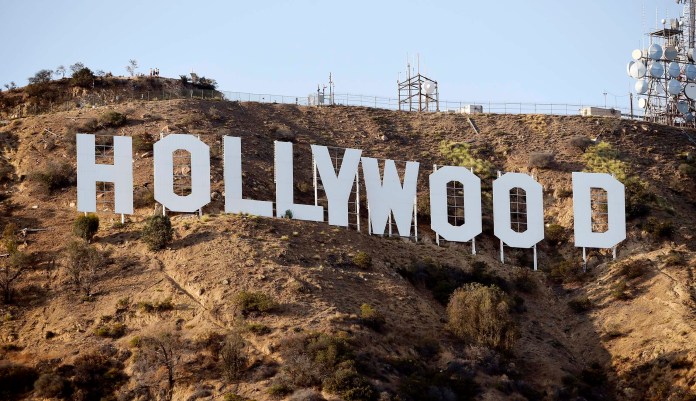
The Coen brothers’ Hail, Caesar! is not their greatest film, but it may be their most affectionate tribute to Hollywood as an American dream factory. Set in the studio system’s golden age, it follows a fixer trying to manage movie stars, scandals, and religious sensitivities.
It is when George Clooney, playing a leading A-lister, is kidnapped by communist revolutionaries seeking to overthrow Hollywood that the film shines. What follows is a refreshingly unapologetic defense of Hollywood’s old mythology. musicals, westerns, biblical epics, and drawing-room comedies are all treated as part of America’s democratic cultural tapestry. The film argues that movies may be fake, foolish, and compromised, but they still give ordinary people a shared mythology — and that is what binds us together as Americans.
NETFLIX’S LADIES FIRST IS A FEMINIST REVENGE FANTASY IN SEARCH OF A PLOT
The Death of Stalin (2017)
Armando Iannucci’s The Death of Stalin is my favorite comedy of the millennium. The film turns the Soviet terrorist state into a bureaucratic clown show, where mass murderers become petty office politicians the moment the dictator dies. Its genius is that it does not make totalitarianism less evil by making it funny. Like Mikhail Bulgakov’s “Heart of a Dog,” it makes it more contemptible. It shows communism not as the virtuous empowerment of the oppressed, but as cowardice, paranoia, careerism, and human mediocrity armed with guns and buttressed by state power.
There are, of course, plenty of other candidates. I could make a case for Rocky, Mr. Smith Goes to Washington, It’s a Wonderful Life, or any number of enduring films in which Americans dream, repent, or rebel. They remind us that America is not merely an abstract idea, but a hard-won inheritance of liberty, self-government, intrepidness — all that helped turn a rebellious experiment into the freest, wealthiest, and most powerful nation in history. Surely, that is something worth cherishing and fighting for. Happy Independence Day.
Harry Khachatrian (@Harry1T6) is a film critic for the Washington Examiner. He is a software engineer, holds a master’s degree from the University of Toronto, and writes about wine at BetweenBottles.com