
If reports are correct that Food and Drug Administration Commissioner Marty Makary resigned under pressure from the White House to approve flavored nicotine vaping products, the episode says a great deal about the state of American tobacco policy. Cigarettes remain legal, ubiquitous, and extraordinarily deadly. Yet smoke-free alternatives that may help adults move away from combustible tobacco continue to trigger political panic out of proportion to the actual public health trade-offs involved.
There is something deeply unserious about how Washington talks about nicotine. Cigarettes, the most dangerous products in the category, remain widely available. Smoke-free alternatives, however, are often treated as if their very existence is beyond the pale. That disconnect has fueled a regulatory debate that is too often driven by moral panic over nicotine rather than by outcomes.
The debate has drifted far from outcome-based public health policy.
The FDA’s recent approval of several flavored smoke-free products has sparked outrage from familiar quarters, with critics arguing that any legal pathway for flavored alternatives is inherently reckless. Sen. Dick Durbin (D-IL) posted on X that “these products addict children & expose them to harmful chemicals.”
An adult smoker standing at a convenience-store counter does not face an abstract policy debate. That person faces real choices: continue smoking cigarettes, buy an illicit product of uncertain origin, or try a legal alternative that has undergone review. Any regulatory system that ignores those real-world choices loses touch with reality.
The public health standard Congress created recognizes exactly that reality. The FDA is supposed to assess effects on the population as a whole, not pretend that adult smokers do not exist. That requires regulators to weigh risks to youth while also accounting for the possible benefits of moving adult smokers away from combustible cigarettes, which remain uniquely deadly.
Studies suggest that nicotine e-cigarettes are the most effective tobacco cessation tools. Surveys of adult tobacco smokers reveal that they find it easier to quit with flavored vapes. Much of the evidence suggests that vaping has displaced rather than expanded youth tobacco use. Youth smoking rates fell dramatically during the rise of e-cigarettes, and both youth smoking and youth vaping have declined in recent years, reaching an all-time low in 2025.
A credible regulatory system requires a legal, science-based pathway for the appropriate review of smoke-free products.
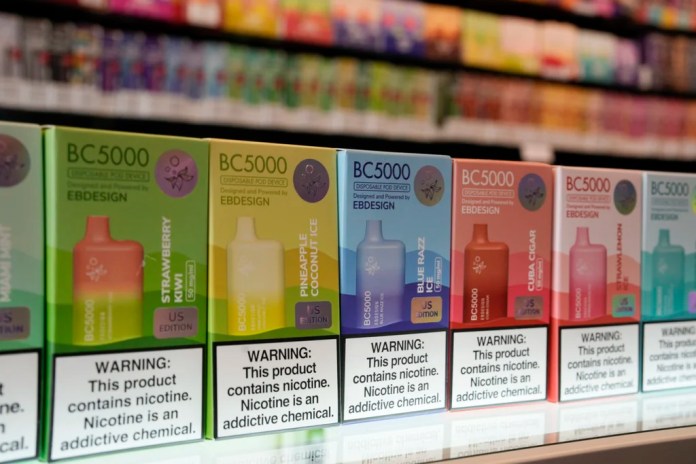
Without such a pathway, the market moves into the shadows. Unauthorized products continue to flood convenience stores, gas stations, and online sellers. Adults are left with fewer regulated options, and youth protections become harder to enforce. In this scenario, the government signals that legal compliance is for suckers, while the illicit market sets the terms.
Few would support allowing children access to nicotine products. That is why strict enforcement, age-verification measures, marketing restrictions, and retailer accountability all matter. But public policy for adults should not be built around standards designed for minors. Nor should the response be to erase all distinctions between legal and illegal products or between combustible cigarettes and smoke-free alternatives. Public health is not advanced by pretending those differences are meaningless.
Too much of this debate has devolved into performance and moral signaling. Support a lawful pathway for smoke-free alternatives, and you are accused of not caring about kids. Suggest that adults should have access to lower-risk options, and you are treated as if you have abandoned public health entirely. That framing may generate applause and outrage, but it is no substitute for serious policymaking.
Adults who smoke deserve a system that is honest, consistent, and grounded in evidence. They need a government that can distinguish between products that meet the legal standard and those that do not. And they need policymakers willing to admit that reducing smoking-related disease sometimes requires embracing imperfect solutions that are better than the status quo.
DON’T LET GOVERNMENT REGULATORS KILL LOCAL MEDIA
The FDA should be judged on whether it builds a system that protects youth, respects the law, and gives adult smokers a realistic pathway away from combustible cigarettes. That is what serious regulation looks like.
The country needs policymakers willing to confront the realities of nicotine use, consumer behavior, and illicit markets.
Caleb O. Brown is chief executive officer of the Bluegrass Institute. Jeffrey A. Singer, MD, practices general surgery in Phoenix and is a senior fellow at the Cato Institute.