
More than a week after Californians cast their ballots, the field is finally set in several of the state’s most closely watched races, ending days of uncertainty over who will advance to November’s general election.
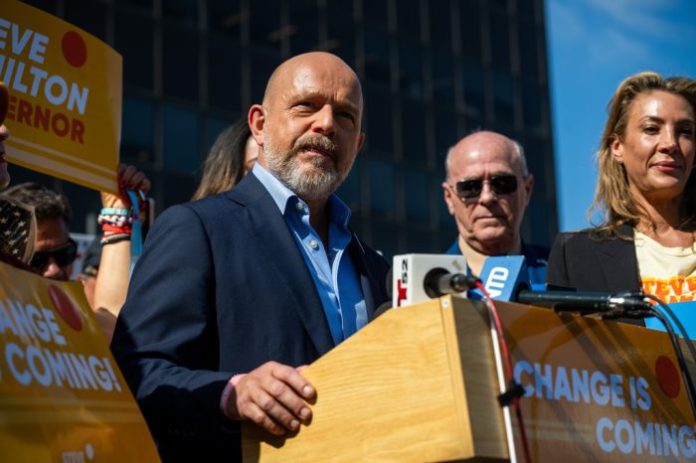
In California’s crowded governor’s race, Democrat Xavier Becerra and Republican Steve Hilton emerged as the top two finishers. In Los Angeles’s mayoral race, Mayor Karen Bass and Councilwoman Nithya Raman secured spots in the general election, leaving Spencer Pratt, a strong contender, out of the final field. Voters also had to wait days to learn the outcomes of some of the nation’s most consequential House battleground races after casting ballots in five newly redrawn congressional districts that Democrats view as central to their effort to reclaim the lower chamber.
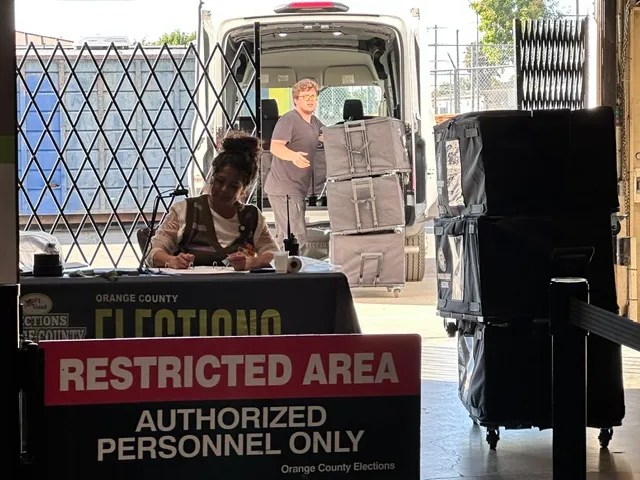
The lengthy count has once again put California’s election system in the spotlight. The state’s expansive vote-by-mail program, acceptance of ballots postmarked by election day, and legal practice of “ballot harvesting,” allowing third parties to return completed ballots, can delay final results, particularly in close races. Critics argue the process takes too long and fuels public skepticism, while supporters say the additional time helps ensure every valid vote is counted.
With President Donald Trump setting the tone, some Republicans and commentators raised concerns about the integrity of the process. House Speaker Mike Johnson (R-LA), while offering no specific evidence of wrongdoing, claimed Monday that the election process in the Los Angeles mayoral race “stinks to high heaven.” Assistant U.S. Attorney Bill Essayli also posted on social media that federal prosecutors were working with the FBI on “multiple election fraud investigations,” though he provided no details.
But California Democratic strategist Garry South, who has run campaigns for Gov. Gavin Newsom (D-CA) and former Gov. Gray Davis, insisted that the slow pace was just part of the process.
“The length of our vote count in California does lend itself to charges of hanky-panky by Trump and other Republicans like Speaker Johnson who are hell-bent on crying fraud and election-rigging,” he told the Washington Examiner. “The plain and simple fact is that it takes longer to count our votes because we rely on mail-in ballots, which are accepted and counted if they are mailed by election day. We choose to count every vote, which is what a democracy should demand.”
Kaivan Shroff, a media and culture expert, said that a lengthy wait time reflected nothing other than California’s normal ballot-counting process, but admitted that some responsibility for the confusion should fall on state election officials and political leaders.
“As much as the California system is designed to be as inclusive as possible and allow the most people to vote, they don’t seem to have done an appropriate job educating the public on the process so that people can expect these sorts of changes and fluctuations,” Shroff told the Washington Examiner. “Insiders and political commentators are aware of that dynamic, and we’ve been talking about it since election night. But I think it’s incumbent on leaders to make sure people have faith in the system and trust in the system, especially when it’s at such a low point across the country.”
Hilton publicly urged Newsom to speed up the state’s vote-counting process, arguing that reporting delays were eroding public trust in the state’s election.
“Californians deserve elections that are secure, transparent, and timely,” Hilton said. “If Governor Newsom is serious about restoring confidence in our elections, he should stop making excuses and deploy resources. Let’s get this done and give Californians the results they deserve.”
On Monday, he added, “Nearly a week into California’s election shambles. The world is laughing at our inability to count votes in a timely manner. Where is Gavin Newsom?”
The primary races unfolded against the backdrop of California’s top-two primary system, which sends the two highest vote-getters to the general election regardless of party. That structure has left both parties closely watching, for days, whether their preferred candidates survived the crowded primary field to advance to the Nov. 3 election.
Redistrict results come into focus
Democrats had high hopes for the five congressional districts redrawn last year after Proposition 50, a controversial ballot initiative backed by Newsom and state Democrats. The measure reshaped California’s congressional map ahead of the midterm elections, creating several districts that Democrats viewed as key opportunities in their effort to reclaim the House. Newsom framed the fight over the new maps as one for the very soul of democracy. But determining who would emerge from those contests took time.
The five Republicans most affected by the redistricting effort were the late Rep. Doug LaMalfa and Rep. Kevin Kiley (I-CA) in Northern California, Reps. Darrell Issa (R-CA) and Ken Calvert (R-CA) in Southern California, and Rep. David Valadao (R-CA) in the Central Valley. Since the maps were drawn, however, the political landscape had shifted considerably. LaMalfa died in office, Kiley left the Republican Party to become an independent, Issa retired, and Calvert chose to run in a different district against a fellow Republican incumbent.
The race to replace LaMalfa will feature Republican James Gallagher and Democrat Mike McGuire. Kiley waited several days to learn that he would face Richard Pan in California’s 6th Congressional District after it briefly looked like Democrats might be shut out of the November showdown. Pan is known nationally for leading California’s effort to eliminate religious exemptions for school vaccine requirements.
The race in California’s 22nd District was eventually called for Valadao and Democrat Randy Villegas, who earned the backing of progressive figures including Sen. Bernie Sanders (I-VT) and emerged as a formidable challenger despite facing another Democrat, Jasmeet Bains, who was favored by national party leaders.
TRUMP’S CALIFORNIA COAL EXPORT TERMINAL PLAN FACES ENVIRONMENTAL LEGAL RESISTANCE
California’s 40th District produced perhaps the most unusual result, pitting two incumbent Republicans against one another. Both Calvert and Rep. Young Kim (R-CA) advanced to the general election, setting up an expensive, bruising, and closely watched intraparty showdown.
In Issa’s former district, Republican San Diego County Supervisor Jim Desmond, who secured endorsements from both Issa and Trump, advanced alongside Democrat Marni von Wilpert, a San Diego city councilwoman.