
The main cause of division in 2026 is political polarization. Politics is not confined to voting each election cycle. It dominates online culture and, frustratingly, bleeds into every other category of life. We’re forced to deal with politics in sports, music, and entertainment. Far too many Americans view their fellow citizens as bad based on politics alone.
This internal segmentation has reached unprecedented levels. Much of the blame lies with social media and the 24-hour news cycle.
There is no way the Founding Fathers could have envisioned a world so captured by technology and tribalism. But they did issue warnings.
In his 1796 farewell address, President George Washington issued his own set of warnings to the American people.
He addressed geographical fragmentation:
“One of the expedients of party to acquire influence within particular districts is to misrepresent the opinions and aims of other districts. You cannot shield yourselves too much against the jealousies and heartburnings which spring from these misrepresentations; they tend to render alien to each other those who ought to be bound together by fraternal affection.”
In speaking of factions and the damage they can do:
“They serve to organize faction, to give it an artificial and extraordinary force; to put, in the place of the delegated will of the nation the will of a party, often a small but artful and enterprising minority of the community; and, according to the alternate triumphs of different parties, to make the public administration the mirror of the ill-concerted and incongruous projects of faction, rather than the organ of consistent and wholesome plans digested by common counsels and modified by mutual interests.”
He continued later on:
“The alternate domination of one faction over another, sharpened by the spirit of revenge, natural to party dissension, which in different ages and countries has perpetrated the most horrid enormities, is itself a frightful despotism.”
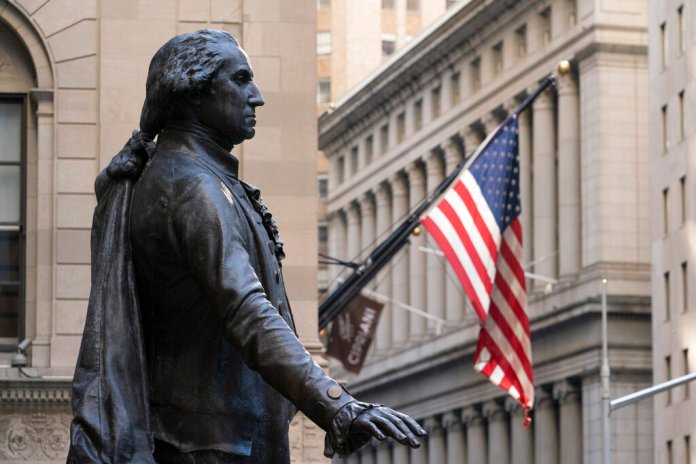
Washington understood that varied interests and objectives could not override the shared goals of our young country. He did not advise against conflicting opinions but cautioned Americans not to see them as an immediate betrayal. The same applies to electoral defeats. They were not to be interpreted as long-lasting catastrophes.
Washington’s prescient words perfectly encapsulate the fierce tribalism we contend with on a daily basis. While regional differences remain, the ideological differences are what cause the real division. Americans living in the same communities can be so ideologically divided that it leads to rancor.
Problems arise when loyalty to one’s party, politician, or brand takes the place of loyalty to our nation and its principles. Despite claims to the contrary, this is a bipartisan tendency. It was not new in Washington’s day. Human beings are much the same as they were when this country was founded. Warnings against what might cause us to crumble are every bit as applicable now.
That the American experiment has lasted long enough to experience a semiquincentennial celebration is no small thing. But when compared to the scope of history, we remain a relatively new nation.
RESTORING AMERICA — ‘A REPUBLIC IF YOU CAN KEEP IT’: AMERICA AT 250
Washington’s farewell address was published a mere 20 years after the nation adopted the Declaration of Independence. If his words of wisdom applied to our infant country then, how much more so do they apply now, centuries later?
We live in a different time with victories and obstacles that Washington and his peers could never have conceived. But division, the pursuit of power, and forgetting our shared objective as Americans have remained enduring features of American life.