
Six years ago, the world was overtaken by a kind of mass psychosis. The death of George Floyd in police custody on May 25, 2020, led to riots and statue-smashing across three continents; to corporations, universities, and public bodies adopting racist policies; to police officers, who had previously pounced on the slightest lockdown infractions, dropping to their knees in the face of organized criminality.
Such was the collective dementia that few dared complain. Even the most insane stories — 1,200 public health professionals asserting that people should stay indoors other than for Black Lives Matter protests, for example — were reported with a straight face. Anyone who expressed the banal opinion that “all lives matter” risked being fired.
Now there has been another death in police custody, that of an 18-year-old British student named Henry Nowak. Henry who? Precisely. Nowak was walking home one evening in Southampton, England, when he got into an altercation with someone named Vickrum Digwa. Digwa ended up stabbing Nowak with a ceremonial Sikh knife known as a kirpan. When the police arrived, Nowak was bleeding out, but the officers’ first reaction, prompted by Digwa’s claim that he had been racially abused, was to put the dying man in handcuffs.
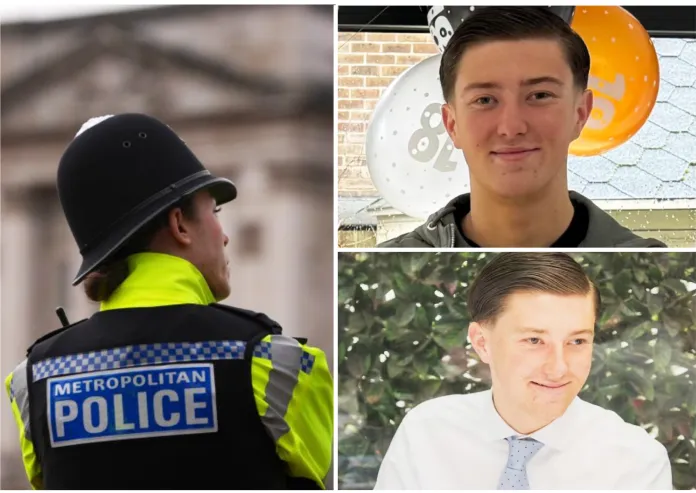
Digwa is on trial as I write, and there are things we don’t yet know about the case. But the asymmetry between the reaction to Floyd’s death and Nowak’s is striking. Both men died after being restrained by police. Indeed, in a grisly echo of the earlier death, Nowak’s last words are reported to have been: “I can’t breathe.” Yet, until Elon Musk took an interest, the case was being reported as a local crime story.
Yes, Floyd’s death, unlike Nowak’s, was caught on film, which gave it a vivid horror. Nonetheless, the bizarre thing about the disparity of reaction is the way in which Floyd’s death, not Nowak’s, is the one treated as representative of a deeper problem.
The Floyd case did not demonstrate that American police officers were systematically racist. As I wrote here in 2023 when five black officers beat a black driver to death, the United States almost certainly has a problem with brutal and trigger-happy officers, but that is not the same thing as having racist officers.
The Nowak case, by contrast, looks like the product of a systematic obsession with the kind of DEI, sometimes absurdly called “anti-racism,” that has become institutionalized in Britain as across the West. I use the word institutionalized deliberately. Policies that have become part of the institutional structure of public bodies, and of society more widely, are now maintained even when their outcomes are objectively horrific.
In 2017, a young security guard in Manchester, England, saw a man whose behavior struck him as “dodgy.” He later told the official enquiry, “I felt unsure about what to do. For all I knew he might well be an innocent Asian male. I did not want people to think I am stereotyping him because of his race.” The suspicious character, Salman Abedi, went on to detonate the bomb in his rucksack, killing 22 people, half of them teenage or preteen girls.
In 2023, a young man named Valdo Calocane came to the attention of the authorities in Nottingham, England, after a series of violent attacks, one on his roommate, others on strangers. Mental health services believed him to be dangerous and would have locked him up, had they not “considered the research evidence that shows over-representation of young black males in detention.” Calocane went on to murder two teenage fellow students and an older man.
WHY I AM QUITTING THE CONSERVATIVE PARTY AFTER 40 YEARS
In 2024, a school principal felt what she described as “a visceral sense of dread” about one of her students, a boy of Rwandan parentage named Axel Rudakubana. He was obsessed with genocide, seemed to hate white people, and had brought a knife to school. When she reported her concerns to mental health professionals, they told her she was “racially stereotyping” Rudakubana as “a black boy with a knife.” Rudakubana went on to murder three little girls at a Taylor Swift-themed dance class.
What these cases have in common is the power of the anti-racism taboo, especially in the public sector. Being accused of racism is often career-ending — indeed, for government workers, it is one of the very few ways of being sacked — and losing your job seems, to most people, a more concrete danger than some hard to picture terrorist murder. I hope Musk succeeds in making Nowak the new Floyd, a global symbol of a broken system, only this time with real evidence behind the claim. Americans inflicted the woke mind virus on the world. It seems fitting that they should spread the antidote.