
PITTSBURGH — On April 19, 1926, an above-the-fold story in the Pittsburgh Gazette Times detailed the Pittsburgh Catholic Diocese’s Bishop Hugh Boyle officiating at the dedication of a new church and school in the city’s upper north side neighborhood off of Perrysville Avenue.
“The services, which began shortly after 10:30 a.m. consisted of a procession from the old church to the new building and a solemn dedication Mass.”
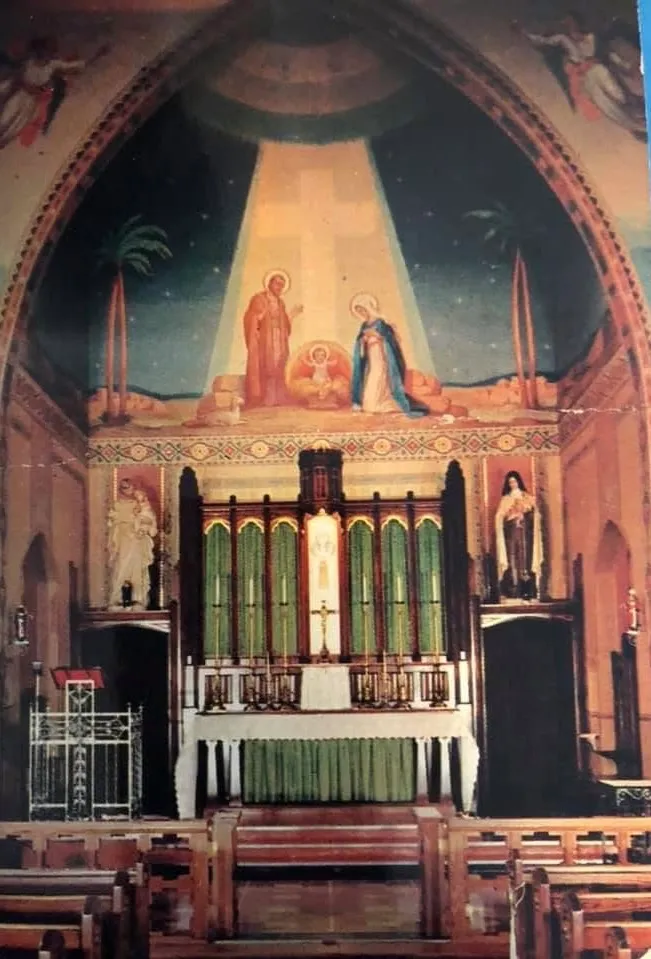
An oversized photo of the Nativity of Our Lord Catholic Church, with hundreds of people standing outside the unique church building, accompanied the story. The building was designed to look like a stable, and inside were steep, angled wooden beams, and an altar that had a beautiful hand-painted depiction of the birth of Jesus, done by a painter who immigrated from Germany and a local artist who was also a member of the parish.
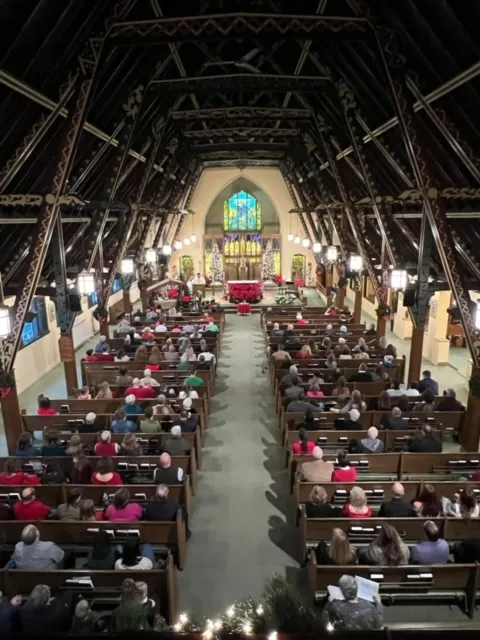
The new church in the booming neighborhood, filled with thousands of working-class immigrants of German, Irish, Polish, and Italian families, also had classrooms underneath the chapel. All were “modernly equipped” to educate the students from these families, and the chapel itself was equipped to hold 500 people, not including the 100 or so who could fit in the chapel choir loft.
For the next 50 years, Nativity grew with the neighborhood. Along the four blocks of Perrysville Avenue, below the church, were scores of businesses: a five-and-dime, four hair salons, a bustling grocery store, a barber shop, a hardware store, a furniture store, several bakeries, two gas stations, two banks, a gun store, and a plumber.
In the early ’50s, the church grew so much that a brand new building to house the students was built across the street. A massive priory was also built below the church, and it was not an easy feat. The church was literally carved into a hill with very little real estate around it. Nonetheless, these two buildings, along with narrow parking lots beside the school, as well as the priory, emerged.
This was where my father was baptized in 1936. It was where my parents were married. It was where I was baptized in 1959. It was where my mother converted from Lutheran to Roman Catholic in 1974. It was where I was married in 1984, along with my sisters. It was where my children were baptized, along with their cousins and my cousins.
It was where I went to school and formed some of my most enduring memories and friendships that still hold today. None of it was perfect, but it was our place — our connective tissue, and not just for the children but the parents too. There was the men’s guild and the women’s guild. There was also the sewing club and weekly bingo.
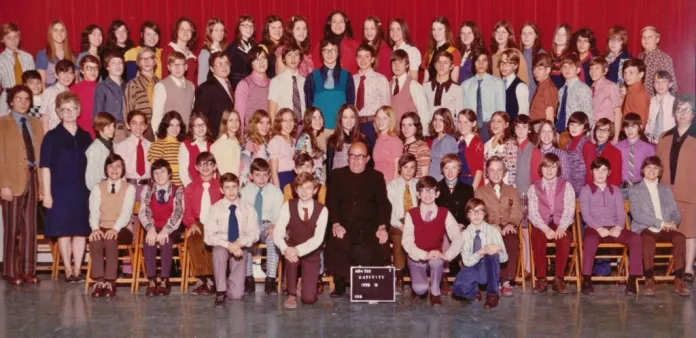
It was our home.
PNC STEPS UP FOR PITTSBURGH’S NFL DRAFT
Nativity had both junior varsity and varsity football and basketball teams. Girls were able to play junior varsity and varsity and cheerlead. There were monthly school dances that had the janitor, Mr. Claus, turn our massive cafeteria into a dance floor. It also turned into a basketball court for when we played the other Catholic schools in the city. At the end of the year, we always had our sports banquet at the Islam Grotto, which was located right next to the brand-new Three Rivers Stadium. Someone in our parish must have known someone at the Steelers, because we had Terry Bradshaw one year and Franco Harris the next speaking at our banquet.
Nativity was never meant to be a commuter parish. It was meant to be a place to walk to, celebrate your faith, and form a community. Which we did until we didn’t anymore.
By the 1990s, things in the neighborhood began to change. Manufacturing had declined, and a lot of families had to leave. The stately homes that housed families with five or six children now became multiple apartments.
As the families moved away, one by one, the businesses started to shutter, going from scores of small businesses to a mere handful. Going “up the Avenue,” as we would say about walking up to shop there — it was a mile-long hike uphill — instead became jumping in the car and going out to McKnight Road, the Breezewood of Pittsburgh.
The suburban families who navigated the parking lots started opting for churches in the outer suburbs with sprawling parking lots. They took their faith and their children’s education with them. By the late 1990s, the school closed, but not without a fight from those who were left. But after a while, they knew that the end was near.
The name changed from Nativity to Incarnation as it was merged, merged again, and then merged again, with other parishes until all that was left was an early-morning Mass. This was a stark difference from the 7:30, 9 a.m, 11 a.m, 12:45, and 4 p.m. offerings that the community grew up with.
Last week, days shy of its 100-year anniversary, a day that was celebrated with so much fanfare, anticipation, and aspiration, Nativity held its last official Mass.
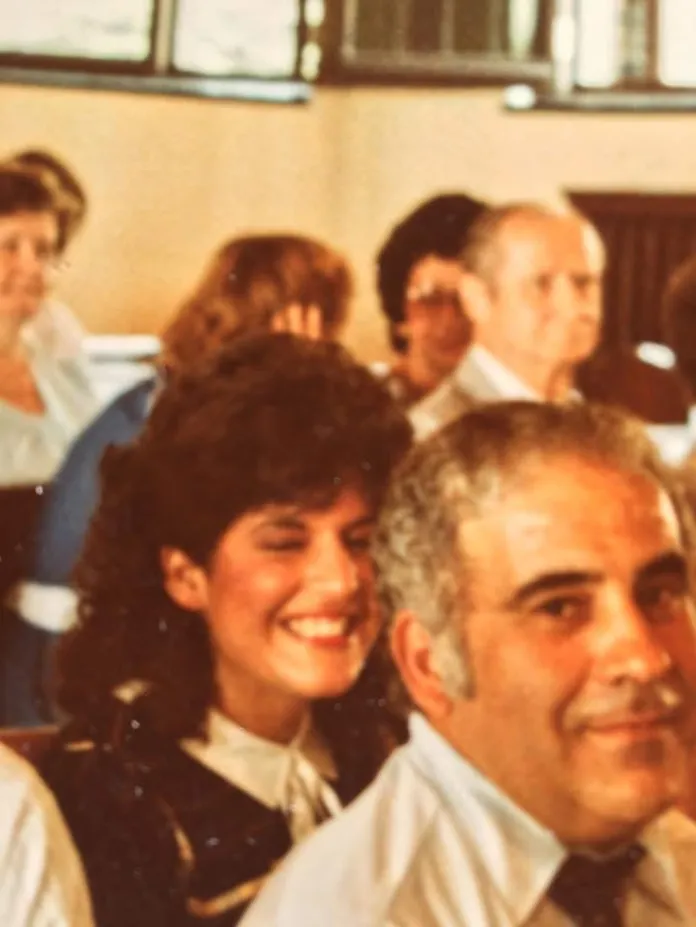
The last time that I went to Mass there was not that long ago with my parents. They had been Eucharistic ministers there since I had been a teenager. Going there made them sad. They missed the choir, the noisiness of the children, both theirs and their grandchildren. The inevitability of knowing it was at an end was too much for them.
I felt the same way. Looking at those beautiful wooden beams and pews, I saw myself fidgeting during weekly rosary service, how excited I was to receive my First Holy Communion, how nervous I was getting ready to walk down the aisle with my father at my wedding, and equally nervous holding my newborn for her baptism. There were the funerals of my grandparents, and those of aunts and uncles and friends, where I shed tears.
Nativity was more than a building — it was a place. And for 100 years, it was the place for thousands of other people. Their sense of community held us all together for a very long time.
On the same Sunday that Nativity said goodbye, I was attending Mass at my new parish 40 miles away. My granddaughter was serving, and my daughter, son-in-law, and three younger grandchildren were all in the pews, with the youngest having no problem yelling “Grandma” when I walked in late for all to hear.
This parish is on the opposite spectrum of Nativity. While it is just a little country church, because of its rural location, the parking lots are generous. But even still, all four of them were packed on Sunday, so much so that people were parking along the grass and the main street because of the overflow.
KASH PATEL AND SEN. DAVID MCCORMICK TEAM UP TO FIGHT FENTANYL IN PENNSYLVANIA
As I was walking in, late as always, a man briskly walked past me to get into church. I moved out of his path and said a faint “sorry.” He mumbled something about his frustration about the parking situation, as our parish had nearly tripled in size over the past few months. I looked at him and said, “This is a good problem to have.”
I’m not sure if he heard me, but I will say this: The people who went to Nativity for a very long time would have loved to have this problem.