
On the morning of Sept. 26, 1960, a 26-year-old man from the dairy farms of Wisconsin walked up North Michigan Avenue toward Tribune Tower in downtown Chicago. He was about to begin his first day at WGN Radio, one of the most powerful stations in America, and he was terrified.
“I walked into the studio, and I thought, ‘I’m working with some big names at a big radio station, veterans, and they’re going to ignore me!’” he would later recall. They did just the opposite. Over the next six decades, so did the rest of the country.
Orion Clifford Samuelson, the broadcaster whom Paul Harvey once said could have served as secretary of agriculture under any of three presidents, and whom admirers took to calling “the Elvis of agricultural radio,” died on March 16 at his home in Huntley, Illinois. He was 91.
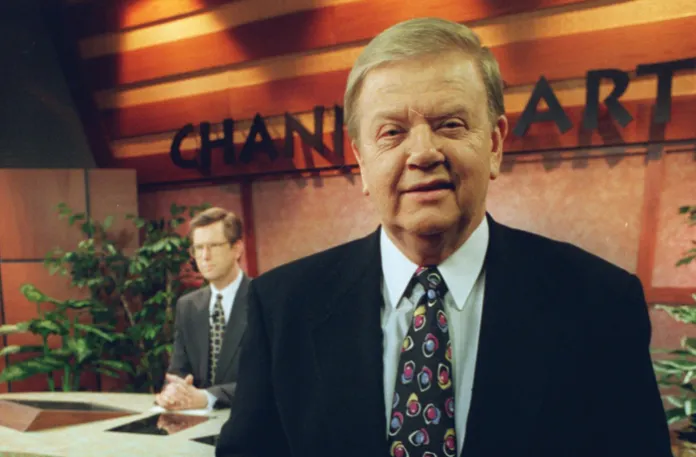
Samuelson was born on March 31, 1934, on a dairy farm near Ontario, Wisconsin, where his grandparents had settled because the rolling hills reminded them of Norway. He was raised expecting to take over the family operation, but a childhood leg disease made heavy farm work impossible and left him unable to walk for a substantial part of his adolescence. Confined largely to the farmhouse, the young Samuelson found a companion in the radio, listening to World War II news broadcasts each evening, absorbing not just the news but the power of a voice that could travel from a studio to a kitchen table a thousand miles away.
After high school, he considered becoming a Lutheran pastor before settling on six months of radio school in Minneapolis. He cut his teeth in Sparta, Wisconsin, first as a polka disc jockey — perhaps this explains the natural warmth that would later make him such an effective broadcaster — then moved to WBAY Radio and television in Green Bay, where he began covering agricultural programming. When a job opened at WGN, Samuelson applied, got the position, and made his way toward Tribune Tower.
He first appeared on the air at WGN at “milking time,” 5 a.m., a schedule that suited a man raised on a dairy farm. Three years into his tenure came the moment that seared itself into Chicago broadcasting history: Samuelson was the staffer who read the news of President John F. Kennedy’s assassination on WGN’s airwaves. He would carry that weight, and that sense of responsibility, for the rest of his career.
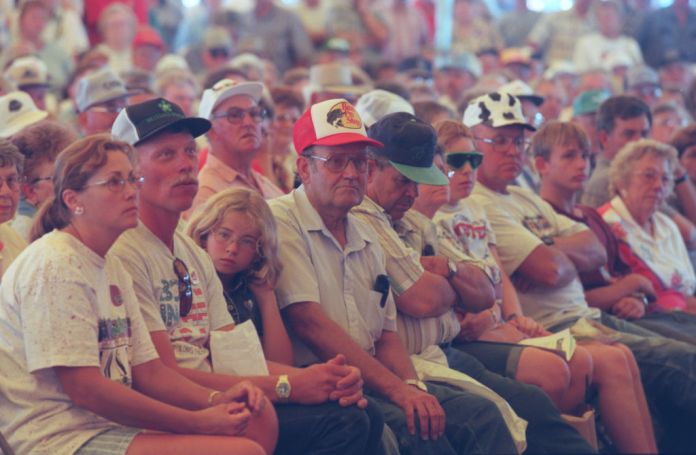
What followed across six decades was a career of genuinely staggering breadth. Samuelson interviewed nine presidents, broadcast from all 50 states, shook hands with Fidel Castro in Cuba, met Mikhail Gorbachev in Moscow, and traveled alongside the Secretary of Agriculture and the Prime Minister of India to visit the Taj Mahal. He hosted “Top O’ the Morning” on WGN-TV during the 1960s and, from 1975 to 2005, “U.S. Farm Report,” a weekly television newsmagazine syndicated across 190 Midwest stations. He also found time, along the way, to record an album of polka novelty songs.
His weekly “Samuelson Sez” commentary became as dependable a feature of Midwestern life as a weather forecast. What made Samuelson remarkable was not merely his longevity or his rolodex of world leaders, but his gift for bridging two worlds that rarely spoke to each other. His longtime co-host Max Armstrong called him “an agvocate before it became fashionable,” someone who could explain corn basis prices and beef demand to a suburban Chicago housewife as fluently as he could to a farmer in overalls. His governing conviction was simple, and he repeated it often enough that it became a kind of creed: If you eat, you’re involved in agriculture.
Samuelson held the same position at the same station for 60 consecutive years, a feat in American broadcasting second only to Vin Scully. In 2003, he was inducted into the National Radio Hall of Fame, and it was Harvey himself who presented the award at a black-tie dinner in Chicago on the night of a lunar eclipse. Harvey’s opening line: “Even the moon hides its face when we honor Orion Samuelson.”
His retirement broadcast on Dec. 31, 2020, closed out exactly 60 years on the air at WGN. He had published his autobiography eight years earlier under the title You Can’t Dream Big Enough, which, for a kid who couldn’t walk and couldn’t farm, turned out to be as apt a title as any broadcaster ever chose.
Near the end of his life, when asked what he most wanted to be remembered for, Samuelson gave an answer that was, characteristically, not really about himself at all.
“If anything I want to be remembered for, I guess it would be for helping people understand that there are no differences between them and people on the farm or ranch,” he said. They all want to do the same — make the best food available, the most nutrition available, at a cost that people can afford.”
A farmer, he liked to remind his listeners, buys everything retail and sells everything wholesale. He spent 60 years making sure the rest of us understood what that meant.
Daniel Ross Goodman is a Washington Examiner contributing writer and the Allen and Joan Bildner Visiting Scholar at Rutgers University. Find him on X @DanRossGoodman.