
The prime minister of Pakistan is begging President Donald Trump to postpone his bombing campaign against the Islamic Republic of Iran, simultaneously pleading for the Trump regime to open up the Strait of Hormuz as a gesture of good faith.
Shehbaz Sharif published the plea to social media on Tuesday afternoon, claiming that “diplomatic efforts for peaceful settlement of the ongoing war” are “progressing steadily, strongly and powerfully.”
“To allow diplomacy to run its course, I earnestly request President Trump to extend the deadline for two weeks,” Sharif wrote. “Pakistan, in all sincerity, requests the Iranian brothers to open Strait of Hormuz for a corresponding period of two weeks as a goodwill gesture.”
Pakistan has been serving as a mediator for negotiations between the White House and Tehran, with support from teams in Egypt and Turkey.
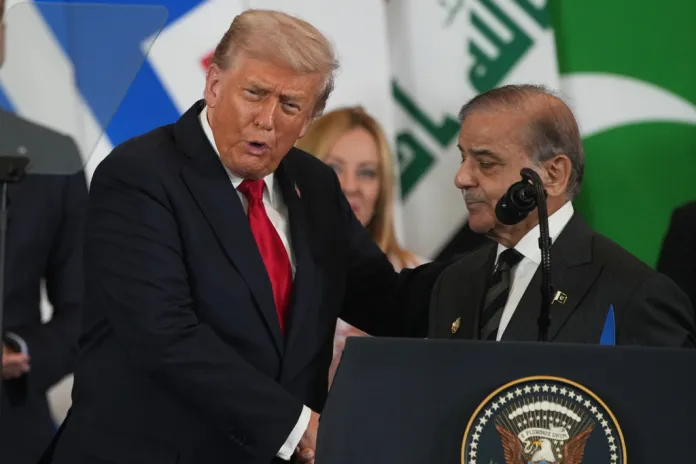
Sharif has additionally requested that “all warring parties” observe a total ceasefire “for two weeks to allow diplomacy to achieve conclusive termination of the war.”
White House press secretary Karoline Leavitt told the Washington Examiner that “the president has been made aware of the proposal, and a response will come.”
Trump warned Tuesday morning that without capitulation from the Iranian regime, “a whole civilization will die tonight, never to be brought back again.”
“I don’t want that to happen, but it probably will,” the president said, having previously specified that the U.S. military will target power plants and bridges to cripple the Islamic Republic.
Sharif claimed there is reason to believe that the latest round of talks carries “potential to lead to substantive results in near future” and that the mutual agreement would give negotiators time to inch closer to a permanent solution.
Reports out of Iran and Pakistan have been messy throughout the day, with outlets such as the New York Times and Wall Street Journal claiming that the Iranian regime has totally walked away from the negotiating table in response to the president’s bellicose rhetoric. Axios claimed that White House officials see a glimmer of hope but require more time to iron out the details.
It would not be the first time that Trump has delayed strikes on Iranian infrastructure. The president has repeatedly threatened and then walked back such plans since Operation Epic Fury began on Feb. 28.
Iran has kept up a strong posture against Trump’s threats of annihilation, telling the United Nations Security Council session on Tuesday that Trump’s remarks “constitute incitement to war crimes and potentially genocide.”
STRIKES ON IRAN’S POWER PLANTS WOULD DEAL SIGNIFICANT DAMAGE TO REGIONAL POWER GRIDS
“Iran will not stand idle in the face of such egregious war crimes. It will exercise, without hesitation, its inherent right of self-defense and will take immediate and proportionate reciprocal measures,” Iranian representative to the United Nations Amir-Saeid Iravani said.
Iravani claimed that Tehran has rejected the U.S. ceasefire proposals and will only agree to a total end to hostilities with guarantees that another conflict will not follow.